A German specialty chemicals company plans to spend about $150 million on a plant at Bushy Park, the industrial site on the Cooper River in Goose Creek, to make an ingredient used in propellants.
Alzchem Group AG announced July 8 that it had chosen Bushy Park for nitroguanidine production in the United States. The plant is intended to supply the U.S. market under a contract with the U.S. government, the company said.
Construction is expected to begin in 2027, with commissioning planned for 2029, according to Alzchem. The company has not said how many people the plant will employ.
What still has to happen
The project is not final. Alzchem said its next steps are front-end engineering and design, detailed technical planning, regulatory approvals and finalizing the contract with the U.S. government. The company’s later releases, through mid-October, did not report a signed contract.
The investment will be supported by funding from the U.S. government, the state of South Carolina and Berkeley County, Alzchem said. It did not say how much each would contribute.
Alzchem will lease its land at Bushy Park under a long-term arrangement, according to Pacolet Milliken, the site’s owner.
Why nitroguanidine
Alzchem calls nitroguanidine an essential substance used in the production of propellants, and it describes defense as a strategically important market.
In its first-half 2026 results, released July 30, the company named defense among the main growth drivers for its specialty chemicals segment and cited its strong market position in nitroguanidine. Segment sales rose 10% from a year earlier, to 214.3 million euros, the company reported.
Alzchem has also been adding capacity at home. It began starting up a new nitroguanidine plant in Germany this year, with the added output coming online in stages in the second half of 2026, the company said. Intermediate products will still be made at its German sites after the U.S. plant opens, according to Alzchem.
“With the decision on the location in South Carolina, we are consistently advancing our international growth strategy,” Andreas Niedermaier, Alzchem’s CEO, said in the announcement.
Alzchem, which is based in Trostberg, Germany, makes its products at four sites in Germany and one in Sweden, according to its website. It has sales companies in Atlanta, China and England, more than 1,700 employees, and reported 2025 sales of 562.1 million euros.
To help pay for its growth projects, Alzchem said it arranged a new long-term financing structure of up to 100 million euros with its banks in the second quarter.
The site
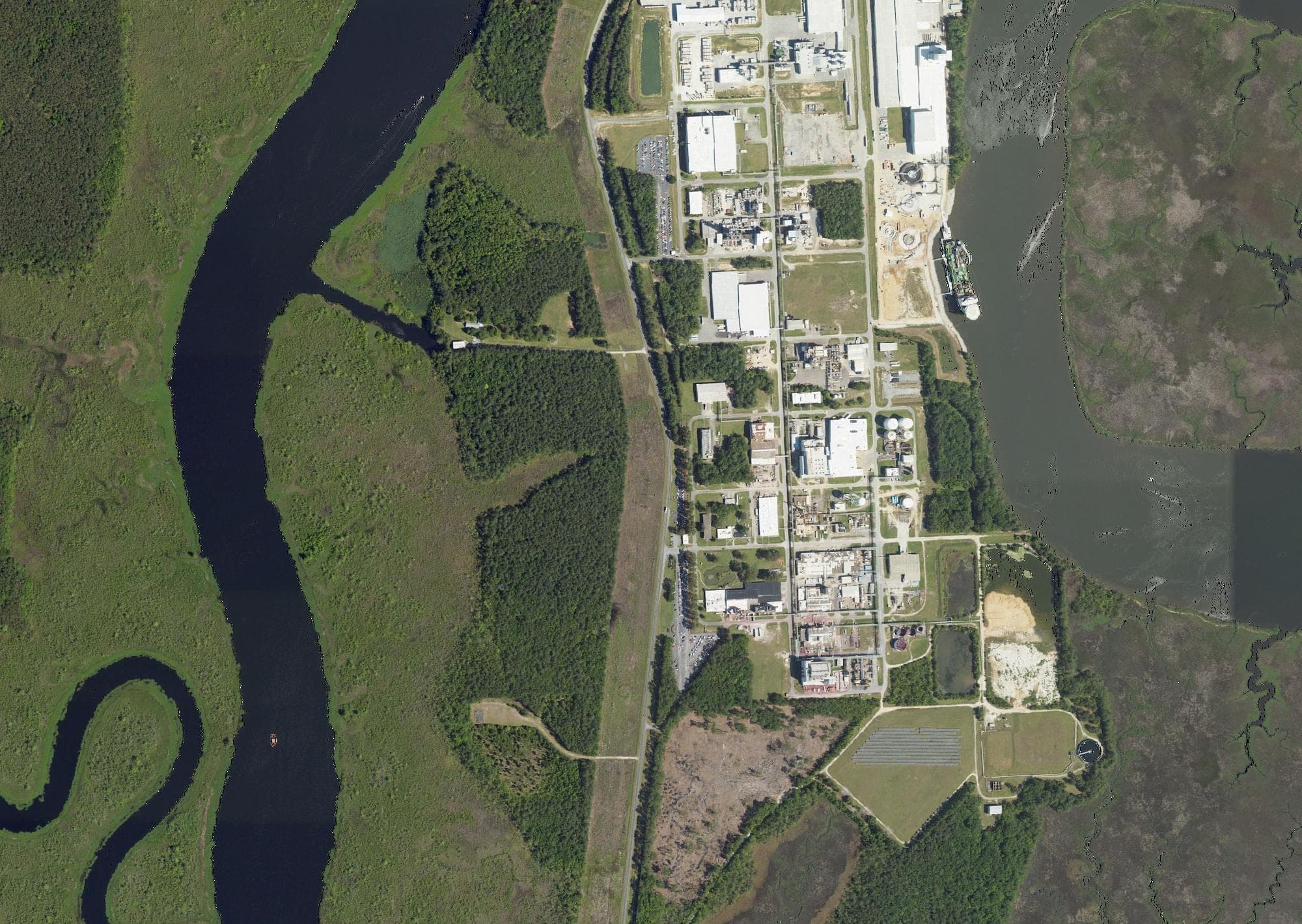
Bushy Park is a 1,530-acre industrial campus in Berkeley County owned by Pacolet Milliken, a family-owned investment firm based in Greenville. It provides about 35 utilities and services to its tenants, including steam, nitrogen, compressed air and process water, and has an on-site rail line and barge slip, according to Pacolet Milliken. The site’s 10 industrial and manufacturing tenants employ more than 1,200 people, the company said.
Bushy Park’s website lists LANXESS, Evonik and Symrise among specialty chemical users of the site, and Leonardo DRS and HII among defense and shipbuilding users. It says international companies make up half of its tenants.
Alzchem chose the site after an extensive evaluation, Pacolet Milliken said, citing its ability to support complex, large-scale chemical manufacturing, its transportation links and its proximity to the Port of Charleston.
“Bushy Park continues to demonstrate its value as a strategic location for world-class manufacturers,” William Crawford, CEO and president of Pacolet Milliken, said in the announcement.
The announcement, which Berkeley County Economic Development and the Charleston Regional Development Alliance posted, said the project benefited from collaboration with Berkeley County and the state.
What it could mean locally
For now, the plant is a plan with a price tag and a timeline. The announcements did not include a job count, the size of the public incentives or the plant’s exact location on the 1,530-acre site. Berkeley County Council approved property tax breaks in February for the project, then known as Project Eagle, The Post and Courier reported July 9. Public meeting documents put the investment at $130 million at the time and said it would create about 45 full-time jobs, the newspaper reported.
What the companies have laid out is a schedule: engineering and permitting now, construction starting in 2027 and commissioning in 2029. Alzchem also still has to finalize its contract with the federal government.