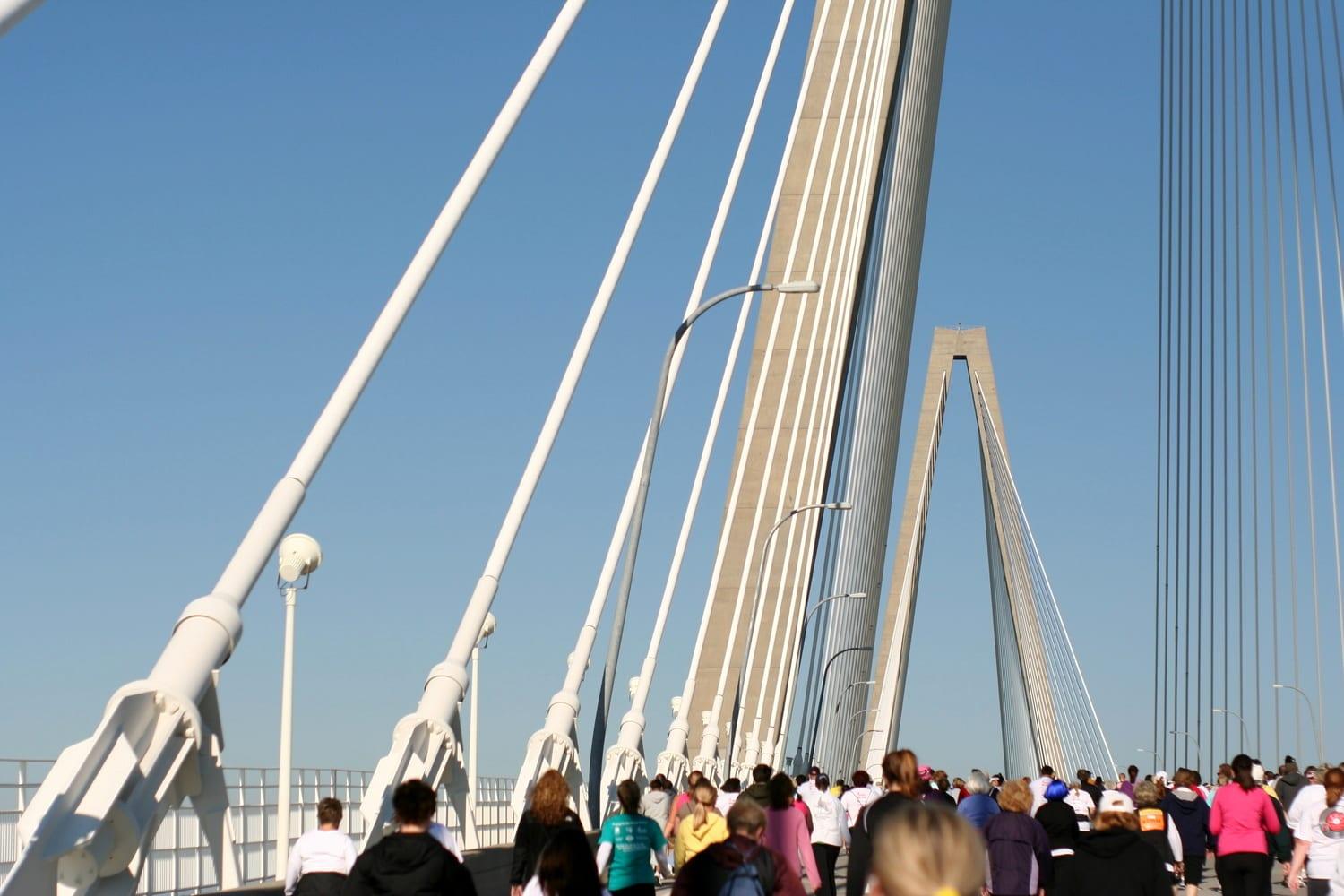
The Cooper River Bridge Run began in 1978 as a fitness event. When the 40th edition starts Saturday, it will also be one of the Charleston area’s bigger paydays.
The race had a direct economic impact of $19.2 million, spent at hotels, restaurants and stores, and a total impact of $29.6 million, according to a survey conducted in 2016 by Harry Davakos of The Citadel, a former Bridge Run board member, The Post and Courier reported.
“Then there was the economic impact, which no one foresaw at all,” former Charleston Mayor Joseph P. Riley Jr. told the newspaper. “It’s really had an enormous positive impact on the city and the region.”
The race has grown from 766 runners, who each paid a $3 entry fee in 1978, into one of the largest in the country, according to The Post and Courier. It has ranked among the 10 biggest U.S. races for 11 straight years.
The field has been shrinking, though. A record 36,756 people finished in 2012, a year marked by bus delays that pushed back the start by 58 minutes. Organizers then lowered the registration cap from 45,000 to 40,000. Finishers fell to 26,843 last year, when the race still ranked ninth in the nation, the newspaper reported. Explanations offered for the decline have included bad weather, spring break timing and an entry fee that reached $55 for runners who registered after Jan. 15, 2015.
The race supports a local running economy, too. The area now has five running specialty stores, not counting big-box retailers, and more than 140 races a year, according to The Post and Courier. “I think the Bridge Run helped start the running boom in Charleston,” said Irv Batten, the race’s deputy director and a former running store owner.
For the 40th race, organizers began celebrating on Presidents Day, 40 days before the start, with daily giveaways, raffles and events. Every finisher will receive a special anniversary medal.