The South Carolina Supreme Court on Wednesday dismissed a lawsuit by four Charleston groups that sought to stop Carnival Cruise Lines’ use of the port’s downtown passenger terminal as a cruise ship’s home port, ruling that the groups had no standing to sue.
“We hold these groups lack standing and dismiss,” Justice Kaye G. Hearn wrote for the court. Chief Justice Jean Hoefer Toal and Justices Costa M. Pleicones, Donald W. Beatty and John W. Kittredge concurred.
The plaintiffs were the Historic Ansonborough Neighborhood Association, the Charlestowne Neighborhood Association, the Coastal Conservation League and the Preservation Society of Charleston. Their complaint named only Carnival, but the South Carolina State Ports Authority, which owns and operates the Union Pier terminal, and the city of Charleston were later allowed to join as defendants, according to the opinion.
What the groups claimed
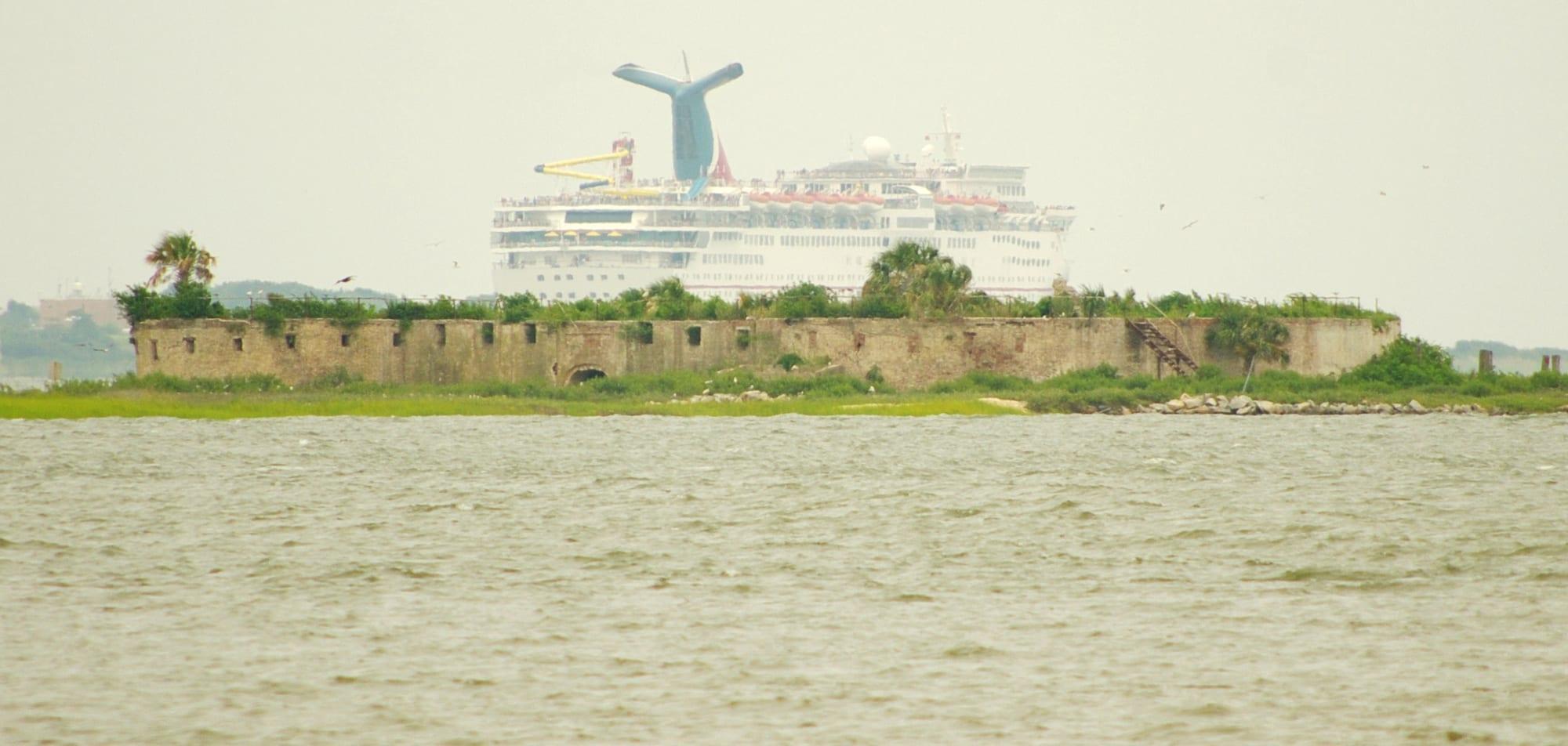
The suit targeted the Carnival Fantasy, which has used the terminal as its home port under a contract with the Ports Authority since 2010. The ship is 855 feet long, stands more than 60 feet above the water line and can carry up to 2,056 passengers and 829 crew members, the court said in summarizing the complaint.
The groups alleged that the ship disrupts the historic skyline, that its thousands of passengers and crew cause traffic congestion and road closures, and that it gives off noise and diesel soot next to the city’s Old and Historic District. They argued that expanded cruise operations could put the district’s listing on the National Register of Historic Places at risk.
They sought an injunction on 10 claims: seven based on city ordinances, a public nuisance claim, a private nuisance claim and a claim under the South Carolina Pollution Control Act. The ordinance claims argued, among other things, that the ship’s use of the terminal broke zoning, height and view corridor rules, that its smokestack was a sign, and that its amplified announcements violated the noise ordinance.
How the case reached the court
In August 2011, Carnival, the Ports Authority and the city asked the Supreme Court to take up the case directly, saying the suit threatened maritime commerce across the state. In announcing the petition, the Ports Authority said the suit implied that docked ships become buildings subject to local zoning, a theory it said could also bar other commercial ships, such as those carrying BMWs and power generation equipment, from the city.
The court agreed to hear the case and appointed Circuit Judge Clifton B. Newman as a special referee. Newman recommended dismissing the ordinance claims and the pollution claim but letting the two nuisance claims go forward. The court then threw out the noise ordinance, sign ordinance and Pollution Control Act claims and asked both sides to argue standing, preemption and whether the zoning rules apply to the ship. It heard arguments Nov. 19, 2013.
The ruling
The court held that the groups described only harms shared by the public at large, not injuries to themselves or their members.
“All members of the public suffer from and are inconvenienced by traffic congestion, pollution, noises, and obstructed views, and Plaintiffs have not alleged they suffer these harms in any personal, individual way,” Hearn wrote.
State law lets an adjacent or neighboring property owner who would be specially damaged by a zoning violation sue to stop it. But the groups did not claim to own nearby property, the court said. The Conservation League rents space nearby and the Preservation Society holds a conservation easement on a nearby property, and neither interest makes them property owners under the statute, according to the opinion.
The court also declined to apply the “public importance” exception, which can let a case go forward without standing. It said the claims could be brought by other parties who can show the required injury.
Because the groups lacked standing, the court did not decide whether the city’s zoning ordinances apply to the ship or whether federal or state law preempts them.
“Courts are not bodies for the resolution of public policy and generalized grievances,” Hearn wrote.
The opinion said harms suffered by the public at large are for the legislative and executive branches to address. “If existing laws and regulations or their enforcement fail to protect the public from harm, it is incumbent upon the public to seek reform through their elected officials or failing that, at the ballot box,” Hearn wrote.
Other fights over the terminal
The ruling ends the lawsuit over the Fantasy’s current operations. Separate disputes continue over the Ports Authority’s plan to build a new cruise terminal by converting an existing cargo warehouse at Union Pier.
The city’s Board of Architectural Review unanimously gave the design final approval in April 2012, the Ports Authority said then.
In September 2013, U.S. District Judge Richard Gergel ruled that the Army Corps of Engineers’ federal permit for the project was void because the Corps had not followed required procedures, according to court records. Gergel found that the Corps had taken too narrow a view of the project’s scope.
A group of organizations including the Preservation Society and the neighborhood associations is also challenging the project’s state permit, issued by the South Carolina Department of Health and Environmental Control in December 2012. On Dec. 20, 2013, the state Administrative Law Court declined their request to vacate that permit, according to court records.