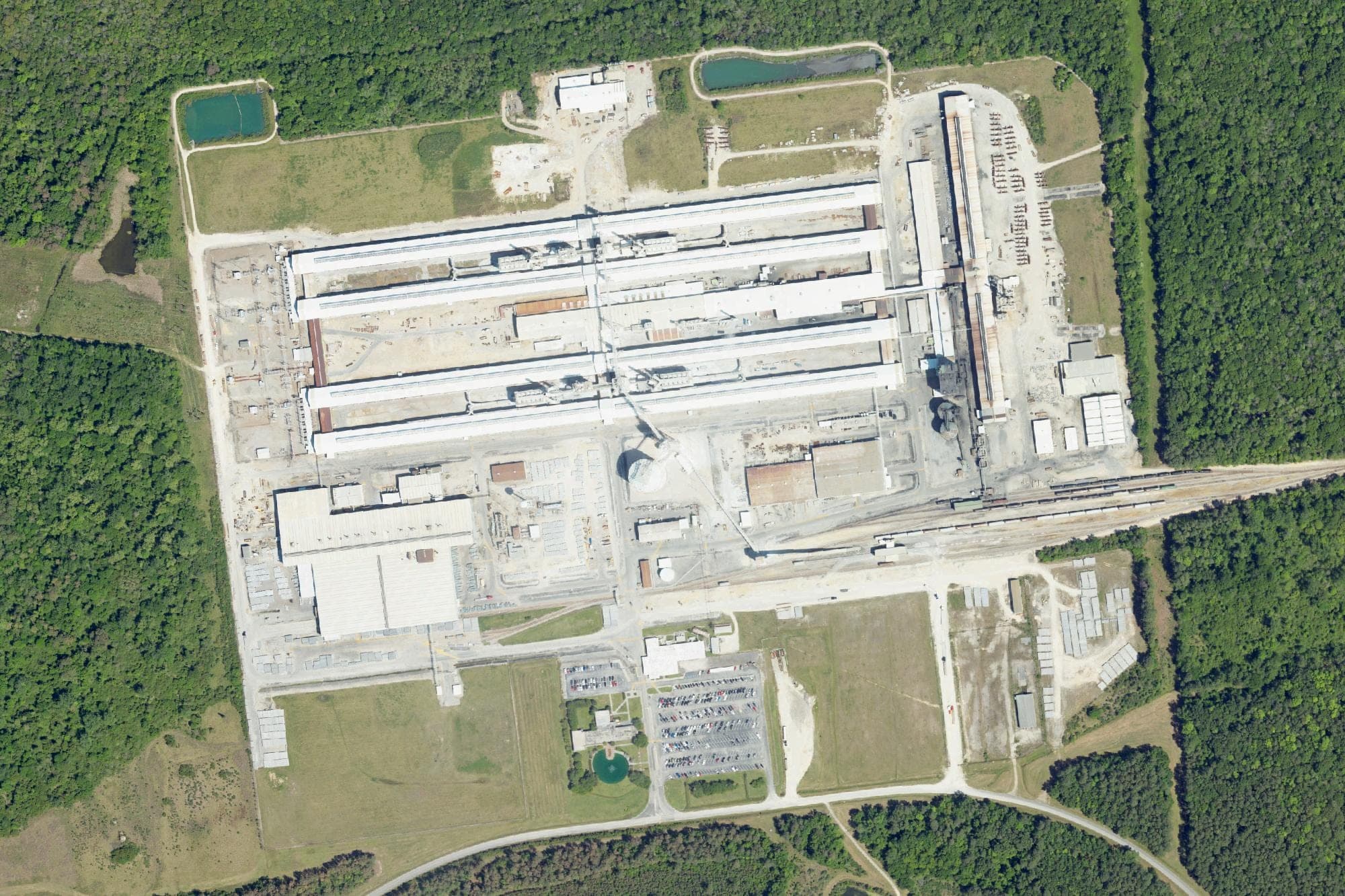
Century Aluminum says its smelter in Berkeley County is back at full capacity. The plant hadn’t been fully used since 2015, when Century cut its production in half, The Post and Courier reported.
The Chicago-based company said in its Aug. 6 earnings release that it had finished restarting the last 90 idle pots at Mt. Holly, the plant off U.S. 52 near Goose Creek. CEO Jesse Gary told analysts that the final pots came online in late June, according to the company’s transcript of the call.
Century celebrated the milestone July 27 with U.S. Commerce Secretary Howard Lutnick; Peter Navarro, senior counselor to President Donald Trump; and South Carolina Attorney General Alan Wilson. The company says the expansion raises total U.S. primary aluminum production by about 10% and lifts the Mt. Holly workforce to more than 600.
“We are grateful to President Trump and Secretary Lutnick for their strong leadership as we rebuild U.S. aluminum production, which is critical for U.S. national and economic security. This 10% increase in domestic aluminum production is just the beginning,” Gary said in the company’s announcement.
“Century Aluminum’s $50 million investment will increase American aluminum production by 10% and further cement South Carolina as a leader in American manufacturing,” Lutnick said in the same release.
What the restart added
Century announced the restart in August 2025, saying it would spend $50 million to bring back more than 50,000 metric tons of idled annual production, WCBD News 2 reported. The plant was running at 75% of capacity at the time.
The expansion added 150 jobs, from engineers to entry-level positions, with an average wage and benefit package of more than $125,000, WCSC Live 5 reported from the ceremony.
To restart, Century needed more electricity. In early October 2025, it extended its power contract with state-owned utility Santee Cooper through 2031, Santee Cooper said. The remaining details depended on incentives from Berkeley County and the state, trade publication AL Circle reported.
Why now
Century ties the restart to federal trade policy. The Trump administration raised Section 232 tariffs on imported aluminum and steel from 25% to 50% in June 2025, and the company called its restart plan a direct result, WCBD reported. The increase took effect despite warnings that it could push prices higher for consumers, the station reported.
“Trade policy has reversed decades of unfair imports from our foreign adversaries in China and Canada, where they dumped aluminum into this country and the Trump trade policies have stopped that and allowed us to invest again,” Gary said at the ceremony, according to Live 5.
The U.S. had 23 aluminum smelters in 2000 and has four operating today, WIS reported. Gary said Mt. Holly was running at roughly half capacity in 2015, according to the station. That year the plant laid off about 300 people, Glennita Grant-Greene, the company’s human resources manager, told Live 5.
The bumps
The restart has not been seamless. On the Aug. 6 call, Gary said Mt. Holly had seen some instability after the restart, which he called not unusual for a restart of its size, and that the company did not expect any impact beyond the third quarter. Chief Financial Officer Peter Trpkovski called it “nothing material” and said he expected it to be resolved in the third quarter, with a little more volume coming back in the fourth, according to the company’s transcript.
Century reported second-quarter net sales of $752.1 million, up from $649.2 million in the first quarter, mainly on higher metal prices and added shipments from the Mt. Holly expansion and a restarted potline in Iceland. The quarter included $10.7 million in Mt. Holly expansion project expenses, the company said. It forecast third-quarter adjusted earnings before interest, taxes, depreciation and amortization of $325 million to $345 million.
The plant has also faced environmental complaints. In March 2025, the South Carolina Department of Environmental Services fined Century $361,500 after tests between March 2021 and June 2023 showed the plant exceeded emission limits more than a dozen times, Live 5 reported. The consent order required the plant to show compliance with its plant-wide emission limit by Aug. 31, 2025.
In August 2026, the agency told Live 5 that Century had taken the actions the order required and that the order had been closed, with all penalties paid. The agency said it had since identified potential new violations involving activity in 2025 and 2026 and was pursuing them through its standard enforcement process. The same Live 5 Investigates report said two workers had died at the plant, one hit by a forklift in 2020 and one in a 15-foot fall in 2024. Century told the station that safety is its top priority and that it is working with state regulators to support the plant’s compliance.
Separately, a judge in July 2025 approved a $944,000 class-action settlement with more than 700 property owners after alumina dust coated cars and plants around Goose Creek in September 2023, Live 5 reported.
Gary said part of the expansion investment is meant to keep violations from happening again, and that the plant has improved its scrubbing systems and other equipment, according to Live 5.
What comes next
Century is also planning a new smelter in Oklahoma with Emirates Global Aluminum. Gary told analysts in August that he expected a final investment decision and groundbreaking by the end of the year, with first metal by the end of 2029, according to the transcript. In September, the project’s director, Ziad Fares, told AL Circle that the project was targeting the start of construction in early 2027, with first hot metal expected by the end of the decade.
At Mt. Holly, the test is whether full output holds. “Today’s actions are just the beginning,” Gary said at the July ceremony, Live 5 reported.