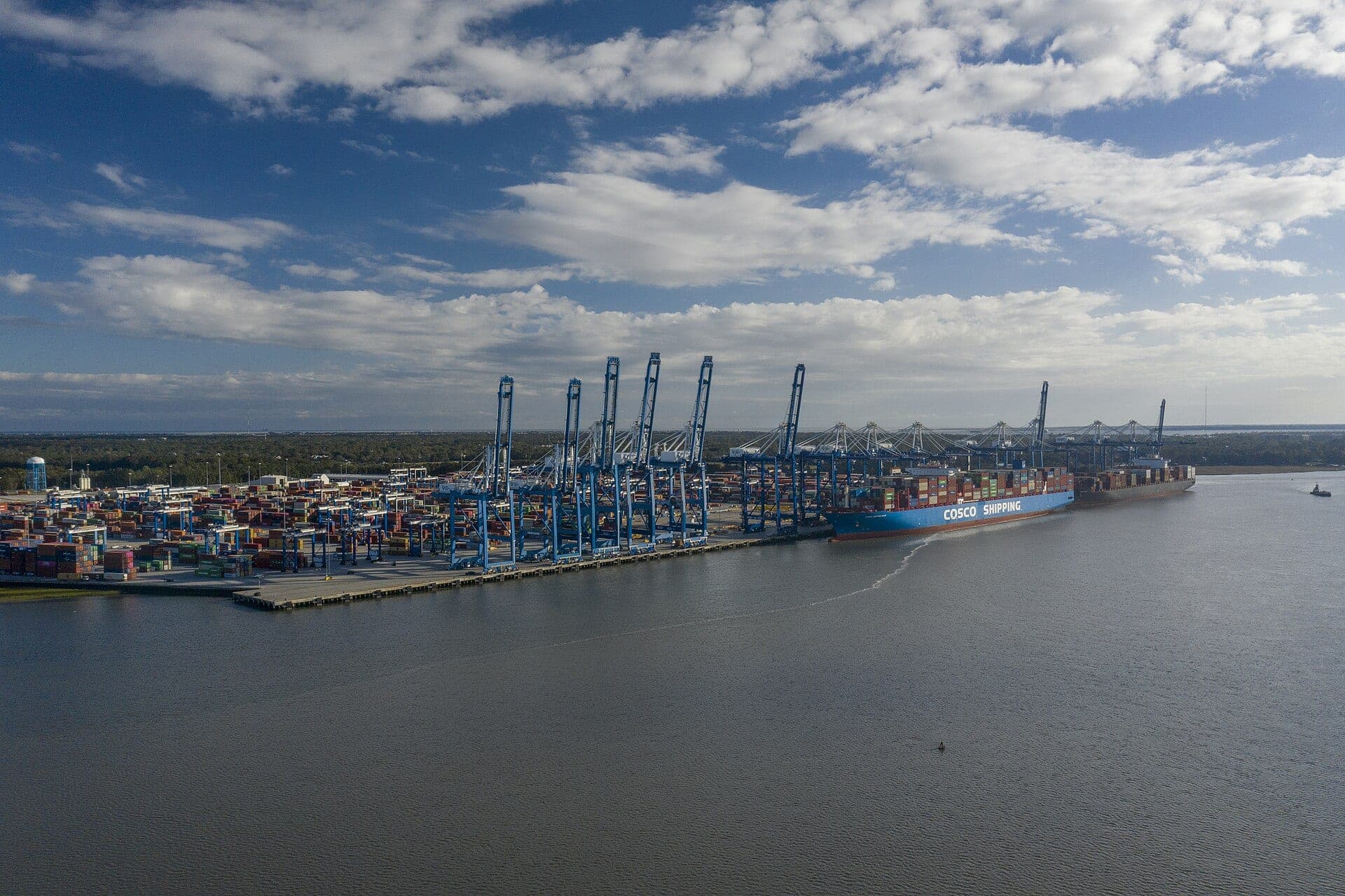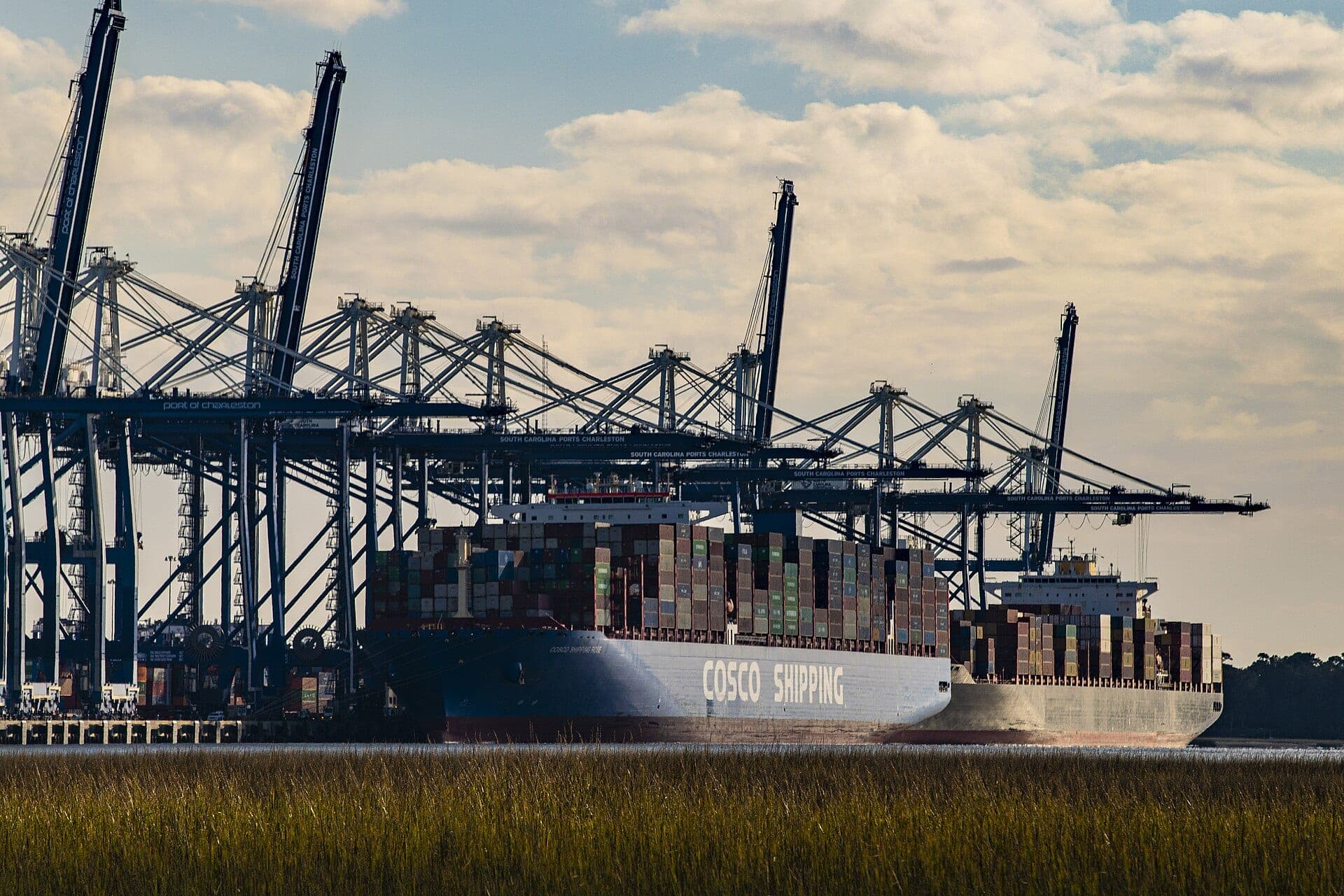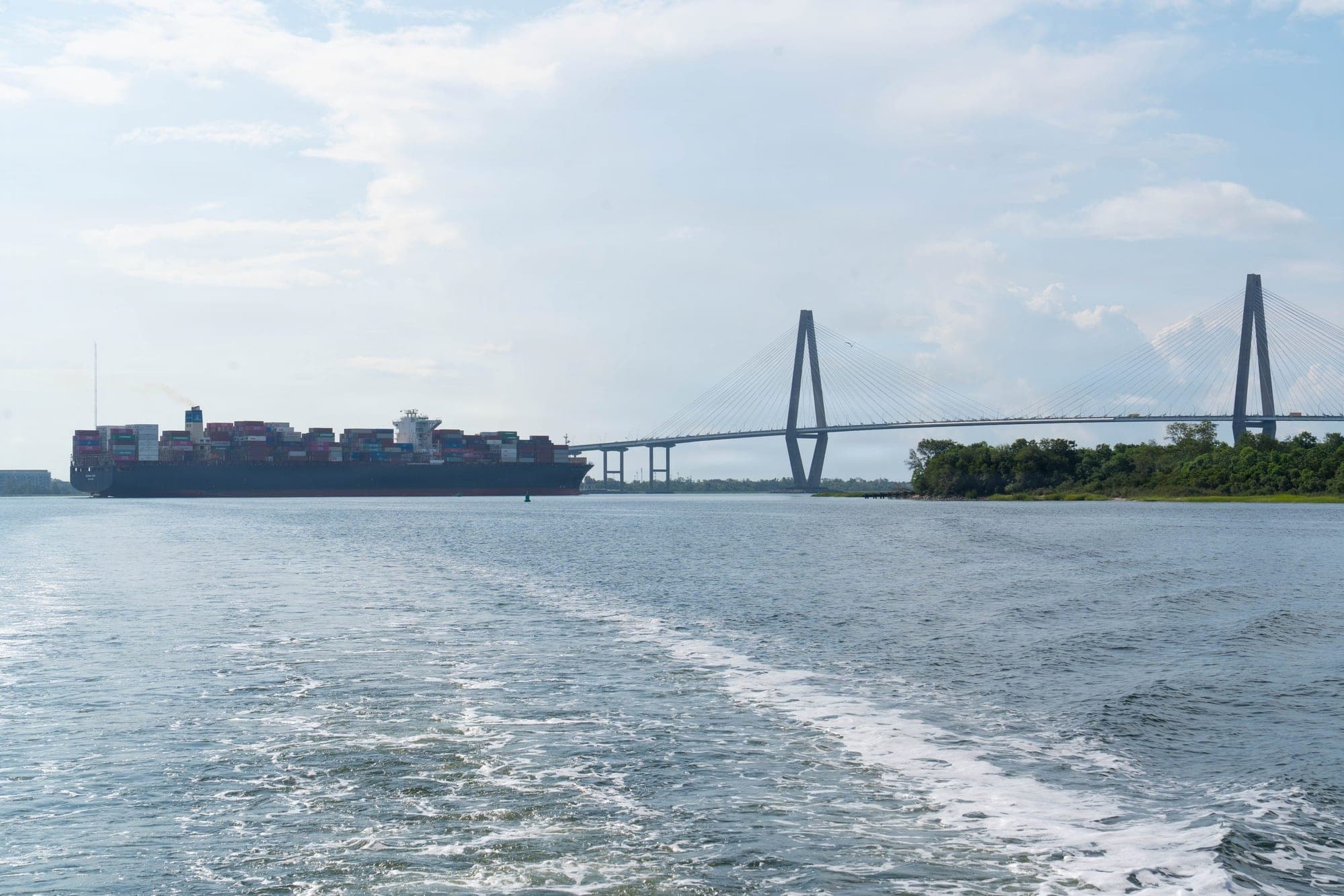
The South Carolina State Ports Authority, known as SC Ports, calls Charleston Harbor the deepest in the Southeast, at 52 feet. It does not stay that way on its own.
The lower harbor needs maintenance dredging every year, according to the U.S. Army Corps of Engineers. The current job belongs to The Dutra Group, a family-owned marine contractor based in San Rafael, California.
The Corps’ Charleston District awarded Dutra a $28,175,500 firm-fixed-price contract on July 28 to dredge the lower harbor, WorkBoat reported. Four companies bid. The full amount was obligated at the time of the award from fiscal 2026 operation and maintenance funds, and the estimated completion date is Sept. 29, 2027, according to the trade publication.
The Corps said Aug. 27 that dredging was scheduled to begin that month, with completion expected by fall 2027.
“Regular maintenance dredging is essential to the continued operability of Charleston Harbor’s vital navigation infrastructure,” Jacob Kyzar, a Corps project manager, said in the agency’s announcement.
What the job covers
The contract covers two turning basins and about 19 miles of channel, according to the Corps.
Dutra said it expects to remove about 4.2 million cubic yards of material from channel sections serving the port’s Wando Welch, Leatherman, North Charleston and Columbus Street terminals, WorkBoat reported. The work will return recently deepened channels to their authorized depths, the company said.
To speed things up, the contractor plans to run two mechanical dredges at the same time, the Corps said. Crews will load the dredged material into scows, or barges, and haul it to the Charleston Ocean Dredged Material Placement Site offshore.
That means dredging equipment will be working in the same channel as container ships. The Corps urged mariners to use extreme caution and monitor official radio channels for navigation updates. It said all project vessels must keep their Automatic Identification System transponders on, monitor VHF radio and display required navigation lights.
Why it matters to the port
Kyzar said the work keeps the harbor a reliable deep-water port that supports its defense mission and “its role as the fourth-busiest container port on the East Coast.”
The Corps counts Charleston Harbor among the nation’s 17 strategic ports.
The harbor was deepened to 52 feet in 2022, including up to the Wando Welch and Leatherman terminals, according to SC Ports. The channel to North Charleston Terminal is maintained at 48 feet. In August, the Corps and SC Ports signed an agreement to study deepening that last stretch.
Maintenance keeps the existing depths from slipping. The Charleston District received $37 million in fiscal 2026 to dredge the lower harbor and entrance channel and to maintain upland placement areas, WorkBoat reported. SC Ports is the project’s nonfederal sponsor.
A harbor on a schedule
The federal project the Corps maintains in Charleston includes more than 38 miles of channel, three turning basins, one anchorage basin and four dredged material placement areas, according to the agency.
Each part runs on its own clock. The lower harbor is dredged every year. The entrance channel is typically dredged every other year, and the upper harbor every 15 to 18 months, the Corps said.
Rethinking the timing
The Corps is also reviewing when that work can happen.
The Charleston District is preparing an environmental impact statement for the long-term operation and maintenance of the harbor, covering dredging, relocation trawling, bed leveling, surveying and the handling of dredged material, according to the district.
The review will look at changing the timing of dredging from fixed environmental windows to timing based on risk assessment and adaptive management, the Corps said. That stems from a 2020 regional biological opinion by the National Marine Fisheries Service that removed the old windows to balance risks to several threatened and endangered species.
The Corps expects the update to give it more flexibility, including in when dredging takes place. The study will not consider changes to the channel’s dimensions, the volume of material dredged or where it is placed, the district said.
The district held one in-person and two virtual public meetings in June. The public scoping period ended June 29. The Corps has said it will offer more chances to comment as the documents are developed, including a public comment period.
Who is doing the work
Dutra traces its history to 1904, when Antone Dutra began work on levees in California’s Sacramento-San Joaquin Delta, according to the company. It describes itself as a heavy civil marine construction firm that offers dredging, marine construction, ecological restoration and barged materials, and it works across the United States and the Pacific Rim.