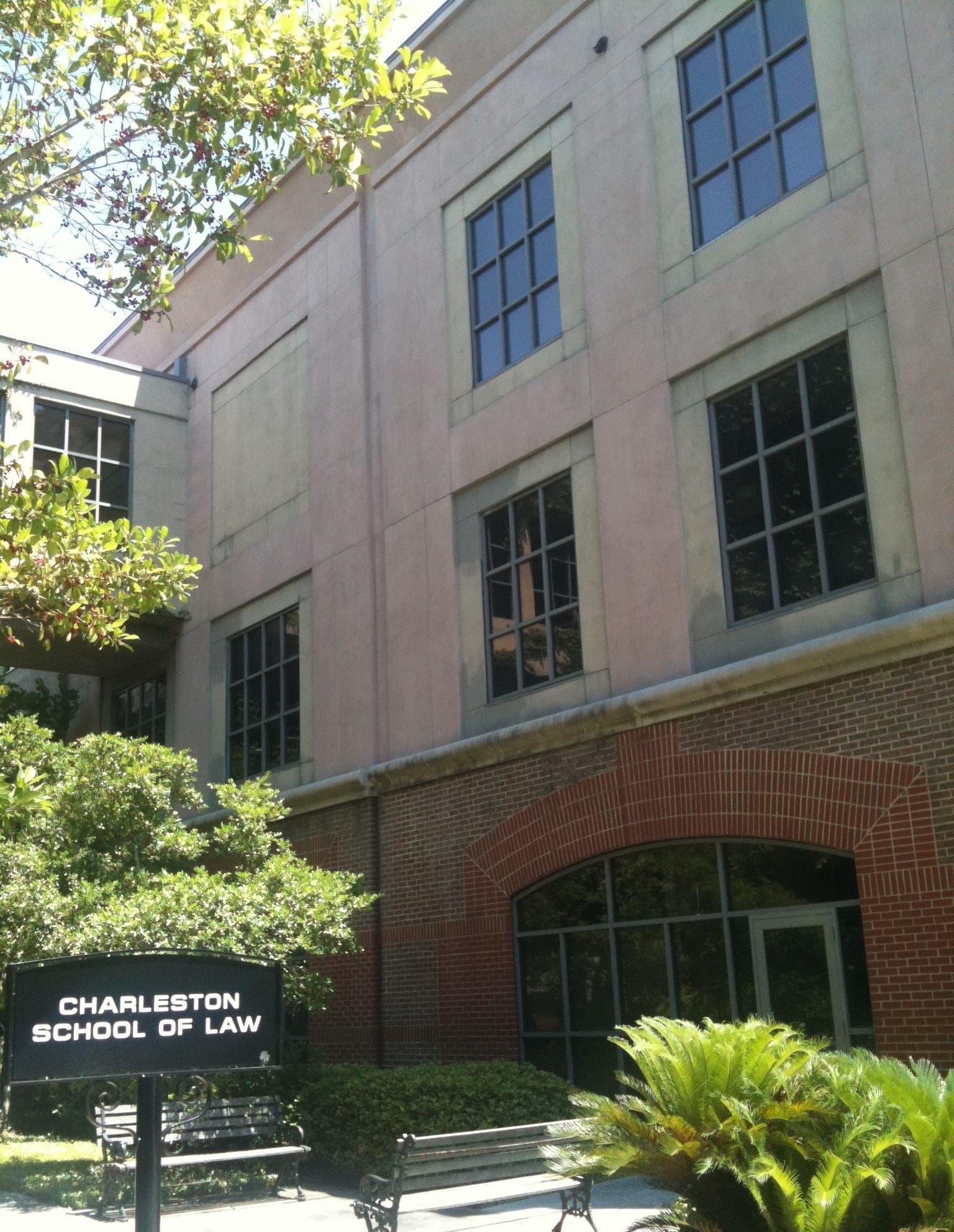
The Charleston School of Law has received full accreditation from the American Bar Association, the school announced late Friday afternoon.
The Council of the ABA’s Section of Legal Education and Admissions to the Bar approved the school’s application Aug. 4 at a meeting in Toronto, according to the school. The vote was not final until late Friday, the school said.
The Post and Courier called full accreditation a major milestone for the school, which a group of Charleston judges and lawyers founded in 2003. The school had held provisional approval from the ABA council since 2006, according to its website.
“In 2003, we began with a dream to create a second law school in South Carolina, a student-centered law school focused on service to the citizens of the state and region,” Dean Andy Abrams said in the school’s announcement. “With today’s decision by the ABA to grant full accreditation to the Charleston School of Law, this is no longer a dream, but a reality.”
Abrams credited the school’s founders, faculty, students, staff and alumni, along with lawyers and judges across the region.
“It has truly been a remarkable seven-year journey made possible by the incredible efforts of the founders, faculty, students, staff, alumni and Charleston community, and the lawyers and judges throughout this city, state and region,” he said.
What accreditation opens up
Full accreditation also lets the school look at new programs, The Post and Courier reported. Those include dual degrees with other Lowcountry colleges and universities, a master of laws degree in addition to its juris doctor, and study abroad options, according to the newspaper.
Alex Sanders, chairman of the school’s board of directors, said the school’s reach now extends well beyond the state.
“The impact of the Charleston School of Law is not just in Charleston and South Carolina, but increasingly throughout America. Eighty percent of the applications now come from outside of South Carolina,” Sanders said in the announcement.
Even so, about 40% of the school’s new students in recent years have come from South Carolina, according to the school.
“We are gratified that our success has been recognized by the American Bar Association,” Sanders said.
By the numbers
About 700 students are expected to be enrolled when classes begin Aug. 15, the school said. The entering class, which is scheduled to graduate in 2014, is expected to include 185 full-time and 50 part-time students. About 55% of the student body is male and 45% female.
The school has graduated 898 students since its first class received degrees in May 2007, an average of 184 a year, according to the school.
Students must donate at least 30 hours to public service projects to graduate, a requirement the school says few law schools in the country share. From 2006 through Aug. 2, students logged 95,394 hours of pro bono, or free, public service, the school said. From 2006 through May 1, they worked 66,286 hours in externships, which can earn students class credit for work at approved locations in the community, state and nation.
The school’s motto is Pro bono populi, Latin for “for the benefit of the people.”
Who started it
Several Charleston judges and attorneys began planning the school in 2002, according to its website. A year later, the S.C. Commission on Higher Education granted a license allowing it to begin accepting students in fall 2004.
Three of the founders serve as the school’s board of directors, according to the website:
- Sanders, the board chairman, a retired chief judge of the S.C. Court of Appeals and retired president of the College of Charleston
- Ralph C. McCullough II, the school’s managing director, a professor at the school and a distinguished professor emeritus at the University of South Carolina School of Law
- Edward J. Westbrook, an attorney with Richardson, Patrick, Westbrook & Brickman
Two other founders, Robert S. Carr and George C. Kosko, both retired U.S. magistrate judges for the District of South Carolina, serve on the school’s Board of Advisors, according to the website.
The school’s admissions office is on the first floor of the AT&T Building at 385 Meeting St., according to the school.