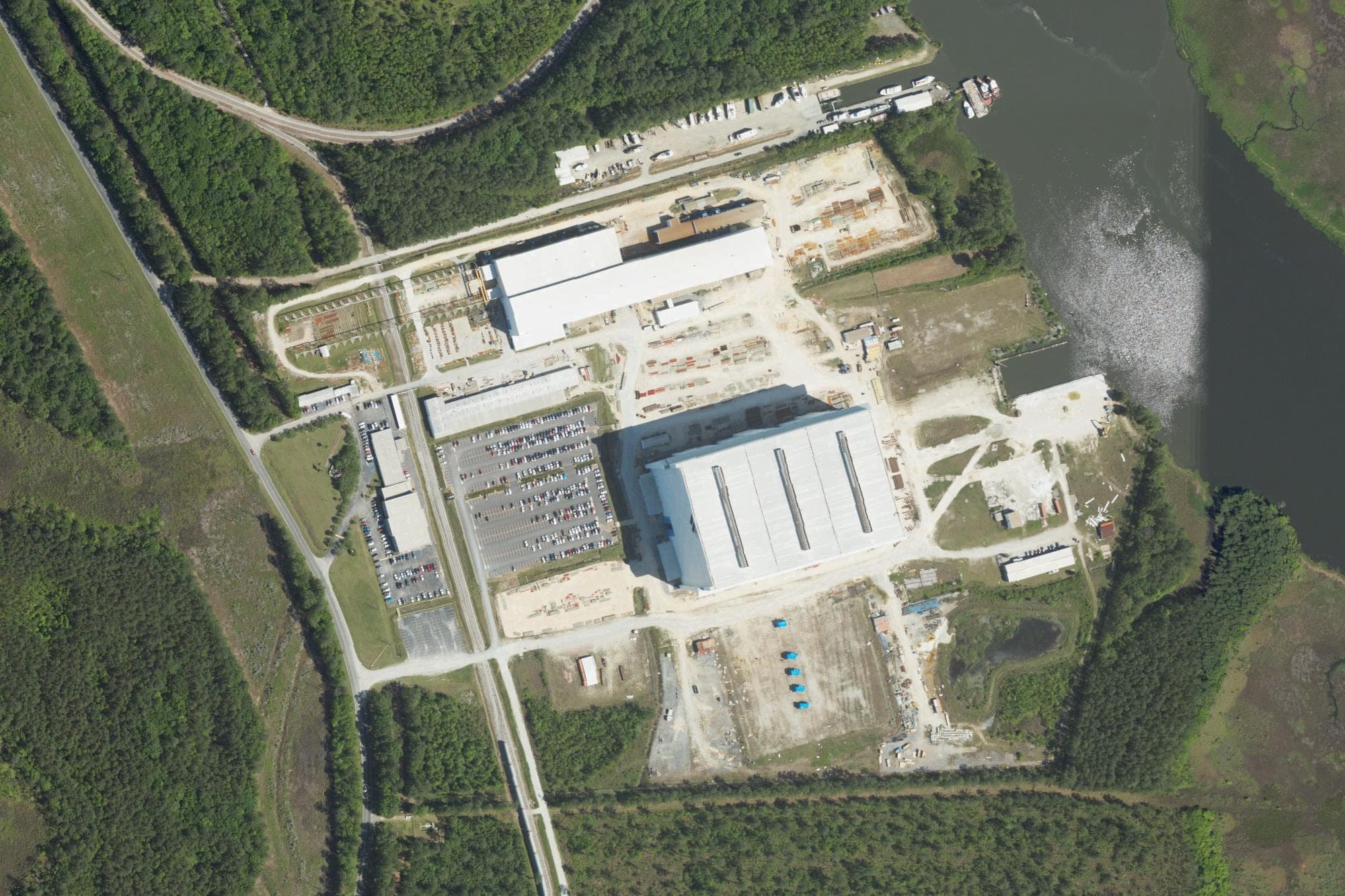
The Navy trains the sailors who run the reactors on its submarines and aircraft carriers at a complex in Goose Creek. Now it is paying $264 million to give that complex more room for simulators.
The builder is HITT Contracting, a national contractor based in Falls Church, Virginia, whose Charleston office sits on Daniel Island.
The Navy’s Southeast engineering command awarded HITT a $264,031,732 fixed-price-award-fee construction contract on Aug. 18 to expand the P200 nuclear power training facility simulation complex at Joint Base Lindsey Graham, according to the Pentagon’s Aug. 20 contract announcement and a release from the command, Naval Facilities Engineering Systems Command Southeast. The base was known as Joint Base Charleston until Aug. 10.
Work will take place in Berkeley County and is expected to be finished by April 2030, according to the announcement.
What the money buys
The project includes a high bay building to house large-scale training simulators and a multistory training support facility with simulation technology, production training space, staff offices, simulator maintenance areas, student support spaces and storage, NAVFAC Southeast said.
The contract also covers the site. HITT will build a mechanical building and an electrical substation with dedicated feeds and update electrical, municipal utility, sewer and telecommunication lines. The contractor will install secure network infrastructure, modern facility control systems and an overhead bridge crane inside the high bay. It will also raise road elevations and widen a local causeway, according to the command.
“This expansion represents a critical investment in our Navy’s infrastructure that directly supports the Foundry,” said Capt. Matthew Williams, NAVFAC Southeast’s commanding officer, in the release. “The new facilities will provide the warfighter with cutting-edge simulator environments and support systems necessary to maintain the highest standards of nuclear fleet readiness.”
Paid for in three pieces
The Navy is funding the job in increments from its military construction budget. It obligated $55,070,586 in fiscal 2026 money at award, according to the contract announcement. The next two pieces are $135,484,430 in fiscal 2027 funds and $73,476,716 in fiscal 2028 funds.
The contract also has 12 unexercised options. If the Navy uses all of them, the total would reach $274,312,160.
The Navy received two offers through SAM.gov and picked HITT on technical factors and price, which together offered the best value to the government, NAVFAC Southeast said.
In February, a NAVFAC Southeast contract specialist estimated the project’s cost at $250 million to $500 million, The Post and Courier reported. The newspaper reported then that construction was set to start in the fourth quarter of 2026 and finish in October 2029. The contract now sets April 2030 as the completion date.
Who trains there
The expansion supports the Naval Nuclear Power Training Command and the Nuclear Power Training Unit, according to NAVFAC Southeast. The two commands train Navy officers and enlisted sailors to operate, maintain and supervise the nuclear propulsion plants on submarines and aircraft carriers.
“There is a Nuclear Power Training Unit Charleston (NPTU CHS) where students train onboard moored training ships and using a suite of simulators,” Dennis Bourgault, the NAVFAC Southeast contract specialist, told The Post and Courier in February. The simulators themselves are being built by a separate team from the construction crew, the newspaper reported.
The Navy hired Kansas City, Missouri-based Burns & McDonnell in early 2024 to design the expansion under a $7,591,817 contract, Defense Daily reported. On its website, Burns & McDonnell says the project supports a long-range plan by the Naval Nuclear Propulsion Program to move to an all-simulation nuclear training program.
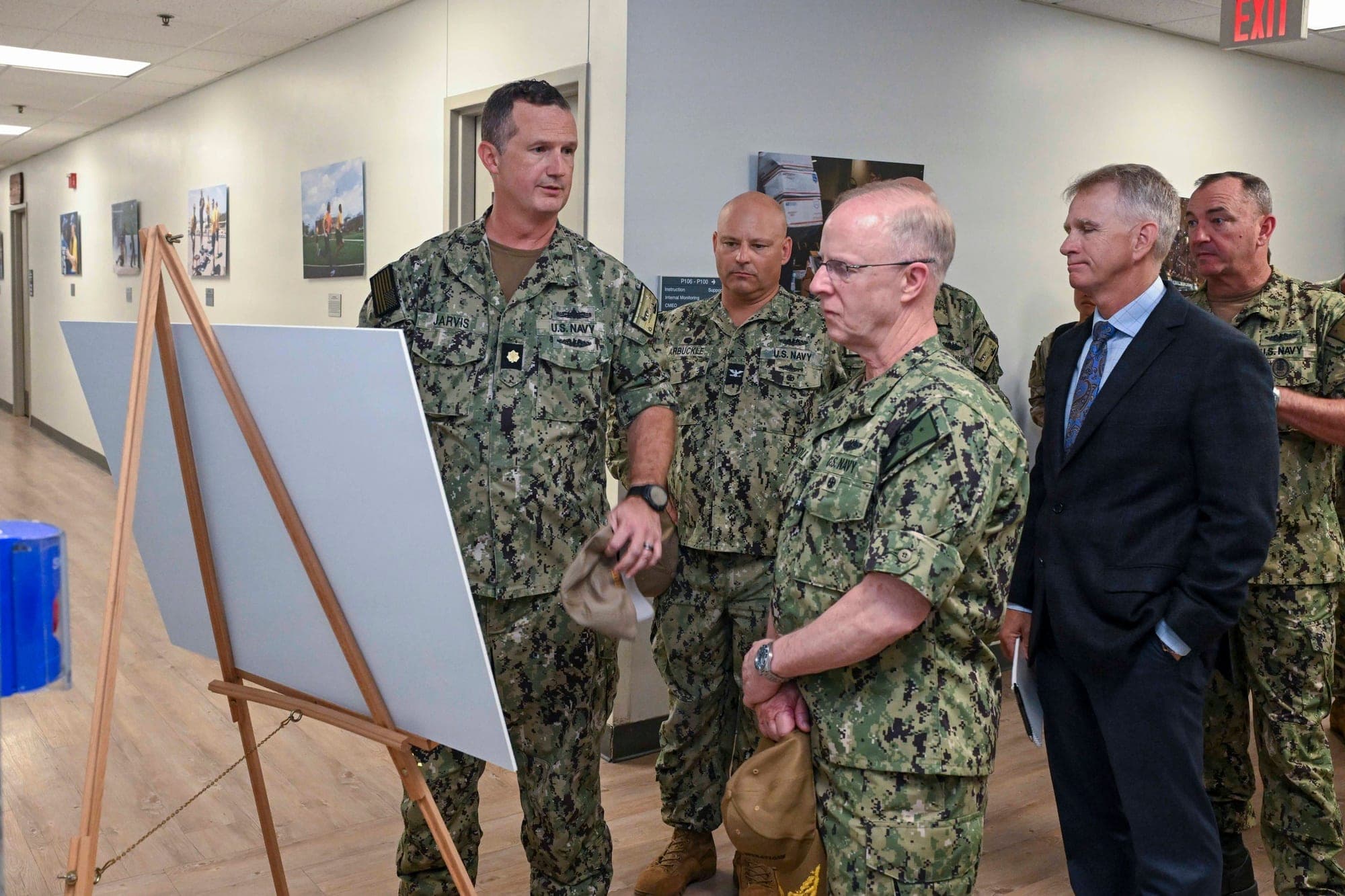
Chief of Naval Operations Adm. Daryl Caudle toured the training command Sept. 8. A Navy photo from the visit shows a staff member briefing him on site improvements.
What it means locally
The Post and Courier reported in February that it wasn’t clear how many jobs the construction or the finished simulator would create. The offices of U.S. Sen. Tim Scott and U.S. Rep. Nancy Mace could not provide an estimate, the newspaper reported.
“I’m pleased that the Senate passed a provision I championed in the NDAA to modernize the Navy’s nuclear propulsion training infrastructure by expanding advanced simulation capabilities,” Scott said in a statement to the newspaper.
HITT’s Charleston office has more than 30 people and works on industrial, office, mission-critical, higher education and government projects, according to the company’s website. HITT says it has been building in South Carolina for more than 20 years. The office lists Boeing South Carolina’s site expansion in North Charleston and the Volvo campus in Ridgeville among its local projects.
If the Navy’s schedule holds, the expanded simulator complex will be finished in April 2030.