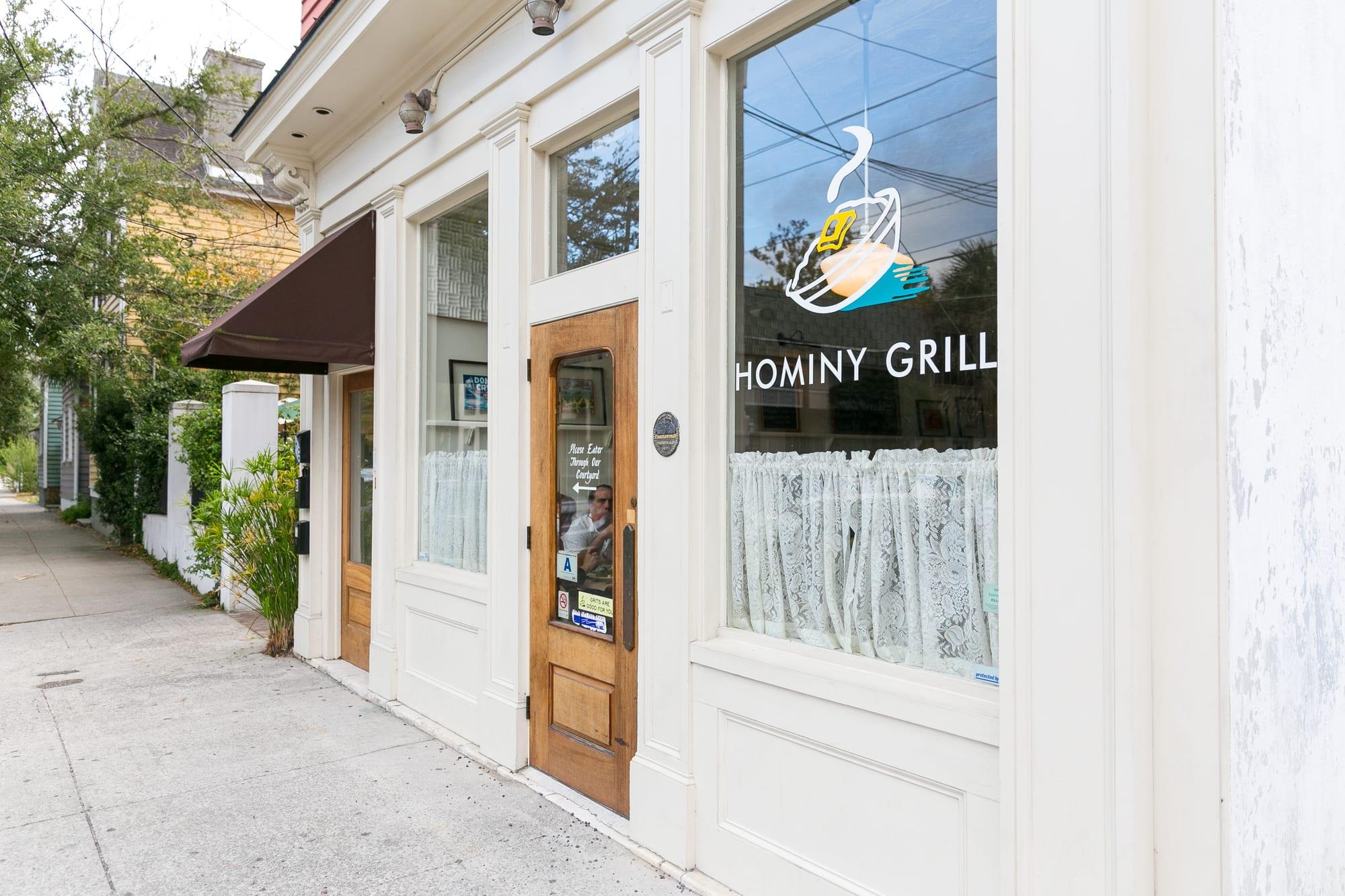
Hominy Grill, the Rutledge Avenue restaurant that drew national attention for its biscuits, tomato pudding and other Southern dishes, will close April 28 after nearly 24 years in business, owner Robert Stehling announced Monday.
Stehling told The Post and Courier the decision wasn’t driven by the rising cost of rent or the dwindling supply of workers, two reasons local restaurateurs often cite when they close restaurants that are still popular. Stehling owns the building at the corner of Rutledge and Cannon streets and has a loyal crew of employees, the newspaper reported.
“Things have a beginning, a middle and an end,” Stehling said. “I felt like at this point in my life, I would like to be open to new experiences.”
He planned to tell his employees Monday afternoon.
After more than two decades running the restaurant, Stehling is looking forward to developing new ventures in the coming months and spending more time with his family, according to the restaurant’s announcement, which Eater Charleston published. The announcement did not say what will become of the space.
Why not sell
Stehling considered selling Hominy Grill and decided against it, The Post and Courier reported.
“It’s complicated to sell something,” he said. “The process can be long and drawn out, and there are a lot of variables.”
Because he isn’t selling, Stehling won’t be bound by a noncompete agreement, so he is free to bring back favorite parts of the restaurant in another setting, according to the newspaper.
“The industry has changed so much in the past 25 years,” he said. “There are so many opportunities to do pop-ups and put your food in front of people without carrying the stressful burdens of insurance and staff.”
For now, he said, he isn’t anxious to jump into another project beyond seeing his daughter through her senior year of high school.
“I need to really decompress,” Stehling said. “I’ve got a few good years to have fun. I don’t want to make up my mind yet.”
Stehling said the tight labor market works in his employees’ favor, since he doesn’t expect any of them to be out of work for long. He hasn’t planned anything elaborate for the final weeks and described the closing as a “strategic retreat,” The Post and Courier reported.
He is bracing for a rush of farewell visits.
“I’m trying to make as much sausage gravy as I can,” he said.
A long run
Stehling, a North Carolina native, learned to cook under chef Bill Neal at Crook’s Corner in Chapel Hill and spent several years cooking in New York City, according to the announcement. He moved to Charleston so Nunally Kersh, now his wife, could run the Spoleto Festival, The Post and Courier reported.
He opened Hominy Grill in 1996 in a former barbershop in a historic single house, according to the announcement. The restaurant became known for straightforward versions of classic Lowcountry dishes and for a fried chicken breakfast sandwich, the Charleston Nasty, that Stehling developed as a nod to a Hardee’s biscuit his mechanic liked.
Not everyone was won over at first. In 1997, The Post and Courier mocked the restaurant for listing macaroni and cheese, candied yams and grits as vegetables, the newspaper noted Monday.
“When you’re born and raised somewhere, you want stuff from outside to come in and validate you,” Stehling said.
Outside validation came. In 2000, New York Times correspondent Johnny Apple wrote that Hominy’s breakfasts “may well be the best breakfasts in the Carolinas, which means some of the best in America.” Two years later, Stehling’s bacon-roasted turkey was on the cover of Food & Wine magazine’s Thanksgiving issue, according to The Post and Courier.
In 2008, Stehling won the James Beard Foundation’s award for Best Chef Southeast, a win that cemented Hominy Grill’s reputation as one of Charleston’s most acclaimed restaurants, according to the announcement. In 2015, Eater critic Bill Addison named it to his first list of the nation’s 38 essential restaurants, the newspaper reported.
Stehling said he wanted the restaurant to earn respect for Southern cooking.
“The food at Hominy made people look at their food, and think, ‘The food I grew up with stands up with French cuisine and Italian cuisine,’” he said.