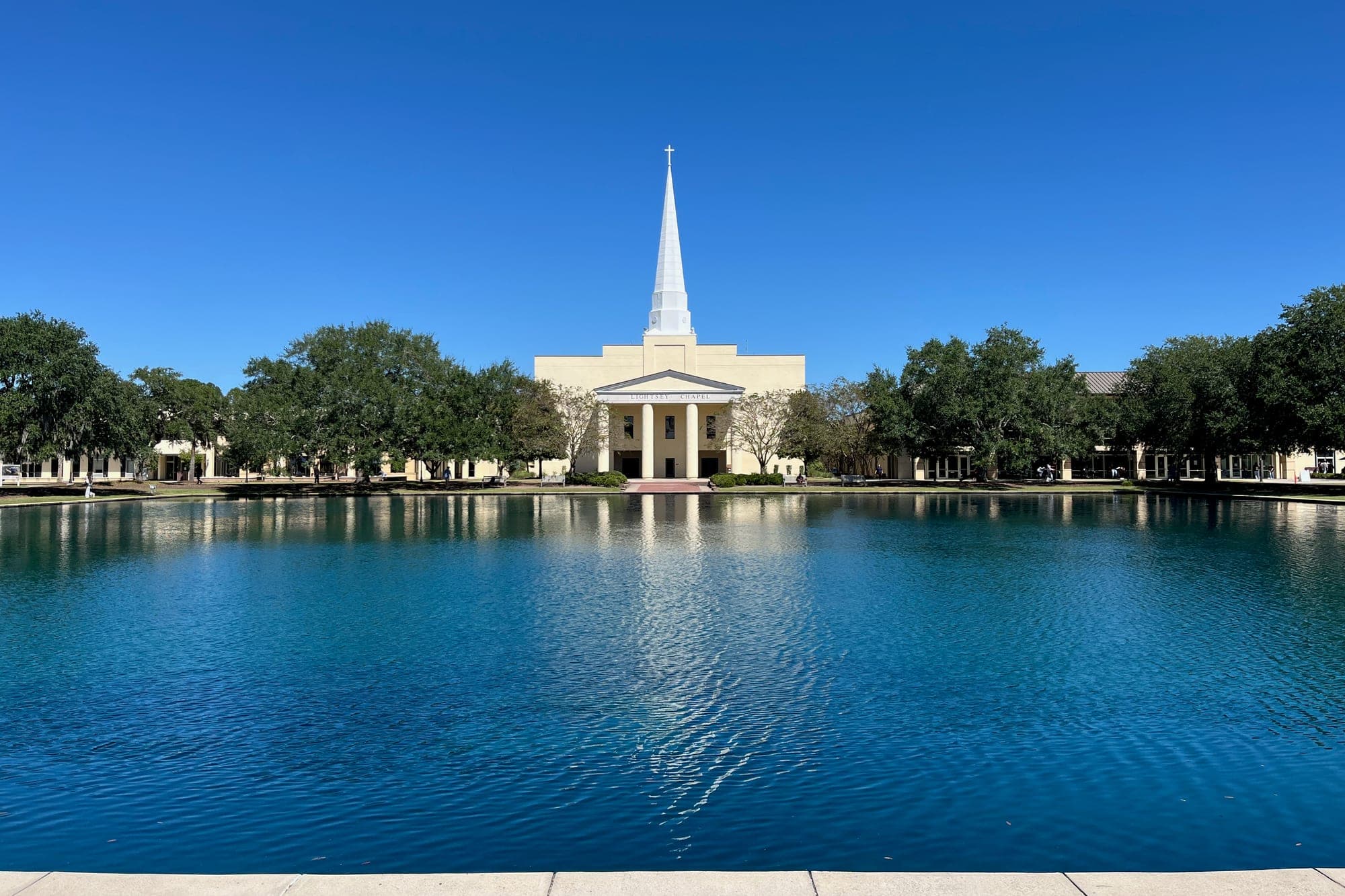
Charleston Southern University’s aeronautics program started in 2021 with 19 students and one full-time faculty member, according to the university.
Lloyd Richardson now runs a department that the university says has 216 students and faculty, a flight school of its own and, as of September, $1.25 million in new federal money to train more pilots and air traffic controllers.
Richardson, a U.S. Air Force veteran, chairs the aeronautics department at the North Charleston university. The school calls it South Carolina’s only collegiate flight training program. Winthrop University in Rock Hill plans a degree that would also train pilots, but its website says that program is still under review by the Federal Aviation Administration, with a launch hoped for by fall 2027.
The university announced Sept. 15 that the U.S. Department of Education had awarded the program $1.25 million for equipment. The list includes modernized flight simulators, air traffic control tower simulators, a multi-engine Redbird flight simulator, two commercial-grade drones, a mobile aircraft maintenance trailer and a temporary mobile office at Berkeley County Airport. The university said the equipment has already raised its capacity to enroll student pilots by 10%.
“Ultimately, this investment allows us to keep the costs down for our students,” Richardson said in the announcement. “We are thankful for this congressional support that gives aspiring aviators greater access to collegiate flight training when the industry demands highly trained professionals.”
The university credited the late U.S. Sen. Lindsey Graham as a strong advocate for the program.
Richardson did not start the program. Its founding chair was retired Air Force Col. Christopher “C.J.” Will, a combat pilot and former commander of The Citadel’s Air Force ROTC program, according to the university. Charleston Southern kicked off its professional pilot degree with a ribbon cutting at Summerville Airport in August 2021.
By October 2022, Richardson was the program’s interim chair and its chief instructor. That month the university announced the program was officially a Part 141 pilot school under FAA rules. To get there, Richardson explained, a provisional school must graduate 10 students from an approved course with a pass rate of 80% or higher. He said the program’s written pass rate was 94.74% and its recordkeeping was graded at 100%.
“God is doing such marvelous work here at CSU that I am humbled and grateful for the opportunity to cross the threshold of my office every morning,” Richardson said at the time.
Graduates of the FAA-approved degree can qualify for a restricted airline transport pilot certificate at 1,000 or 1,250 flight hours instead of the usual 1,500, the university said.
The program has since added pieces quickly. In February 2025, Charleston Southern bought Chucktown Flight Training, doing business as Carolina Sky Flight Training, a Summerville flight school it had partnered with since 2021. The university said enrollment had grown 33% year over year.
“This is truly a thrilling time for CSU Aeronautics,” Richardson said when the purchase was announced. “The program reflects the growing need for quality education in the aerospace industry.”
At a May 2025 ribbon cutting for the flight school at Summerville Airport, Dorchester County Council Chairman David Chinnis said the county had recently invested $4.8 million in the airport, according to the university. Richardson said the faculty had committed to safety in all it does.
“CSU creates men and women of character and attracts men and women of character,” he said.
In September 2025 the university finished space for the program in its Aeronautics and Engineering building, including a flight simulation lab. “Under Richardson’s leadership, the program has grown from 19 students to 200,” the university wrote. Elliott Summey, who runs Charleston International Airport, told the crowd that “Charleston Southern University saw a need and turned it into a reality.”
The faculty now includes four Air Force combat pilot veterans, an Air Force air traffic controller and a Marine Corps veteran, according to the university.
This year the department added an air traffic management degree, which the university says is South Carolina’s first FAA-recognized Standard AT-CTI pathway. It also offers degrees in professional piloting, aerospace management and aviation maintenance management, the last through a partnership with Trident Technical College.
The demand is there, the university argues. It cites federal projections of more than 16,400 job openings a year for airline and commercial pilots over the next decade and an FAA plan to hire 12,563 air traffic controllers from 2026 through 2028.
Richardson has said more is coming. “In the future, expect to see program additions and expansions as CSU Aeronautics leads the way in collegiate flight training in South Carolina,” he said last year.