Maersk Line is staying in Charleston after all.
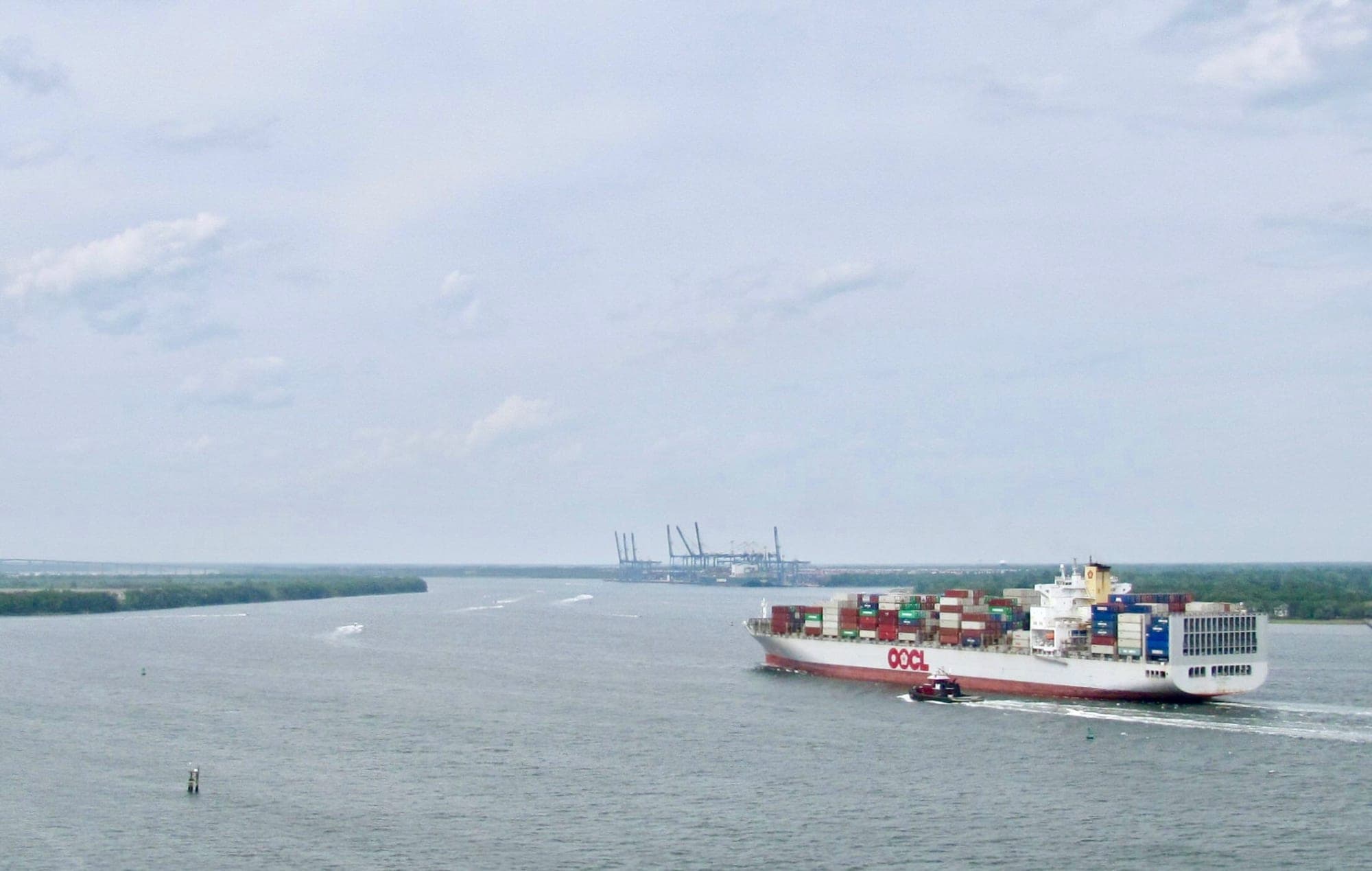
The Danish container carrier said Thursday that it has reached an agreement with the South Carolina State Ports Authority to keep its services at the Port of Charleston beyond the end of its current contract, which expires in 2010. The new contract runs through Dec. 31, 2014, according to the authority and the carrier.
Jim Newsome, the authority’s president and CEO, announced the deal Thursday night in his first State of the Port address to members of the Propeller Club. The news drew a standing ovation from more than 550 people gathered at the port’s Passenger Terminal, the authority said.
“Maersk Line is the largest line in the world, having 15 percent of the world’s market share,” Newsome said, according to the authority. “I cannot imagine running a major port without having Maersk as a prominent customer. The good news is that we will not have to.”
Maersk has had a presence at the Port of Charleston for more than 50 years, the authority said.
What the new deal does
The agreement ends several months of negotiations and reverses the decision Maersk announced late last year to leave Charleston, the carrier said.
It “places Maersk Line’s cost structure in Charleston on a level playing field with other ocean carriers who use the port,” Maersk said in a statement reported by FreightWaves. Under the deal, Maersk will offer its services from a smaller, dedicated portion of the authority’s Wando Welch Terminal, the carrier said.
“We have worked closely with the leadership of the South Carolina State Ports Authority since we initially voiced our concern about cost competitiveness for Maersk Line within the Port of Charleston,” Gordon Dorsey, senior vice president of operations for Maersk Line in North America, said in the statement, according to WCSC Live 5 News. “We are pleased to have reached an agreeable solution for both Maersk Line and the Port of Charleston.”
Why Maersk planned to go
In December 2008, Maersk told the authority it would leave Charleston and hand back its dedicated terminal no later than Dec. 31, 2010, when its contract ends, according to the carrier’s announcement as published by Professional Mariner. It said it would move one service, the South Atlantic Express, which made up roughly 25% of its Charleston port calls, to other nearby ports in early 2009, with the rest of its services to follow over two years.
“Bearing the cost disadvantage between our situation in the Port of Charleston and that of our competitors in the common yard is unsustainable,” Maersk spokesperson Dana Magliola said then.
Maersk said the authority had offered a workable solution that involved moving the carrier into the port’s common yard, but that the move needed the consent of the local International Longshoremen’s Association.
“The local ILA refused to consent, and so we are forced to move,” Magliola said in December.
The authority has said Maersk approached it last year seeking to cut operating costs, FreightWaves reported. The authority offered to let the carrier either shrink its footprint at its terminal and turn back some equipment, or move to a common-use area where state employees, rather than ILA members, perform stevedoring work. The ILA rejected that change, saying it was being asked to give up jurisdiction under its contract and had not been brought into the negotiations, according to FreightWaves.
Maersk’s plan to leave was followed in January by the resignation of Bernard S. Groseclose Jr., then the authority’s president and CEO, who had faced criticism that Charleston was losing ground to East Coast competitors, especially Savannah, FreightWaves reported.
A new CEO’s pitch
Newsome took over Sept. 1 after serving as president of Hapag-Lloyd (America) Inc., the authority said when it hired him in June. He is only the fifth leader in the authority’s 67-year history.
In his address, Newsome said the authority is committed to building volume at the ports of Charleston and Georgetown and will market the port’s deep water, productivity and the dedication of the local maritime community more aggressively, according to the authority.
“Today we can handle two-way vessel traffic at up to 48 feet of draft with the tides,” he said, according to the authority. “This will today accommodate every ship that calls an East Coast port.”
He also pointed to the expansion of the Panama Canal, due in 2014, which he said will bring ships carrying up to 9,000 20-foot equivalent units, or TEUs, to East Coast ports.
The text of his remarks posted by the authority shows he did not play down the port’s slump. He told the audience that Charleston’s container volumes were at 2000 levels and that the port had not been as competitive as it needed to be in keeping existing business and attracting new business.
Newsome thanked the authority’s employees and the local maritime community for their support during his first seven weeks on the job.
“The port business is a team, not an individual sport, and the success we will have will be ours collectively,” he said. “The best years of this great port are ahead of us.”