The Medical University of South Carolina wants artificial intelligence to help find children at risk of suicide before a crisis.
With a three-year, $1.23 million grant from The Duke Endowment, MUSC researchers plan to build AI models that look for patterns of suicide risk in young people, the university announced Aug. 27. The models will draw on electronic health records from medical organizations whose systems don’t communicate with one another, data from the South Carolina Office of Mental Health and basic school information, including attendance, from the PowerSchool student information system, according to MUSC.
“Through this innovative approach, we are reimagining how we deliver early identification and intervention, with the ultimate goal of improving youth mental health outcomes,” said Dr. Jihad Obeid, the project’s principal investigator and MUSC’s assistant vice president for research, AI strategy and research intelligence.
The team plans to build the models without direct identifiers and keep the data in secure environments, MUSC said. The first year is set aside for school district and health system partnerships, approvals and data-sharing agreements. Model building comes in the second year, and evaluation and statewide sharing of results in the third.
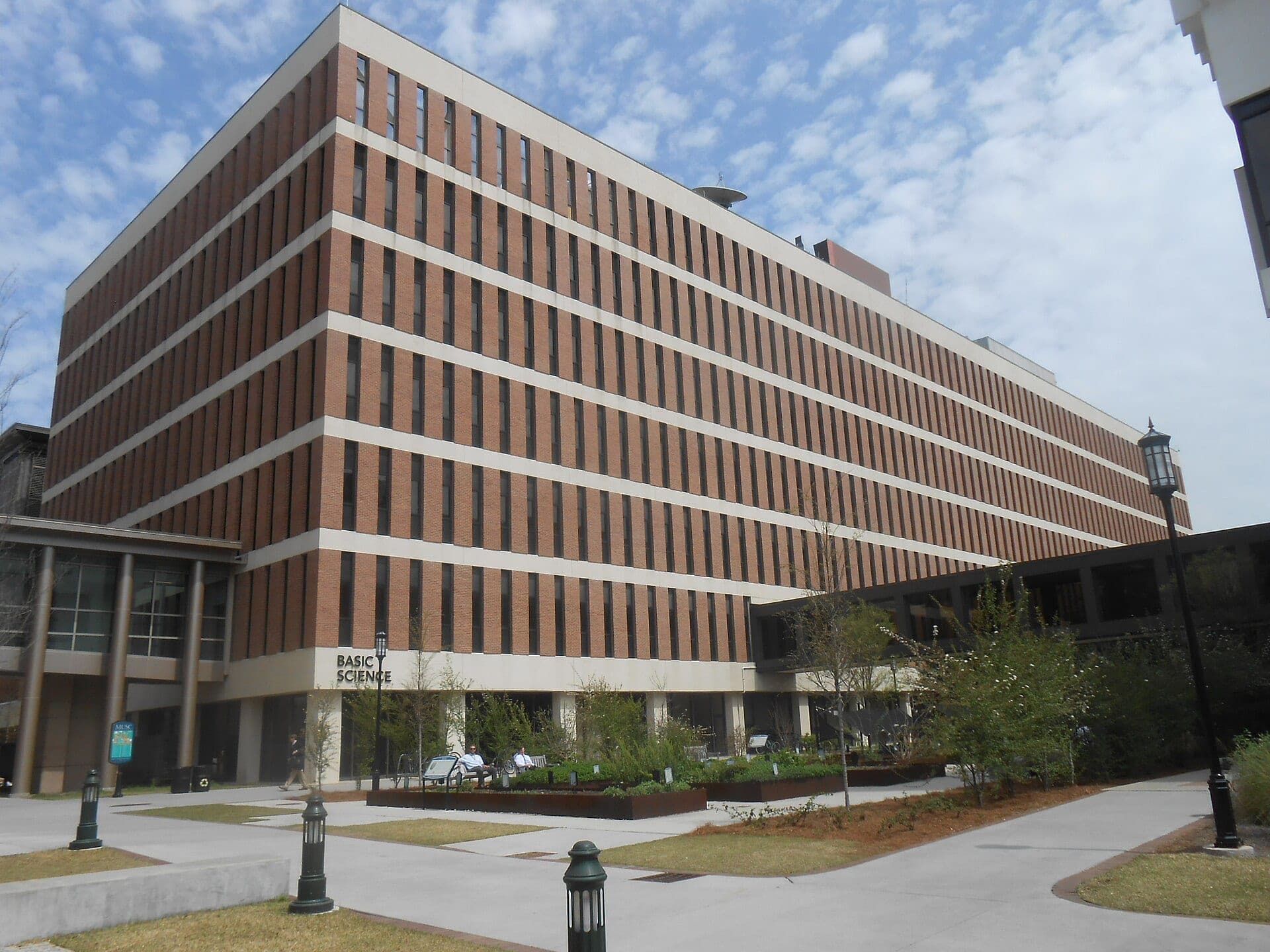
The grant is one piece of a broader AI push at MUSC, the state’s only comprehensive academic health system. It counts more than 36,200 members and a $10.1 billion annual operating budget, according to the university.
A chief AI officer
In August 2025, MUSC named Marylyn Ritchie its first chief artificial intelligence officer, effective Nov. 3. She came from the University of Pennsylvania’s Perelman School of Medicine, where she was vice dean of artificial intelligence and computing, MUSC said. MUSC said she would also lead its Center for Artificial Intelligence and a College of Medicine division focused on computational health sciences and AI.
The university has set two AI goals, according to a Sept. 11 MUSC article. The first is to pioneer changes in health care delivery, research and education through AI. The second is to build an AI-competent workforce.
Research money
In July, MUSC announced the grant recipients of the Southeastern Health AI Consortium, a collaboration with the University of Florida whose projects are backed by $6.6 million in funding, according to MUSC. An earlier call for proposals posted by the University of Florida cited $2.5 million in allocated research dollars. The consortium offers up to $400,000 over two years to each of six teams that pair researchers from both schools, and up to $100,000 in one-year seed money to two more. Funded work spans mental health, maternal health, stroke, brain health and advanced therapies, and every project includes an AI component or lays groundwork for one, MUSC said.
“Meaningful use of AI is defined by its ability to produce actionable insights that improve clinical outcomes, operational efficiency or population health,” Ritchie said in MUSC’s announcement.
The university also points to a joint AI hub with Clemson University among its AI efforts, according to an MUSC article in August.
Rules for the classroom
On the education side, MUSC has adopted an AI Acceptable Use Framework for Academic Tasks, according to the Sept. 11 article. The framework document itself lists a last-updated date of July 8, 2025. It sorts coursework into five categories, from “No AI” for exams and skills evaluations to “AI exploration,” in which students must use AI to explore its role in health care. Every category except the first can require students to document how they used AI, for example by turning in a log of their AI interactions.
All new students take a course called AI at MUSC, and employees have access to AI literacy training, the university said.
“Students want clearer guidance about AI use,” said E’lise Nissen, MUSC’s director of AI in education and scholarship.
Schools as a data source
The suicide-risk project builds on MUSC’s work in schools. MUSC started behavioral health services in 23 schools in 2023, according to the university.
“We are now in close to 150 schools with almost 20 therapists and a few child psychiatrists working within this service,” said Dr. LalithKumar Solai, vice chair for clinical services in MUSC’s Department of Psychiatry and Behavioral Sciences.
“This project builds on MUSC’s leadership in school-based youth mental health and has the potential to transform how we use data and AI to identify risks earlier, intervene sooner and improve outcomes for young people across the Carolinas,” said Stacy Warren, associate director of The Duke Endowment’s Health Care program.
What comes next
MUSC said in September that it is developing a governance structure to keep its AI adoption in line with its mission as the technology changes. In August, it announced that its clinical and translational research institute and its AI center would co-host a statewide AI retreat on Sept. 25 on the Charleston campus, chaired by Ritchie, with talks from recipients of the newly awarded consortium grants.