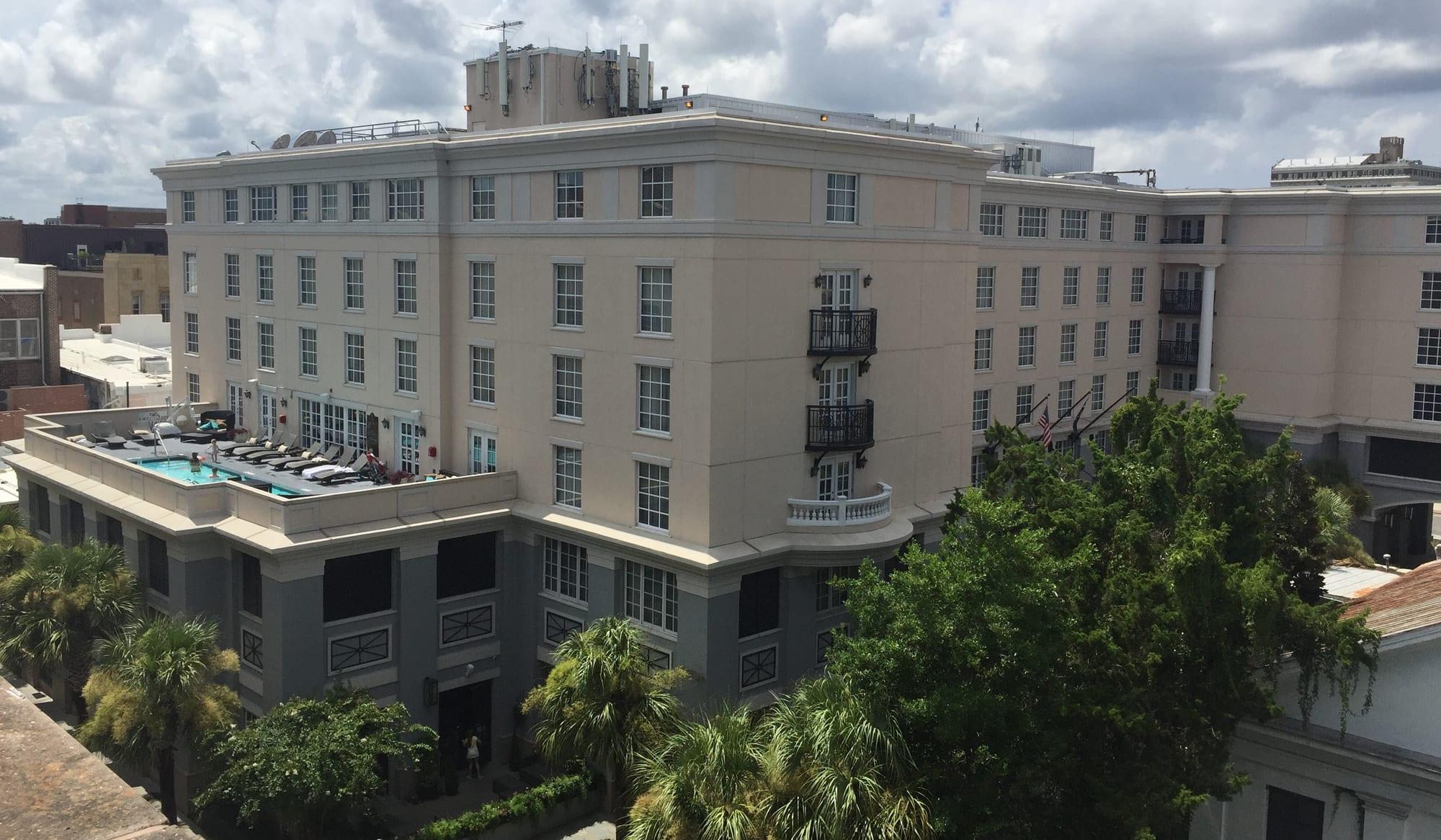
DiamondRock Hospitality Co. has completed its purchase of the 166-room Renaissance Charleston Historic District Hotel for a contractual price of $39 million, the company said Monday.
The Bethesda, Maryland-based real estate investment trust paid with cash it already had, according to its announcement. It put its total investment at $40 million, slightly less than 11 times the roughly $3.7 million in earnings before interest, taxes, depreciation and amortization it expects the hotel to produce over the next 12 months.
The hotel, at 68 Wentworth St., is managed by a subsidiary of Marriott International Inc. The manager projects that revenue per available room will grow more than 8% this year, DiamondRock said.
DiamondRock found the deal through its strategic sourcing relationship with Marriott. When it disclosed the purchase agreement in July, the company called it an “off market” acquisition and said the contract was signed July 1.
“We are pleased to leverage our Marriott strategic sourcing relationship to acquire a well-positioned asset in a high barrier-to-entry destination location at an attractive purchase price,” Chief Executive Officer Mark W. Brugger said Monday. “The Hotel is positioned to benefit from general economic recovery plus several exciting market-specific demand generators such as the expansion of the Boeing plant and the addition of new routes by Southwest Airlines.”
In July, the company laid out its case for Charleston. It cited Boeing’s October 2009 choice of the area for its second 787 Dreamliner production plant, which DiamondRock said is expected to employ almost 4,000 people. It noted that Southwest announced in May that it will begin serving Charleston International Airport within 12 months. And it pointed to an estimated 70 cruise ships in Charleston this year, more than double the 2009 level.
DiamondRock said Charleston draws about 4 million visitors a year who generate $2.8 billion in tourism revenue.
With the purchase, DiamondRock owns 22 hotels with almost 10,600 rooms, the company said. It also announced Monday that it had closed a $200 million unsecured revolving credit facility.