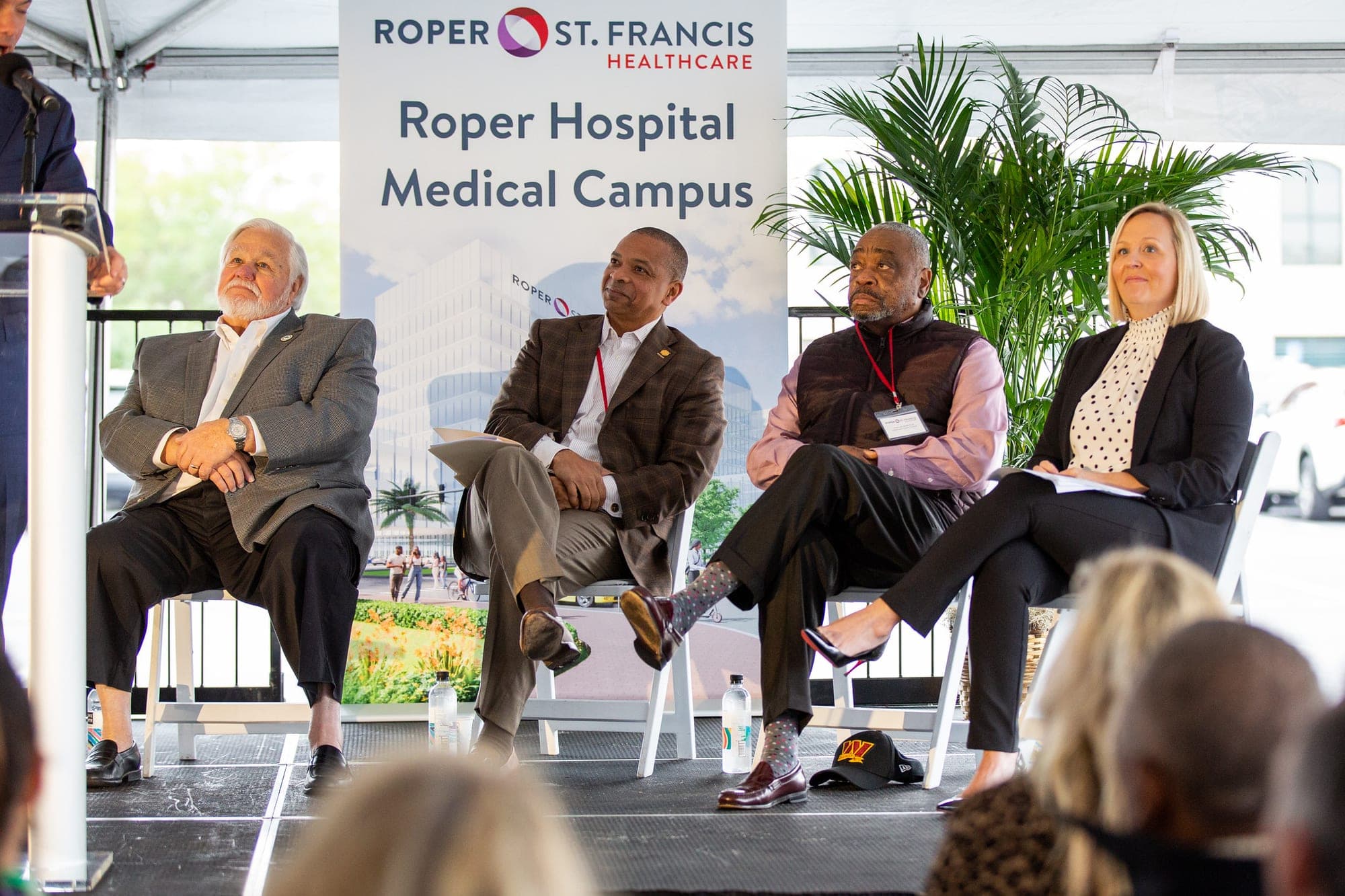
Steel is climbing on a 27-acre site near North Charleston City Hall, where Roper St. Francis Healthcare is building a $1.2 billion campus to replace its downtown Charleston hospital.
On Oct. 1, the health system also launched a much smaller facility with a similar goal: a nearly 40-foot mobile clinic built to reach people who have trouble getting to a hospital or doctor’s office at all.
Roper President and CEO Joseph DeLeon tied the clinic to the system’s long-range plan. The unit “is another way we are advancing our 2030 Strategic Plan and optimizing our footprint to expand access to quality care,” he said, according to ABC News 4.
The hospital goes vertical
Crews from the Barton Malow and Edifice joint venture had begun structural steel work by late April, according to an April 29 announcement from the contractors.
By mid-July, workers were roughly a third of the way through the hospital’s structural steel framing, which was expected to be finished by November, the Post and Courier reported. Chris Socha, the joint venture’s project team leader, told the newspaper that the crane on the site is the tallest in the state.
“Starting to see the site go vertical is exciting to us,” Troy Powell, a chief operating officer at Roper St. Francis, told North Charleston City Council in June, according to the Post and Courier.
The campus will have 328 inpatient beds, a 47-bay emergency department, 44 critical care beds, 18 operating rooms, an imaging department and a 12-bay dialysis unit, according to the contractors. They describe 805,000 square feet of health care space. The Post and Courier has put the 10-story hospital at 880,000 square feet.
E4H Environments for Health Architecture and Skidmore, Owings & Merrill designed the campus. The contractors said the team has had to work around complex seismic conditions, Federal Aviation Administration height restrictions and a high water table.
The building sits on more than 4,300 pilings that reach about 60 feet down, and it is designed to withstand a 500-year flood, the Post and Courier reported in February. That is a contrast with the current downtown hospital, where heavy rain or a big high tide can flood the area around the emergency department and force ambulances to go elsewhere, Charles Fletcher, Roper’s vice president of construction, real estate and support services, told the newspaper.
A date that has not moved
The opening target is June 2029. Fletcher said Roper had not adjusted that date since the project began, “and we’re not going to,” the Post and Courier reported.
At the peak of construction, as many as 1,000 people a day could be working on the site, superintendent Joey Weir told the newspaper. The Post and Courier has reported an anticipated $2.5 billion economic impact from the construction.
Roper also plans a medical office building and a greenway along Mall Drive, and Fletcher said the project is already encouraging plans for apartments on nearby land, the newspaper reported.
What happens downtown
Roper Hospital has operated in downtown Charleston since 1856, and the North Charleston building will be its fourth location, according to the contractors.
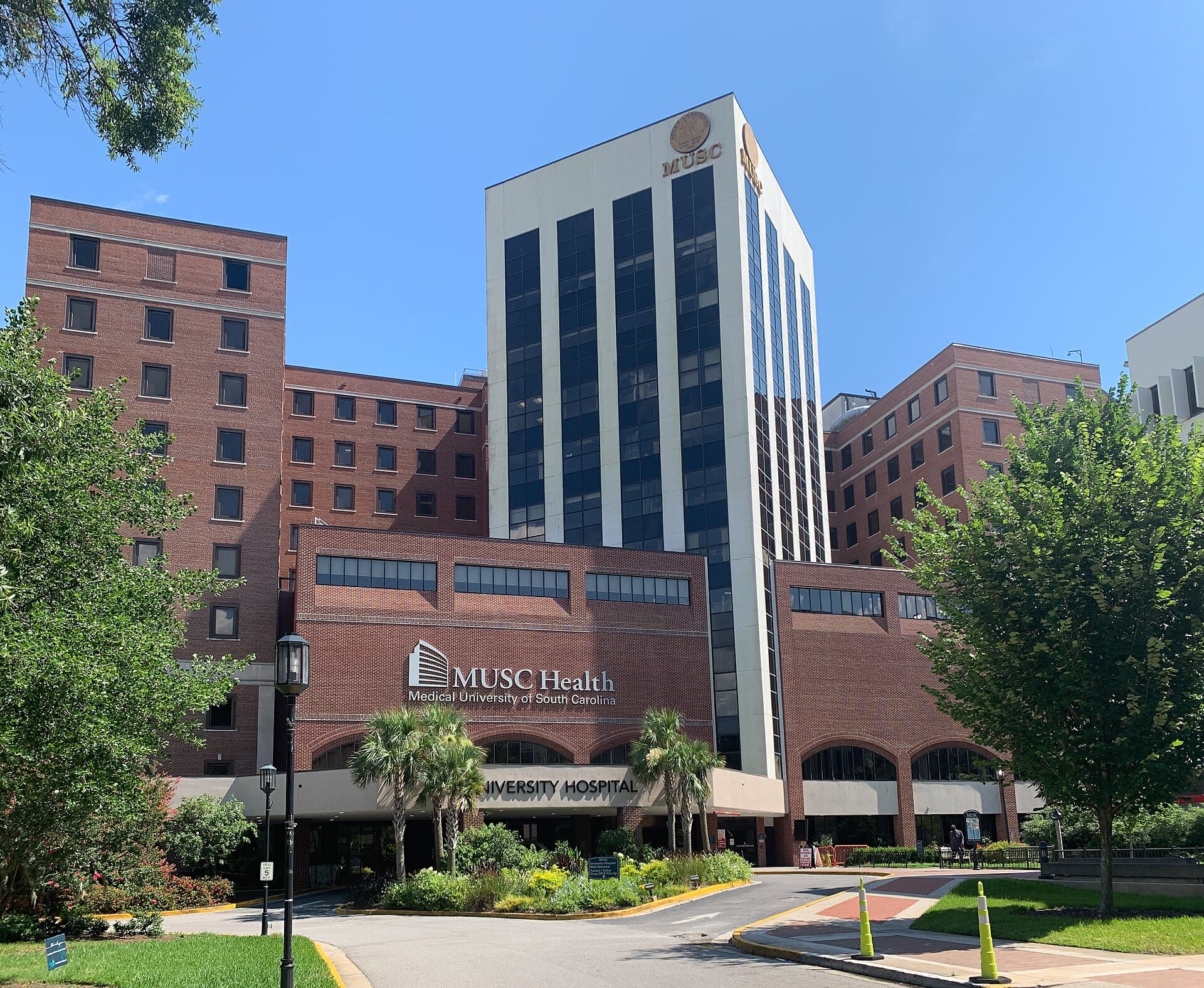
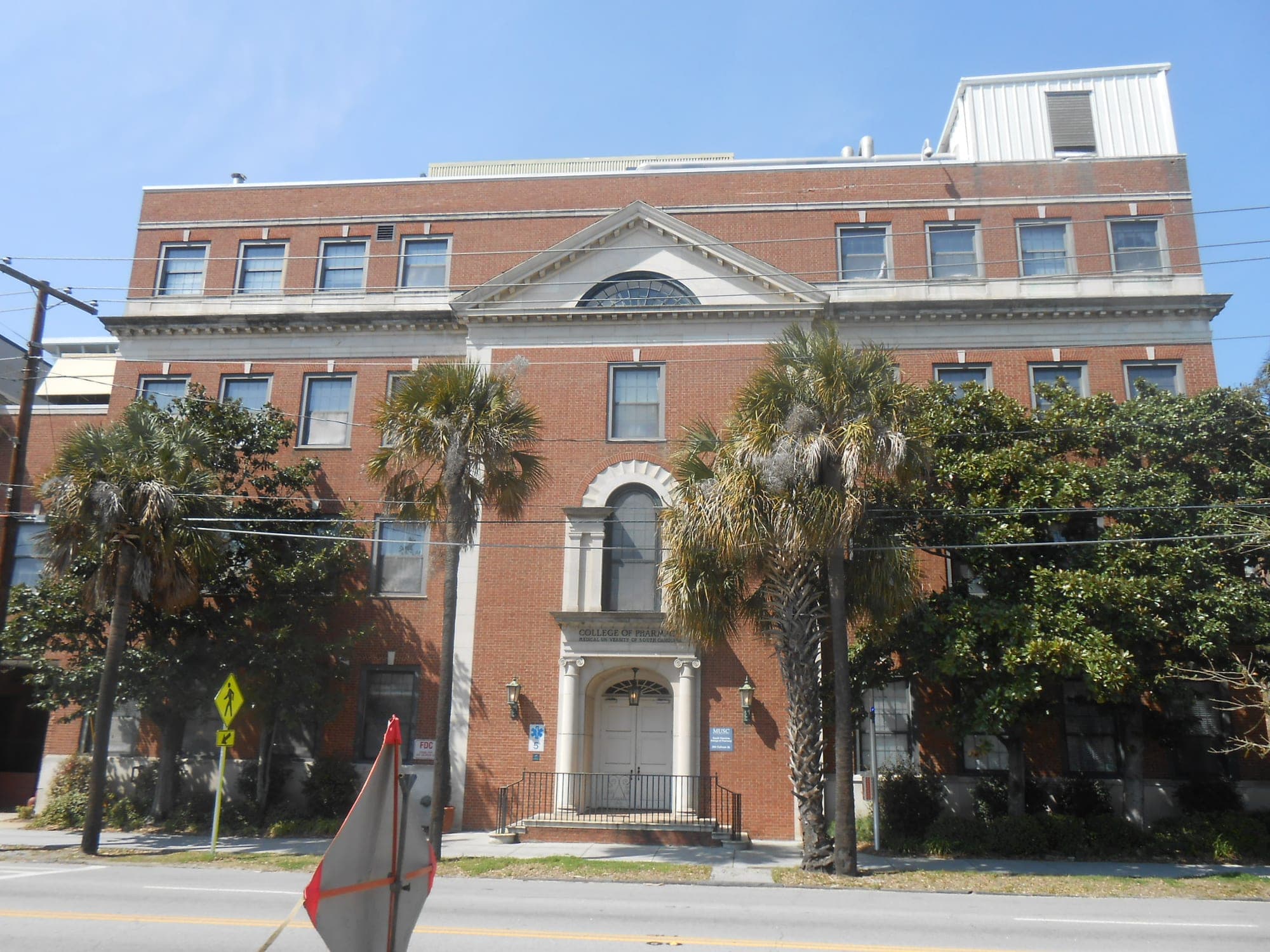
In August 2024, Roper St. Francis announced plans to sell its property at 316 Calhoun St. to the Medical University of South Carolina by 2029, WCSC Live 5 reported. The sale includes the 900,000-square-foot hospital building, a medical office building site and parking garages. MUSC’s trustees approved it unanimously. The downtown hospital will stay fully operational until the move, the station reported.
Care on wheels
The new mobile unit, called Mobile Care for You, has two exam rooms, lab space, a patient intake area and a wheelchair lift, ABC News 4 reported. It is designed to offer primary care, screenings, vaccinations, HIV services, STI testing and preventive dental care in Charleston, Berkeley, Dorchester, Williamsburg, Colleton, Georgetown and Horry counties.
Roper St. Francis paid for the program in part with savings from the federal 340B Drug Pricing Program, and it is working with MUSC to expand preventive dental care in underserved communities, the station reported.
Insurance is not required, Live 5 reported. The unit could park at a church, a laundromat or a community health center. It launched Oct. 1, but regular appointments on the road are expected to begin in the spring, according to Roper St. Francis.
Dr. Tawana Philpott Brown, program director of the Roper St. Francis Health Services Center, said the stops were chosen through interviews and focus groups.
“The community has told us where we should park, what time we should come, what days we should come, what services we should offer,” she told Live 5.
“We recognized that for many people in the communities we serve, the greatest barrier to healthcare is not a lack of desire to receive care, it is access,” she said, according to ABC News 4.
Closer to the suburbs
In June, Roper held a ribbon cutting for its 45,000-square-foot Health Pavilion at Sawmill Centre in Summerville, the Post and Courier reported. The building includes a 24-hour freestanding emergency department, imaging and laboratory services, according to Live 5.
The North Charleston tower is the largest piece of that strategy. If the schedule the contractors described in July holds, its steel frame will be finished next month, more than two and a half years before the first patients are due.