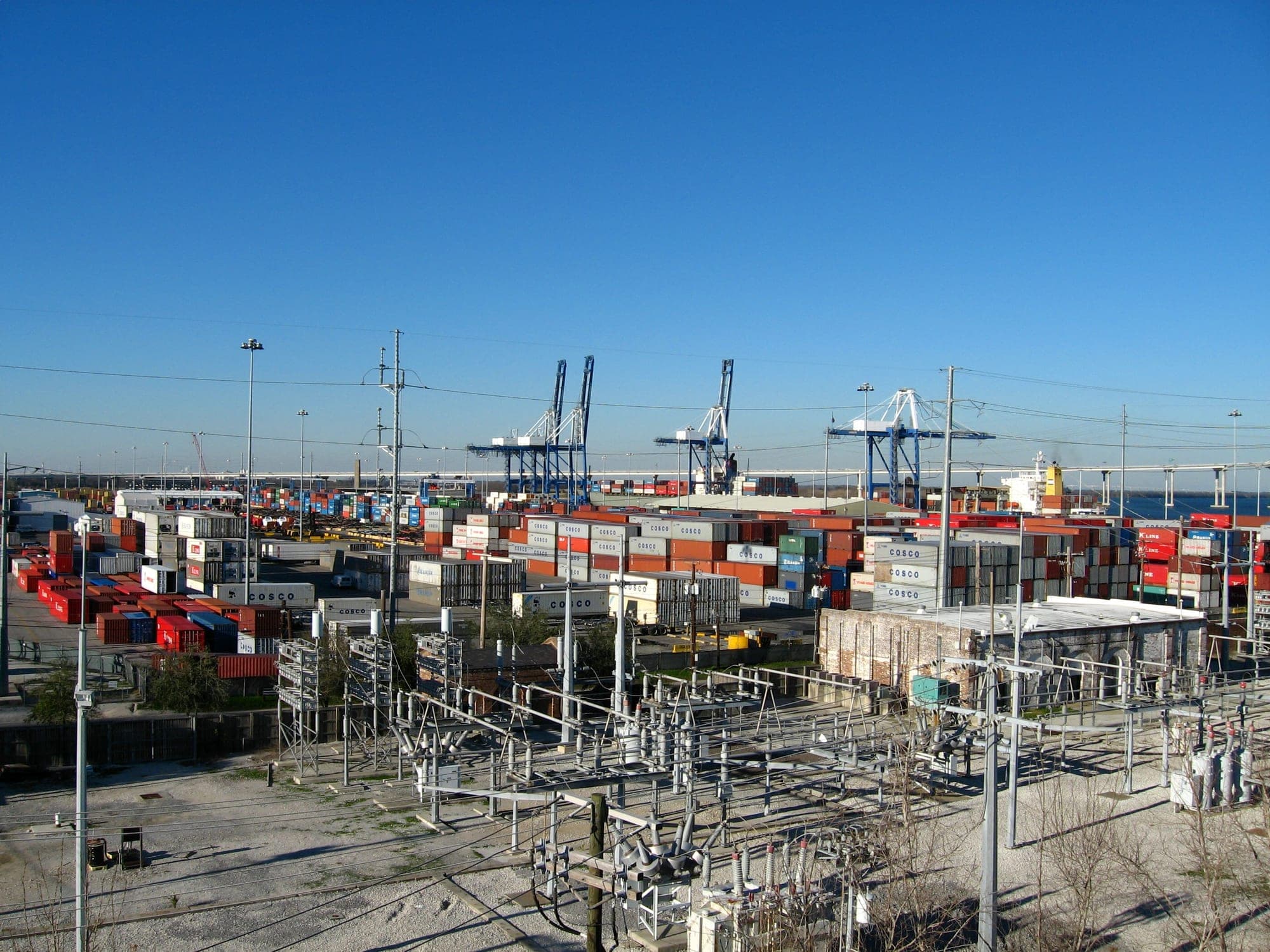
The Port of Charleston handled a record 1.97 million 20-foot equivalent units, or TEUs, in the fiscal year that ended June 30, the South Carolina State Ports Authority said Monday. That was up 14% from the year before. The TEU is the standard measure of container volume.
The authority’s breakbulk tonnage, cargo that doesn’t move in containers, also rose 14%, to nearly 2 million tons. Operating revenues rose 18% to $138 million, also a record. The authority said it reinvests all of its net earnings in its port facilities.
“Upgraded equipment and information systems allowed the Port of Charleston’s employees to meet strong customer demand last year,” said Bernard S. Groseclose Jr., the authority’s president and CEO. “With an aggressive two-year capital plan, a new bridge, harbor deepening and port expansion, Charleston is preparing for the next wave.”
To handle growth in the near term, the authority approved a two-year, $159 million capital plan for new container stacking equipment, container cranes and other improvements to get more out of its existing Charleston terminals.
For the longer term, it started more than $6 million in environmental, engineering and mitigation studies for a 280-acre, three-berth container terminal at the former Charleston Naval Complex. The authority expects permits in August 2006 and plans to open the terminal’s first phase by the end of 2011. At full size, it would add 1.4 million TEUs of capacity.
Other highlights the authority listed from the year:
- BMW renewed a 10-year contract with the authority.
- The authority announced in January that it intends to acquire property for a state port in Jasper County on the Savannah River.
- A yard management system went online at the Wando Welch Terminal in January and was then rolled out to all of the Charleston terminals, raising productivity and cutting turn times for truckers.
- The General Assembly passed the International Trade Incentive Program, which offers job or investment tax incentives to companies that increase their imports or exports through the port.
- New shipping services began calling on Charleston, including the first direct service to Central America.
The authority also noted the completion of the new cable-stayed bridge across the Cooper River, which gives ships higher and wider clearance.