A year after Micah Mallace promised to cut costs and win back cargo, the head of the South Carolina State Ports Authority says the first part of that job is finished. The harder part, turning new contracts into more ships and containers, is still ahead.
“Phase one is done, achieved, behind us. We got competitive again,” Mallace said Oct. 27 in his second State of the Port address, according to WCSC Live 5 News.
The authority, known as SC Ports, said it has cut expenses by 20% since Mallace took over in October 2025, bringing the rates it charges back in line with competing ports. It said it has secured nearly 160,000 containers of new business in retail, consumer goods, manufacturing and export commodities, arriving now through 2027.
The SC Daily Gazette put the figure at 159,000 containers, roughly 6% of the port’s annual total.
Mallace spoke at the Charleston Area Convention Center in North Charleston, where the authority’s board was also scheduled to meet that morning. SC Ports said nearly 1,200 people attended. The Gazette and The Post and Courier reported a record crowd of 1,150.
Still down, for now
The new business has not yet shown up in the monthly numbers. The port handled 111,396 containers at its marine terminals in September, down 4.3% from a year earlier, according to SC Ports. From July through September, the first quarter of the authority’s fiscal year, container counts fell 6.8%.
September was the 12th straight month of year-over-year declines, The Post and Courier reported.
Mallace said the port’s volume fell 5% in fiscal 2026, which ended June 30, while the industry was flat, Live 5 reported. He said operating earnings beat the authority’s plan by $16.8 million.
He pointed to rates that had been higher than those of South Atlantic competitors, and to a cargo mix that leans less on consumer goods than the rest of the country. About half of Charleston’s volume is tied to consumer goods, compared with 67% in the South Atlantic and 81% nationally, he said, according to the station.
“We reduced our internal costs. We passed that back to our customers in getting our rates back in line with our competitors. And rates matter. So that’s the number one driver,” Mallace said, according to Live 5.
Mallace said the rates were back in line with those of rival South Atlantic ports starting in August, The Post and Courier reported.
Chasing retail cargo
Mallace calls his plan a three-phase comeback: get competitive, strengthen the core and make it stick.
“The second phase of the comeback plan is to strengthen the core and deliver on some of the commitments we’ve made,” he said, according to the Gazette.
In this phase, the port is focused on growing its core base of manufacturing customers while adding more retail and refrigerated cargo, Live 5 reported. SC Ports said recent wins include a newly opened transload facility near the port for a global retailer, which it did not name, and commitments from national retail brands and importers choosing Charleston as their Southeast gateway.
Mallace said the authority cut costs largely across the board but doubled its sales staff, the Gazette reported.
“Where distribution centers locate, the ships follow,” Mallace said, according to the Gazette. He said more warehouse space is needed, including for frozen food, The Post and Courier reported. SC Ports cited Cushman & Wakefield figures showing 5 million square feet of industrial space leased in the Charleston market so far this year.
Leatherman and the rail yard
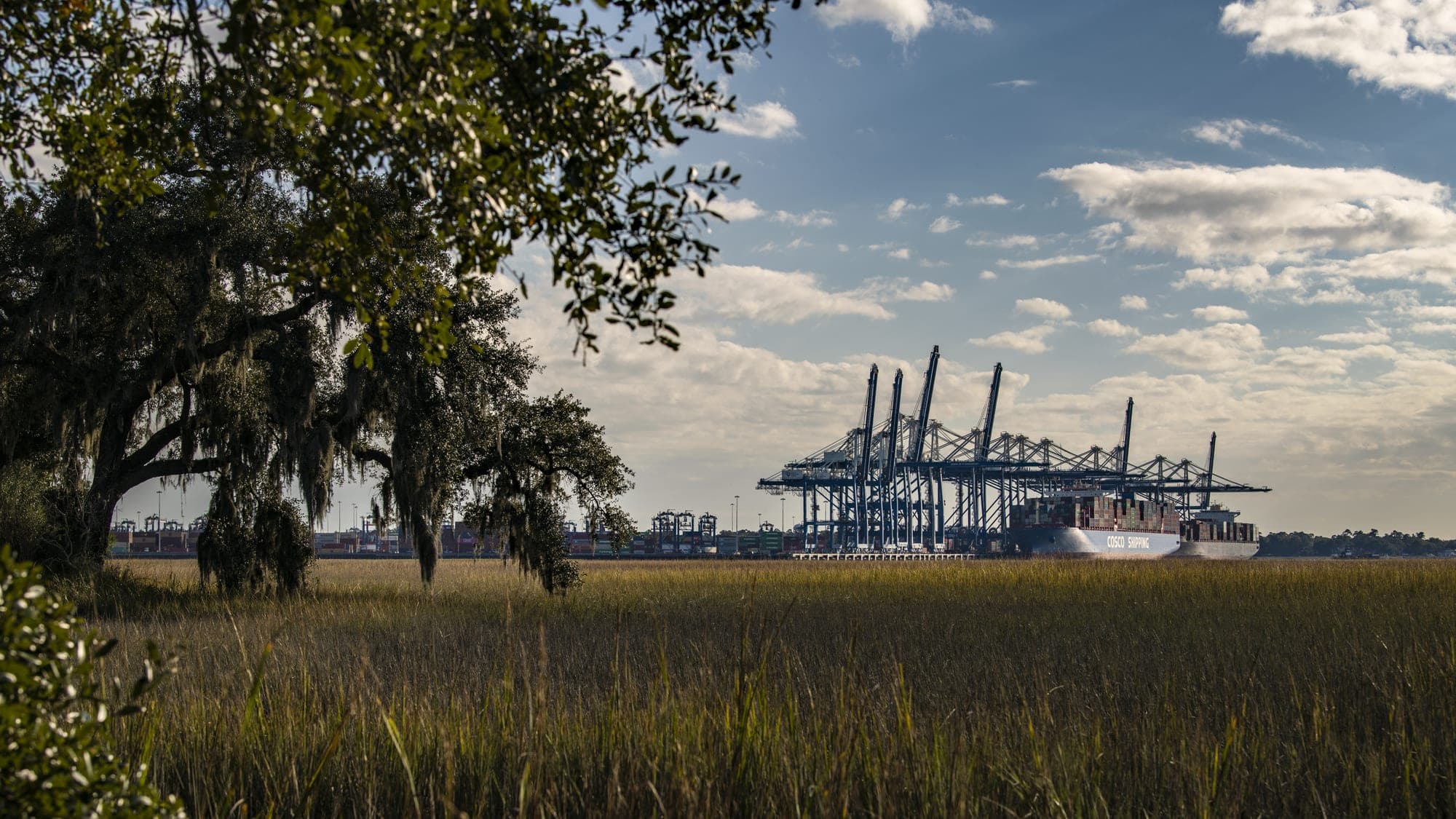
SC Ports idled Hugh K. Leatherman Terminal in North Charleston on Aug. 1. It handled no containers in September, the authority’s figures show.
Mallace said he would know the comeback plan had succeeded when Leatherman reopens for good.
“That will signify that we have achieved volumes and an operating cost structure that suggests the terminal stays open, not for another year or two but for good,” he said, according to the Gazette. “We are not rushing any of these things.”
Accounts of his remarks differed on the Navy Base Intermodal Facility, the authority’s unfinished rail yard on the former Navy base in North Charleston. Live 5 reported that Mallace said the authority had signed revenue contracts with CSX and Norfolk Southern and that the yard was about two years of construction from delivery. The Gazette reported that he said the authority was still negotiating contracts with the two railroads and had not scheduled an opening. SC Ports’ release on the speech said only that the authority continues to work toward bringing the rail yard online.
Rail carries about 25% of the port’s volume, Mallace said, according to Live 5.
SC Ports said work has started to expand North Charleston Terminal. The board’s agenda for its Oct. 27 meeting listed an action item on demolition materials testing at the former WestRock paper mill site, which SC Ports has said it will use to expand that terminal.
What comes next
Mallace said he hopes to report next year that the port has moved into the third phase, Live 5 reported.
“I would say this time last year we didn’t see the light at the end of the tunnel. Today, we do,” he said, according to the station.
He also warned that the gains could slip. “It’s fragile and still requires attention,” Mallace said, according to the Gazette. “The kindling is burning. The logs are ready to go on. Walk away, and it goes out. Tend to it, work together, and it grows.”
The board’s next meeting is Nov. 17.