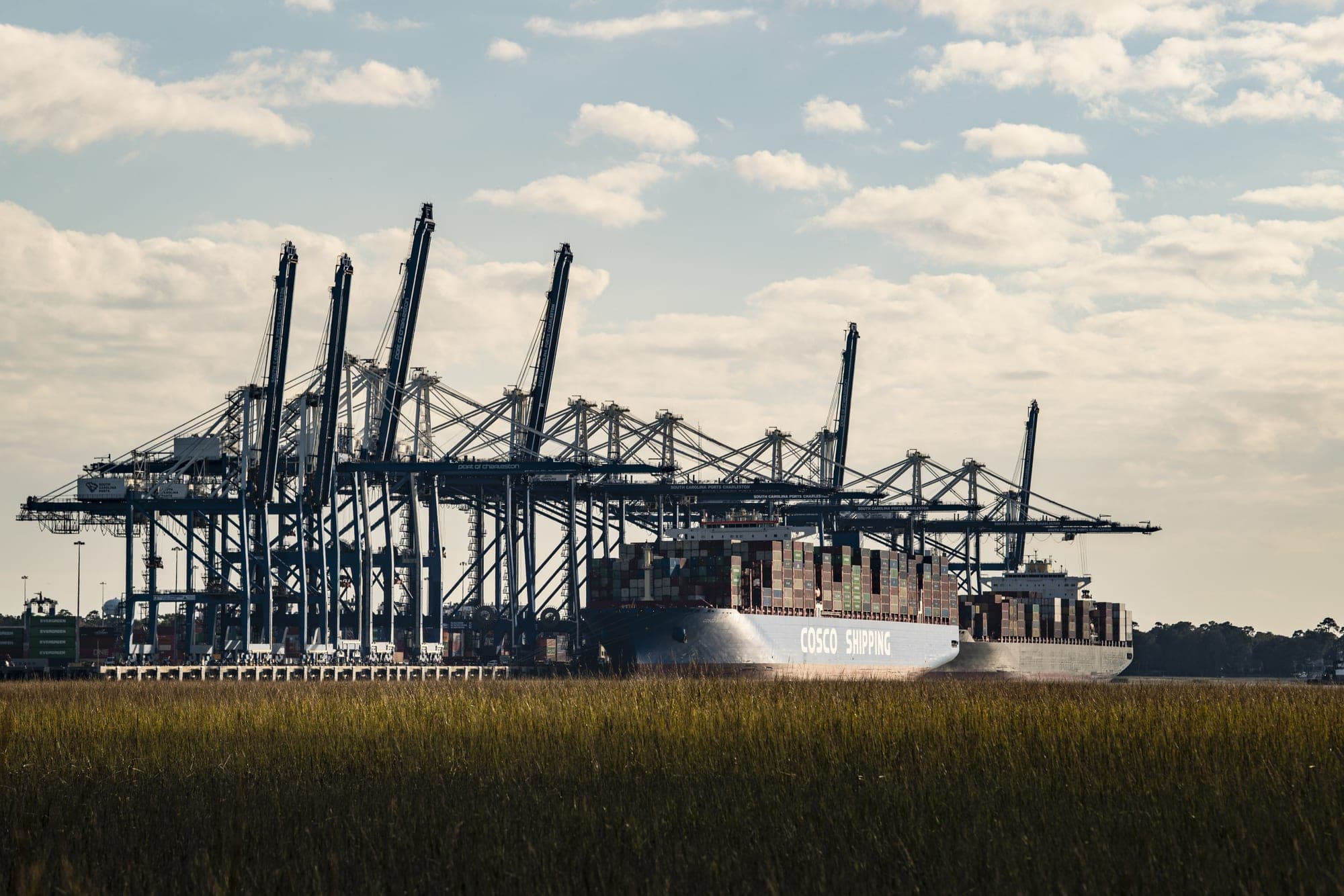
The South Carolina Ports Authority took delivery Friday of two new ship-to-shore cranes for its Wando Welch Terminal in Mount Pleasant, the first of a larger class the port is buying to work the bigger container ships now calling on the East Coast.
The cranes, built in China by Shanghai Zhenhua Heavy Industry Co., known as ZPMC, can lift containers 155 feet above the dock, the authority said Monday.
“The delivery of the new cranes is a milestone for our Port,” said Jim Newsome, the authority’s president and CEO. “They are integral to our future and represent a big step forward in our strategy to remain competitive in today’s big-ship environment.”
The terminal is in the middle of a $44 million project to strengthen and upgrade its wharf for bigger ships and cranes, according to the authority. It said in July that the first of the larger cranes would be commissioned for use this fall.
More are coming. In July, the authority’s board approved $23.6 million for two more ship-to-shore cranes for Wando, to be commissioned at the end of 2017 when the wharf work is done. The board also approved buying 12 rubber-tired gantry cranes for Wando and 12 empty container handlers.
The ships are already getting bigger. Sixteen of the port’s 26 weekly container ship services use vessels too large for the Panama Canal before its expansion, the authority said in July. On July 14, the 8,200-TEU Hannover Bridge became the first post-Panamax ship, one too big for the old locks, to reach Charleston through the newly expanded canal. The authority expects its first call by a 14,000-TEU ship later this year. A TEU, or 20-foot equivalent unit, is the standard measure of container capacity.
The authority says Charleston is the deepest harbor in the Southeast and will be the deepest on the East Coast once a planned deepening to 52 feet is finished. It has a 10-year, $1.3 billion capital plan that includes the new Leatherman Terminal in North Charleston.
The port handled 1.9 million TEUs in the fiscal year that ended June 30, up 1.4% from the year before, the authority reported in July.