The GX Smoke Curtain spends most of its life out of sight, rolled up in a slim housing above an elevator door. In a fire, a flap opens and a sheet of clear fabric drops to the floor. Magnetic strips along its edges grip guide rails on each side of the opening.
The goal is to keep the elevator shaft from carrying smoke to other floors.
Until this year, every GX was built in Goslar, Germany. Now Stöbich Fire Protection Systems is moving that work to North Charleston.
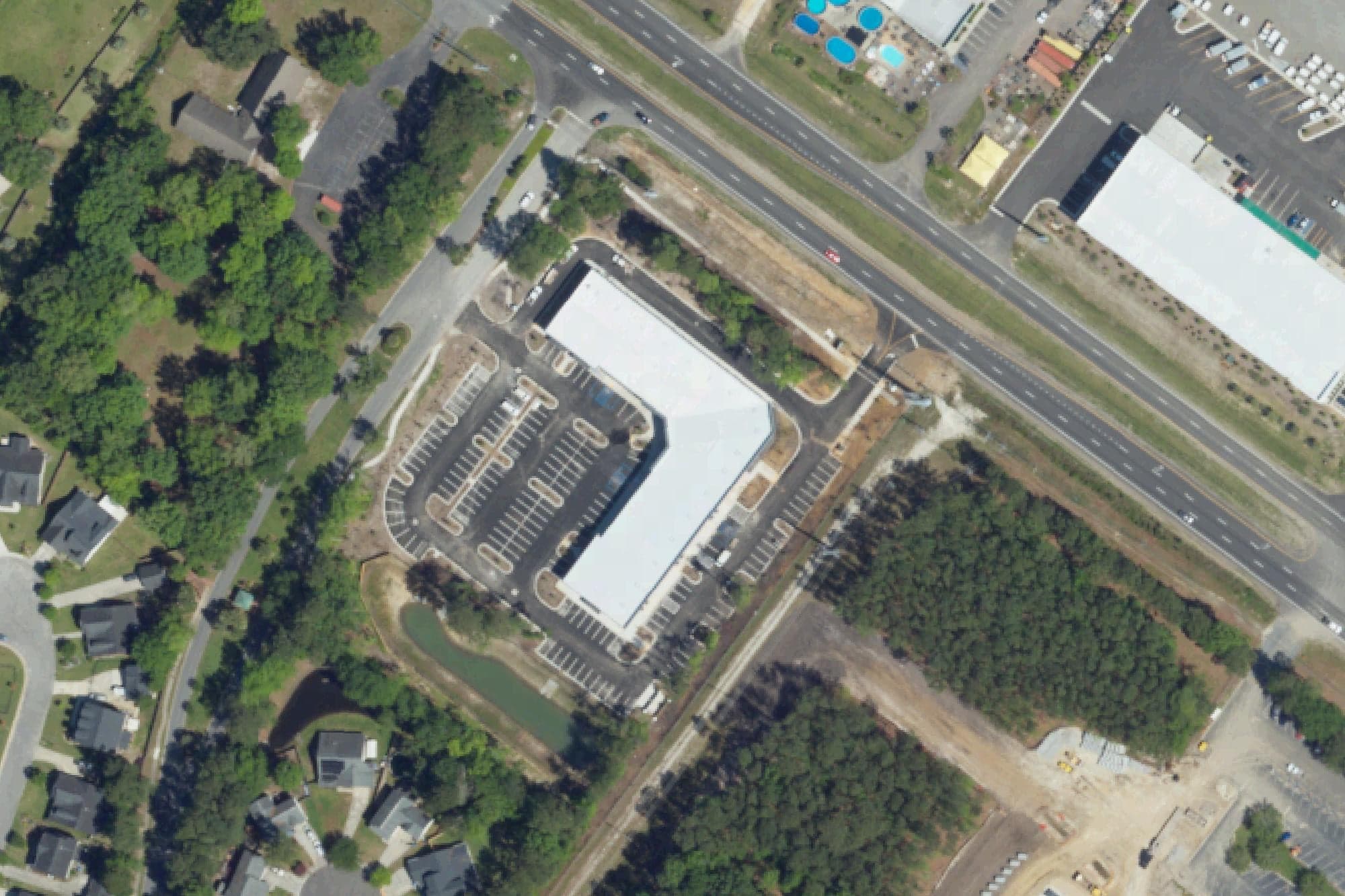
The company is investing $2.53 million and creating 33 jobs at its facility at 5301 Indigo Fields Blvd. in the Dorchester County part of the city, the S.C. Department of Commerce announced Sept. 10. State officials said operations were expected to start in September, and the company said GX production was scheduled to begin that month.
“The U.S. market is an important part of Stöbich’s long-term growth strategy,” Alexander Dolipski, spokesman for the company’s management board, said in the state’s announcement.
A product built for American buildings
Stöbich designed the GX for the U.S. market. In a post about the move, the company wrote that “a lift shaft acts like a chimney,” pulling smoke from floor to floor. It said elevator doors in the United States are built to resist fire but not to stop smoke.
Stöbich says the International Building Code requires smoke protection at elevators in buildings of four or more stories. The code itself is narrower. The 2021 edition, which South Carolina enforces, requires protection at elevator doors when an enclosed elevator shaft connects more than three stories and the building is not fully sprinklered, houses certain hospital, nursing home, assisted living or detention uses, or is a high-rise with a shaft taller than 75 feet, according to Section 3006 of the code. Builders can meet the rule with enclosed elevator lobbies, a pressurized shaft or an added door at each elevator opening that passes the UL 1784 air leakage test.
The standard GX covers openings up to 10 feet by 10 feet, and oversized units up to 12 feet by 12 feet can be built depending on the project, according to the company’s U.S. data sheet and product page. The housing is about 10 inches tall.
The fabric is transparent, so people can see through a closed curtain. Aramid cables are built into it. A motor the company calls Gravigen lowers it.
The curtain is designed to close on its own if the building loses power. An optional setting holds it open for 20 minutes first, and a switch lets it be reopened. The company lists office towers, hospitals, hotels, transit stations and high-rise apartments as typical uses. The company’s U.S. product page and data sheet do not list U.S. test standards or listings.
Moving production took several months, according to the company. A production worker from Goslar flew to the United States to train her American colleagues on the line.
Born from a factory fire
Stöbich’s first product came out of a fire. In 1978, a blaze at a plant run by German cookie maker Bahlsen spread through openings in the walls where conveyor belts passed from room to room. Engineer Jochen Stöbich responded by developing what the company calls the world’s first fire protection closure for continuous conveyor systems.
He founded Stöbich Brandschutz in Goslar in 1980 with three partners and later bought them out. He handed over management in 2020 and died in 2021 at 77.
The company now lists more than 150 patent applications. Its products include fire curtains that drop from ceilings, smoke curtains for escape routes and fire closures for conveyor lines. It is represented in more than 50 countries. The group employs about 1,000 people and reported about 100 million euros in revenue in 2023, according to a company fact sheet.
Twenty-eight years in the Lowcountry
Stöbich has served the North American market from North Charleston since 1998, according to the company.
Dolipski said in the state release that the company sees room to grow its U.S. presence. No incentives were disclosed in the announcement.
Dorchester County Council Chairman David Chinnis said companies like Stöbich “demonstrate that Dorchester County is a place where innovative companies can grow and succeed,” WCSC Live 5 reported.
The company is taking applications at careers.us@stoebich.com.
Stöbich’s first product closed the holes a conveyor belt cuts through a factory wall. Its newest Lowcountry product closes a gap most building occupants never think about: the space around an elevator door.