Winslow Hastie has spent 20 years at Historic Charleston Foundation arguing over what should be built, saved and torn down on the Charleston peninsula. He has about 10 weeks left.
Hastie, the nonprofit’s president and CEO, announced in late August that he will step down Dec. 31, ending a run that included nine years as its leader, according to the foundation.
“There is no controversy, no conflict, just my personal decision,” he told The Post and Courier. “I wanted to step away from a position of strength.”
Hastie, 53, was recently named chairman of the board of Magnolia Plantation and Gardens, a family-controlled historic site on the Ashley River, the newspaper reported. The foundation said he recently became chair of his family’s business and foundation, a role that will require more of his time.
A planner’s résumé
A Charleston native, Hastie started out as a planning consultant with an architecture firm in San Francisco and then worked as a preservation specialist for the city and county of San Francisco’s planning department, The Post and Courier reported in 2017. He came home as a senior preservation planner for the city of Charleston and joined the foundation in 2006.
He spent 11 years as its chief preservation officer. In November 2017, the board picked him from a field of 85 interested candidates to succeed Katharine “Kitty” Robinson, who retired at the end of that year, the newspaper reported.
Earlier that year, he described the work as a balancing act. “We must balance tourism with livability for residents, density with historic neighborhood character, new construction with our nationally significant historic district,” he said in an interview quoted by The Post and Courier.
Zoning fights and a revolving fund
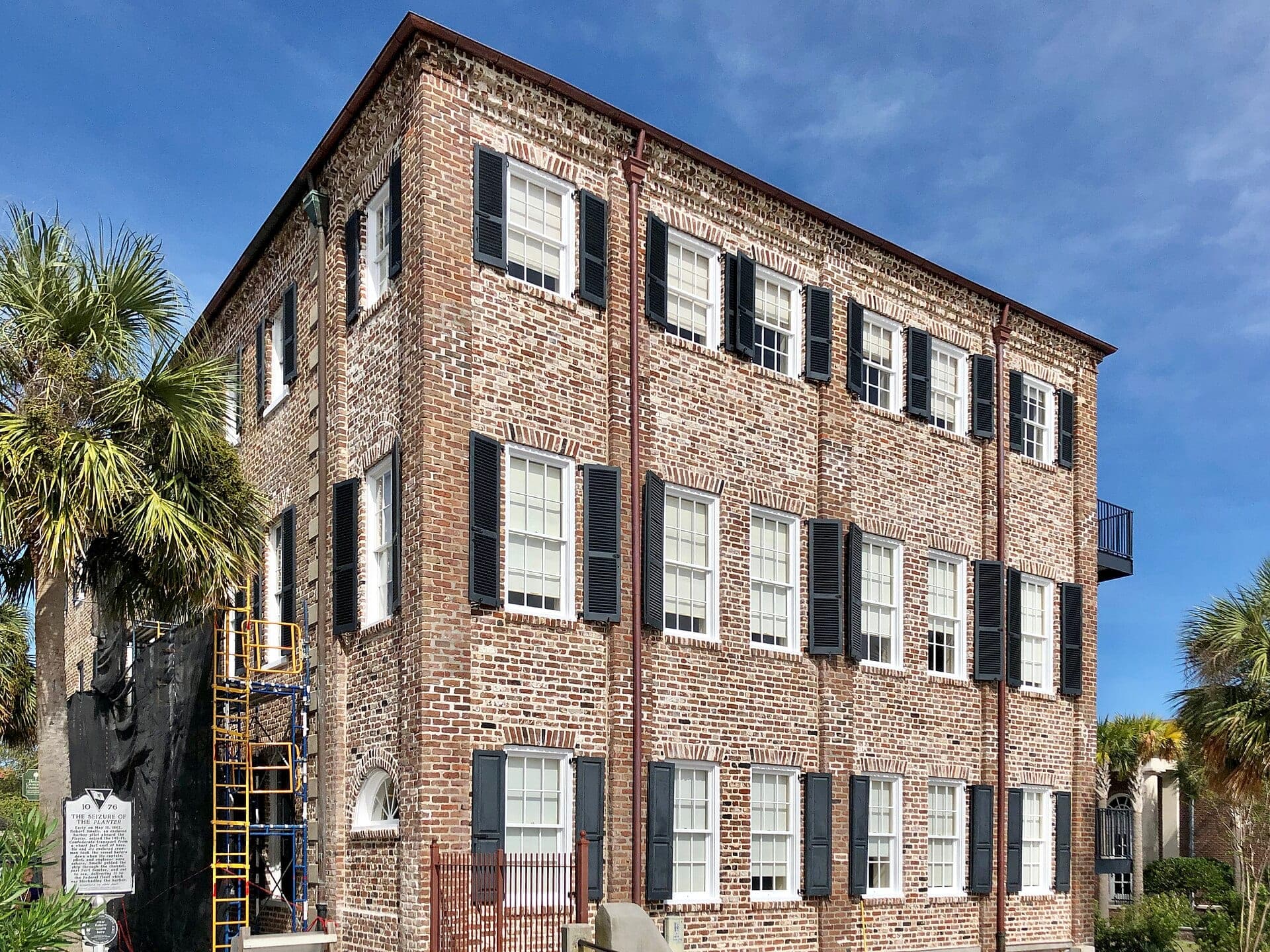
The foundation, created in 1947, runs the Nathaniel Russell House and Aiken-Rhett House museums and holds preservation easements on more than 400 properties, according to the newspaper and a 2024 commentary by Hastie and the foundation’s board chair. It also weighs in on development before city boards and, at times, in court.
Its court fight over a planned Upper King Street hotel ended Sept. 21. The foundation had appealed in June 2025 after the city’s Board of Architectural Review gave conceptual approval to the hotel, at 657 King St., near Line Street, arguing that a five-story building with a sixth-floor penthouse broke the four-story limit on the King Street side of the lot, The Post and Courier reported. Under a mediated settlement, the corners of the fifth floor will drop to four stories with 17-foot setbacks from King Street, and the sixth floor will be set back 25 feet from King, Line and Sheppard streets, a city spokesperson told the newspaper. The city also plans zoning amendments to clarify how split height limits work.
“This decision affirms the value of the zoning process, underscores the need for clear regulations, and supports the long-standing community expectation that development in Charleston should be world-class,” Hastie said. Colin Colbert, a partner in developer CKC Properties, told the newspaper the firm was disappointed that litigation came first but grateful to reach a resolution.
Hastie has also used the foundation’s checkbook. Its revolving fund, created in 1957, buys at-risk buildings and resells them to preservation-minded owners, The Post and Courier reported. In 2023 the foundation paid $900,000 for a vacant 1929 gas station at 80 Ashley Ave. This summer it sold the building for the same price, with a deed restriction that keeps it in commercial use.
“We’re happy to not own it any longer,” Hastie told the newspaper.
The foundation credits him with turning the revolving fund into the Common Cause Loan Program, which addresses housing affordability and gentrification. The Post and Courier reported that the program offers forgivable loans for structural repairs to qualifying low-income homeowners. The foundation also credits him with co-directing the city’s 2008 preservation plan, which won a National Preservation Award, and with helping bring the Dutch Dialogues flood planning effort to Charleston.
One reversal
His tenure also included a public reversal. In December 2023 the foundation said it would sell the Nathaniel Russell House, then reversed course in January 2024 after a backlash, The Post and Courier reported.
“We anticipated our decision would not be celebrated,” Hastie and board chair Anne Blessing wrote in a commentary for the newspaper announcing the reversal.
The board plans a national search with an executive search firm, according to the foundation, which had not named a successor as of mid-October. Hastie said he hopes to help with the transition.
“My focus between now and December will be on helping HCF have a smooth and successful transition and positioning the Foundation for continued impact in the years ahead,” he said in the foundation’s announcement.