Blackbaud Inc. has bought two Massachusetts companies that manage large donor databases and analyze fundraising results for nonprofits.
The Daniel Island software maker said Tuesday it acquired privately owned Target Software Inc. and Target Analysis Group Inc., sister companies based in Cambridge, Mass., for about $60 million. The sellers can earn up to $2.4 million more under a one-year earn-out, the company said.
Blackbaud paid with cash and money borrowed under its credit line with Wachovia Bank, according to a filing it made with federal securities regulators. The deal closed the same day it was signed.
What Target does
Target Software makes database and donor relationship software for national and regional nonprofits that run high-volume direct-response fundraising campaigns, according to Blackbaud’s announcement.
Target Analysis Group provides data mining, predictive modeling and benchmarking services that let nonprofits compare their results with one another. It works with hundreds of nonprofits of all sizes, Blackbaud said.
Together the two companies have nearly 200 employees. They will keep operating in Cambridge as wholly owned subsidiaries of Blackbaud under Lee Gartley, their president, who will also become a Blackbaud senior vice president.
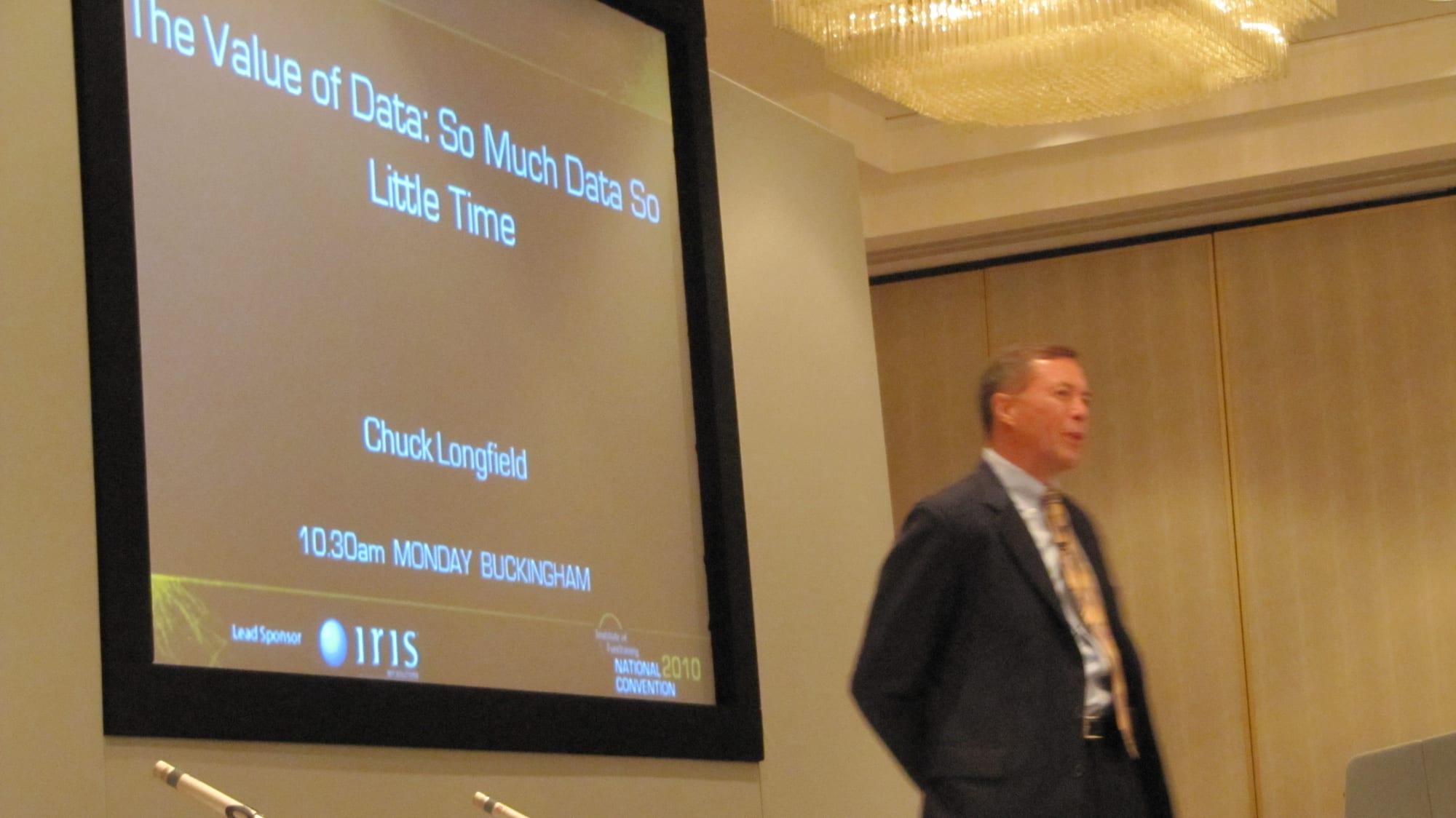
Charles “Chuck” Longfield, Target’s founder and chief executive and a significant stockholder, will become Blackbaud’s chief scientist.
“Blackbaud’s refined analytics and proven high-touch, high-value fundraising capabilities with major givers will dovetail with Target’s high-volume direct response marketing and data mining leadership,” Longfield said in the announcement.
Why Blackbaud wanted it
CEO Marc Chardon said the company had been moving into direct-response marketing and called the Target purchase “a major step in that move.”
“We are very excited to announce the acquisition of Target Software and Target Analysis Group, which significantly advances our strategic goal of providing a complete solution for meeting the fundraising and direct marketing needs of the nonprofit sector,” Chardon said in the announcement.
He said the deal would help Blackbaud serve customers at the high end of the nonprofit market, along with chief marketing officers, and that the companies could sell each other’s products to their customers. “As a result, we believe the acquisition of Target will materially expand our market opportunity,” Chardon said.
Jon Abbott, executive vice president and general manager of the WGBH Educational Foundation, praised the deal in Blackbaud’s announcement. “Data-driven relationship management practices are a critical factor in moving educational and social sector organizations forward,” Abbott said.
How the money breaks down
Blackbaud paid about $54 million up front to Target’s stockholders, including $7.8 million held in escrow to cover any indemnification claims, according to the filing. It paid about $2.1 million more to holders of Target stock options and $800,000 to certain senior Target executives who signed noncompetition agreements.
Before the deal, there were no material relationships between Blackbaud and the Target companies or their owners, the filing says.
What it means for earnings
Blackbaud expects the acquisition to reduce its 2007 earnings by 3 to 6 cents a share on a non-GAAP basis, which excludes stock-based compensation and amortization of intangible assets. About 1 to 2 cents of that comes from writing down Target’s deferred revenue.
That estimate does not include a tax benefit of about $1.5 million a year that the company expects from the way the deal was structured.
On its own, Blackbaud still expects revenue to grow 13% to 14% in 2007, the company said.
Blackbaud also gave a preview of its fourth-quarter results. It expects total revenue of $49.5 million to $49.6 million, within its earlier forecast, and license revenue of $8.2 million, slightly below its forecast. It plans to report full results Feb. 5 and will give 2007 guidance that includes Target then.
The buyer
Blackbaud had revenue of $166.3 million in 2005, up 19.3%, and about 1,014 employees at the end of that year, according to its annual report. More than 15,000 organizations use its products, including the American Red Cross, Bowdoin College and Cancer Research UK, the company says.
Besides its Daniel Island headquarters, Blackbaud has operations in Toronto; Glasgow, Scotland; London; and Sydney, Australia. It went public on Nasdaq in July 2004, and Chardon, a former Microsoft executive, became CEO in November 2005.
The company scheduled a conference call for 5:30 p.m. Tuesday to discuss the deal.