Charleston is drafting new rules for a problem that preservationists say cost the East Side a 130-year-old church in September: buildings left to decay until they are too far gone to save.
At an Oct. 22 meeting of City Council’s Community Development Committee, city staff presented a plan to catalog and rank neglected buildings, tighten enforcement and study new ways to pay for repairs, The Post and Courier reported. The committee’s agenda listed the item as an “Update on 52 Cooper Street and process improvements.”
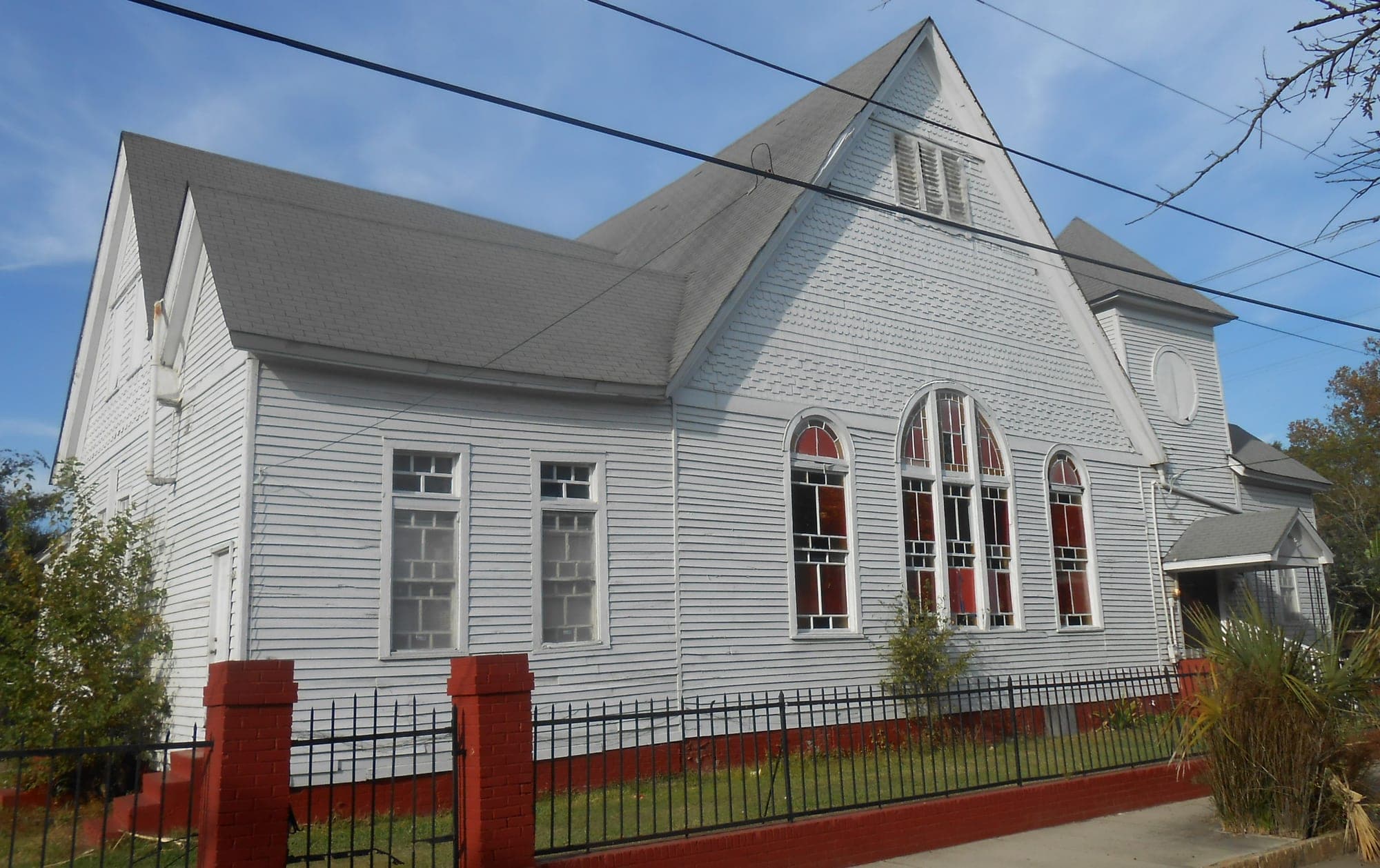
That address was the former Emma Abbott Memorial Chapel, built in the 1890s and later home to Mt. Sinai Holiness Church of Deliverance, WCSC Live 5 reported. Crews tore it down in late September.
How the chapel came down
Columbia-based Styx Development bought the property to redevelop it, ABC News 4 reported. The plan was to turn the church into six residences and build two townhomes beside it. The renovation design went before the Board of Architectural Review about five years ago, Live 5 reported.
An Aug. 12 engineering report found extensive roof deterioration from prolonged water intrusion, along with advanced decay in some support beams and columns, ABC News 4 reported. Engineers said stabilizing the building was not feasible without major risk to workers. The city’s chief building official then ordered it demolished as an immediate public safety threat. The city issued the permit Aug. 21, according to Live 5.
Preservationists learned of it a month later. “We only found out about this yesterday afternoon by going into the city’s portal,” Brian Turner, president and CEO of the Preservation Society of Charleston, told Live 5 on Sept. 22. Mayor William Cogswell asked for a pause while the city sought an independent assessment, but the building was gone within days.
In a statement after the demolition, the city said, “What is already clear is that our own process has gaps, and those are ours to fix,” ABC News 4 reported. The city promised meaningful public notice before any historic structure can be demolished, a funded survey of downtown’s historic buildings and a measure of cultural significance in future decisions.
What the city is proposing
Dave Pettine, the city’s new section chief of planning, permitting and engineering, presented the plan about three weeks into the job, The Post and Courier reported.
In the first one to three months, the city would develop “clear procedures and guidance” for demolition by neglect, formalize how staff coordinate site visits, remedies and other actions, and reconvene the Demolition by Neglect Task Force, a group first formed in 2011, with preservation groups and neighborhoods at the table, according to the newspaper.
Among the early steps, staff would also score at-risk buildings by condition, historic significance and safety and keep that list current. Within six to nine months, the city could amend city codes so that sites left neglected, boarded or vacant for more than six months could be classified as public nuisances. Pettine also wants more citations for willful neglect and a study of whether fines could pay to stabilize buildings instead of going into the general fund, the newspaper reported.
The city does not have a clear count of its rundown or boarded-up buildings, The Post and Courier reported.
“There’s no silver bullet on something like this,” Cogswell said, according to the newspaper. He added that the city would “have to get very creative.”
What preservationists want
Julie O’Connor of Save Our Structures Charleston asked the city to change the code language that lets the chief building official order a demolition, a path that can bypass the Board of Architectural Review and public notice. She called that power “an important public safety authority in emergency cases” but said “it should not be used in cases of demolition by neglect,” according to The Post and Courier.
O’Connor also proposed a deconstruction and salvage ordinance. She named five properties her group considers endangered: 16 Hagood St., 1 Kyle Place, 51 Poinsett St., 209 Line St. and 114 Cannon St.
Turner told the committee the city has the tools to do better. “We have historic assets that other towns in America would dream of,” he said, according to the newspaper.
Alexis Wright Singleton, an East Side community leader, said the loss of the chapel left the neighborhood devastated. “There are no happy words. There aren’t even civil words,” she said, according to The Post and Courier.
A related zoning change
A day earlier, the city Planning Commission’s Oct. 21 agenda included an amendment to adopt the city’s most recent architectural inventory. That inventory map identifies peninsula structures that should be preserved and guides the Board of Architectural Review.
The map now in the zoning code rests on a 1972 to 1973 survey, amended by surveys from 1985 and 2004, according to the draft ordinance. The amendment would let City Council adopt future revisions by resolution after the Board of Architectural Review approves them, rather than by amending the zoning ordinance each time.
The Post and Courier also pointed to other cases, including Clemson University’s former vegetable lab in West Ashley, whose demolition a judge approved Oct. 20.