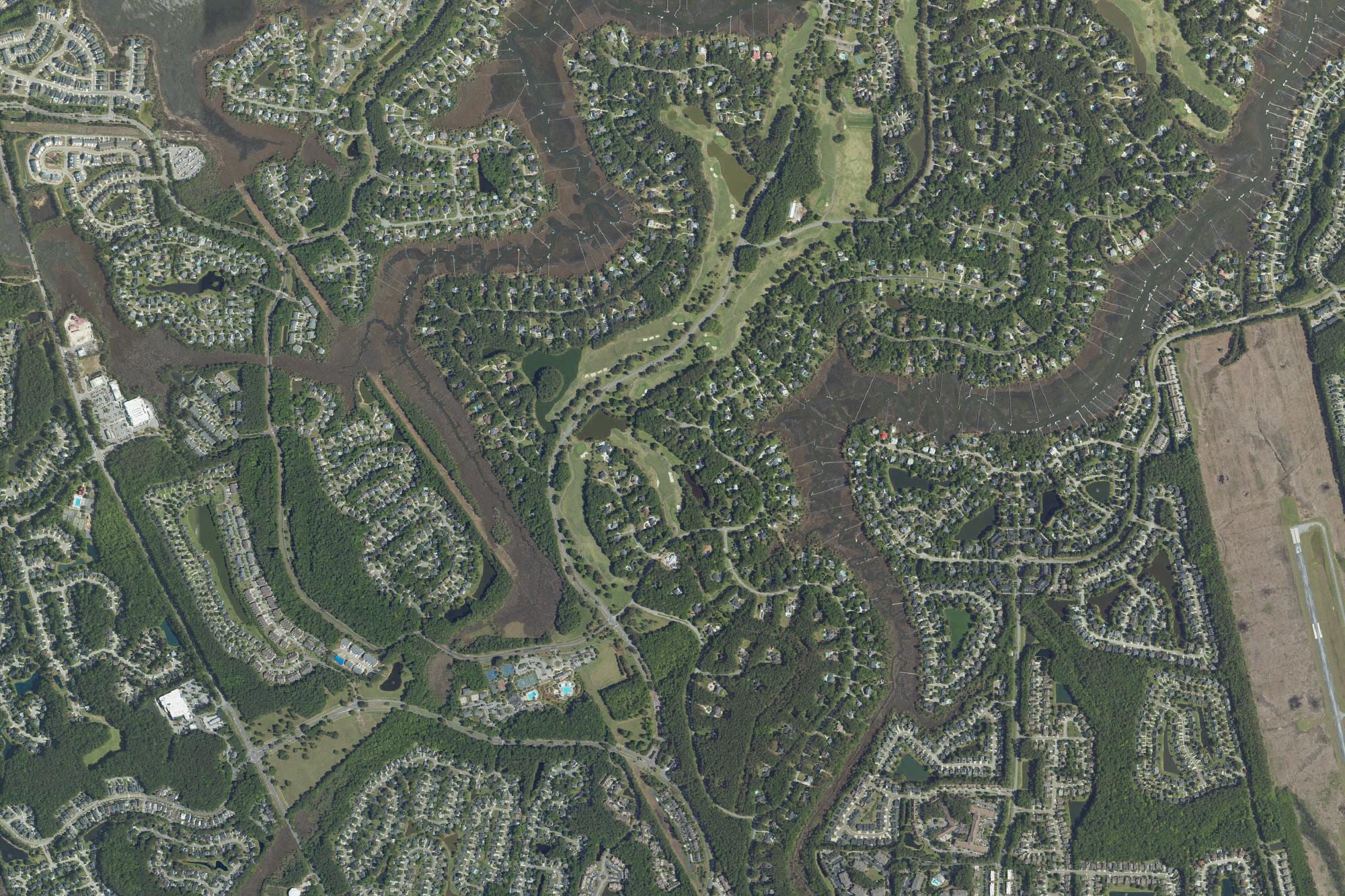
The developer of a planned community owes its property owners association roads and other common areas in good repair, the S.C. Supreme Court said today in a case brought by residents of Dunes West.
The court was answering a question certified by the U.S. District Court, where Concerned Dunes West Residents Inc. and several homeowners are suing Georgia-Pacific Corp., the community’s original developer, and Allan Feker, whose company took over development. The residents are suing on behalf of the Dunes West Property Owners Association to recover the cost of repairing roads and other common areas.
The federal court had doubted whether a 1993 S.C. Court of Appeals decision, Goddard v. Fairways Development General Partnership, reflected state law. That ruling likened developers to the promoters of a corporation, who owe fiduciary duties to investors.
“We hold today that it does: The developer of a PUD owes a duty to the POA to turn over common areas that are not substandard and that are in good repair,” the court wrote in an unsigned opinion. “Failure to do so subjects the developer to liability for bringing the common areas up to standard.”
According to the federal court’s findings, a Georgia-Pacific subsidiary agreed with Wild Dunes Associates to develop the planned unit development, and Georgia-Pacific conveyed 4,325 acres to the developers. Eagle Creek Construction Co. finished the roads and drainage for the early phases in 1991. The developers found defects in 1993, sued Eagle Creek and spent more than $1.1 million repairing roads from 1994 to 1996.
After settling that suit, the developers learned that significant additional road and drainage repairs were needed. One week later, they agreed to sell the remaining undeveloped land to Feker. Before that sale closed, they deeded the roads and common areas to the association on March 20, 1998.
A developer that transfers substandard common areas must, at the time of transfer, give the association enough money to bring them up to reasonably good repair, the court said. One that doesn’t “is liable to the POA for all damages proximately flowing from the breach, including damages for the continued deterioration of these areas.”
The justices declined to answer three other questions, including one on Feker’s liability, which they said turns on contracts. Chief Justice Jean H. Toal and Justices James E. Moore, John H. Waller Jr., E.C. Burnett III and Costa M. Pleicones joined the opinion.