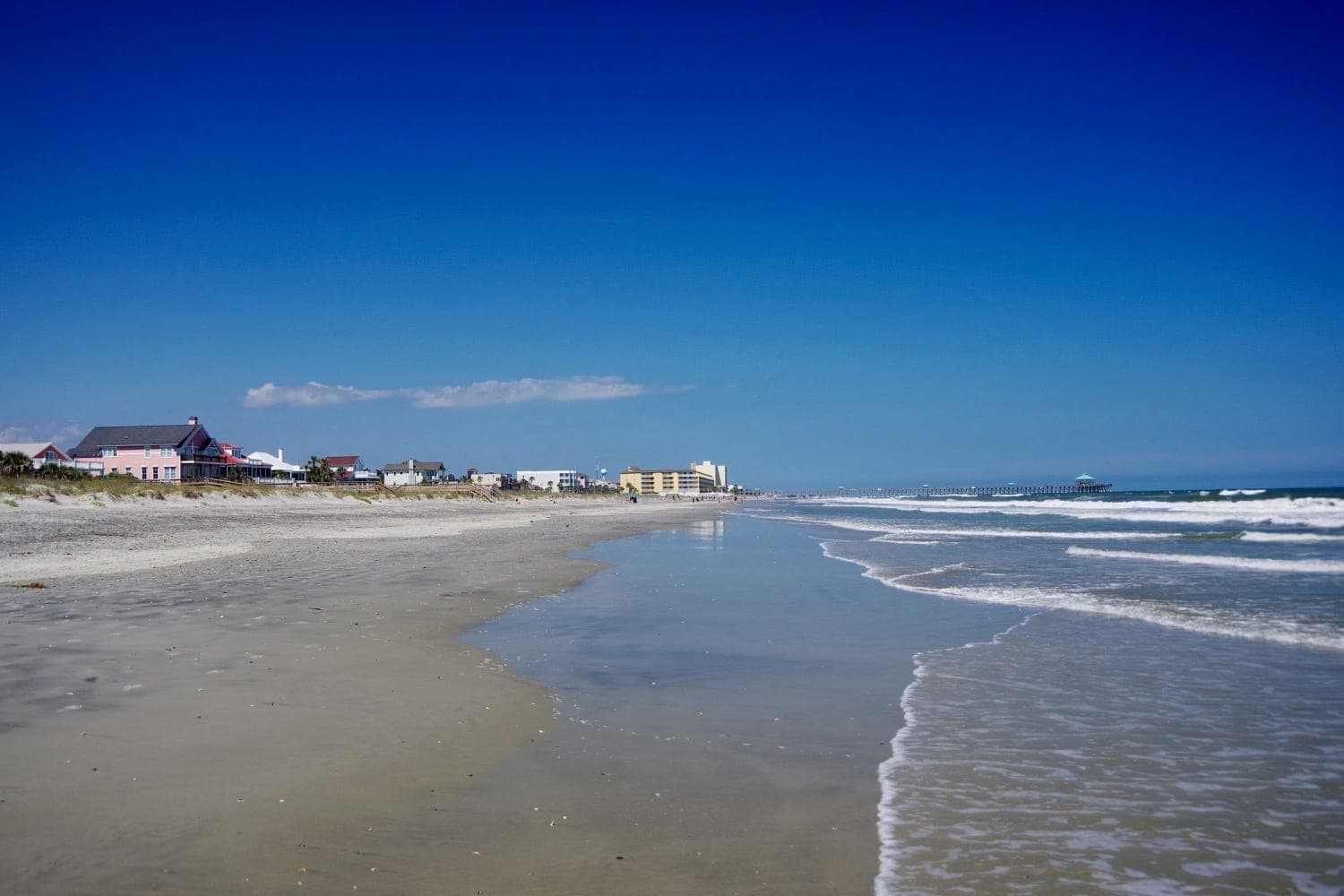
Folly Beach is paying a surf forecasting company to turn cameras into a full-time monitor of its shoreline.
City Council voted 5-1 on Aug. 11 to award a $76,500 sole-source contract to Surfline Coastal Intelligence for automated monitoring of erosion, shoreline change and beach attendance over an initial 12 months, according to council minutes. The money comes from the city’s Beach Preservation Fund, which also pays for beach surveys and renourishment, the resolution says.
Council had postponed the contract in June along with several budget measures, minutes show; during the discussion, one member asked that the conversation not be rushed. At that meeting, a presenter said Surfline already had cameras on the Folly Beach Pier and two at the Washout. Asked how long a 45% discount would last, the presenter said it would probably cover a first-year pilot.
The Post and Courier described Surfline Coastal Intelligence as a California-based company and reported that at least seven new cameras are slated for the island. Surfline’s proposal to the city promises daily shoreline positions, beach profiles, counts of people on the beach and in the water, and heat maps of where visitors gather. It says the data is stored on Amazon Web Services servers in the United States and that clients can choose facial blurring at no extra cost.
Some cameras could go on private homes. As of late September, the city had asked 10 homeowners to host one; three agreed, three declined and four had not responded, Live 5 News reported. Hosts would sign three-year contracts with Surfline, which would reimburse electricity costs on request, according to the station.
“We can do a post-storm analysis using this camera data in one day,” Mayor Chris Bizzell told Live 5. The city must document storm damage to apply for state and federal aid, he said.
Bizzell said the cameras could also count beachgoers to show state officials a return on beach spending. He distinguished them from license plate readers.
“These cameras are very low resolution. They can’t identify a face. It’s basically shapes,” Bizzell said.