Google has agreed to pump groundwater for its Berkeley County data center only when all other water supplies are exhausted, settling a fight over a state permit that lets it draw up to 549 million gallons a year.
The consent agreement with the Coastal Conservation League and the Southern Environmental Law Center was reached Thursday morning as the S.C. Board of Health and Environmental Control met to review the permit, The Post and Courier reported. With the deal, the groups withdrew their challenge. DHEC was also a party to the agreement, according to the groups.
“It’s official. The public voice is a game changer,” said Laura Cantral, the Conservation League’s executive director, in a statement from the groups.
The water comes from the Middendorf Aquifer, according to the groups. The Post and Courier described it as a major aquifer beneath Charleston. The permit roughly triples the amount Google had been allowed to take, about 180 million gallons a year, the newspaper reported. The newly permitted amount would be enough each day to fill three Olympic-size swimming pools, according to the newspaper.
The new conditions
Under the agreement, Google can use groundwater only as a last resort, the groups said. That can happen at times of peak demand, which usually come in summer, or in an emergency affecting the drinking water supply. Google may also pump when it needs to maintain its well.
Google must report its groundwater use every quarter instead of once a year, as state law requires, and the reports will be public, according to the groups.
“This agreement means Google won’t use groundwater unless there is no alternative, and shows what can be achieved when South Carolina neighbors come together to protect the Lowcountry’s valuable natural resources,” said Catherine Wannamaker, a senior attorney for the Southern Environmental Law Center.
A Google spokeswoman confirmed the agreement, The Post and Courier reported.
“We are proud of our collaborative efforts to ensure responsible stewardship of Lowcountry natural resources and look forward to continued partnership on these efforts with state, local and community groups in the years to come,” said spokeswoman Jacinda Mein, according to the newspaper.
Why Google wants more water
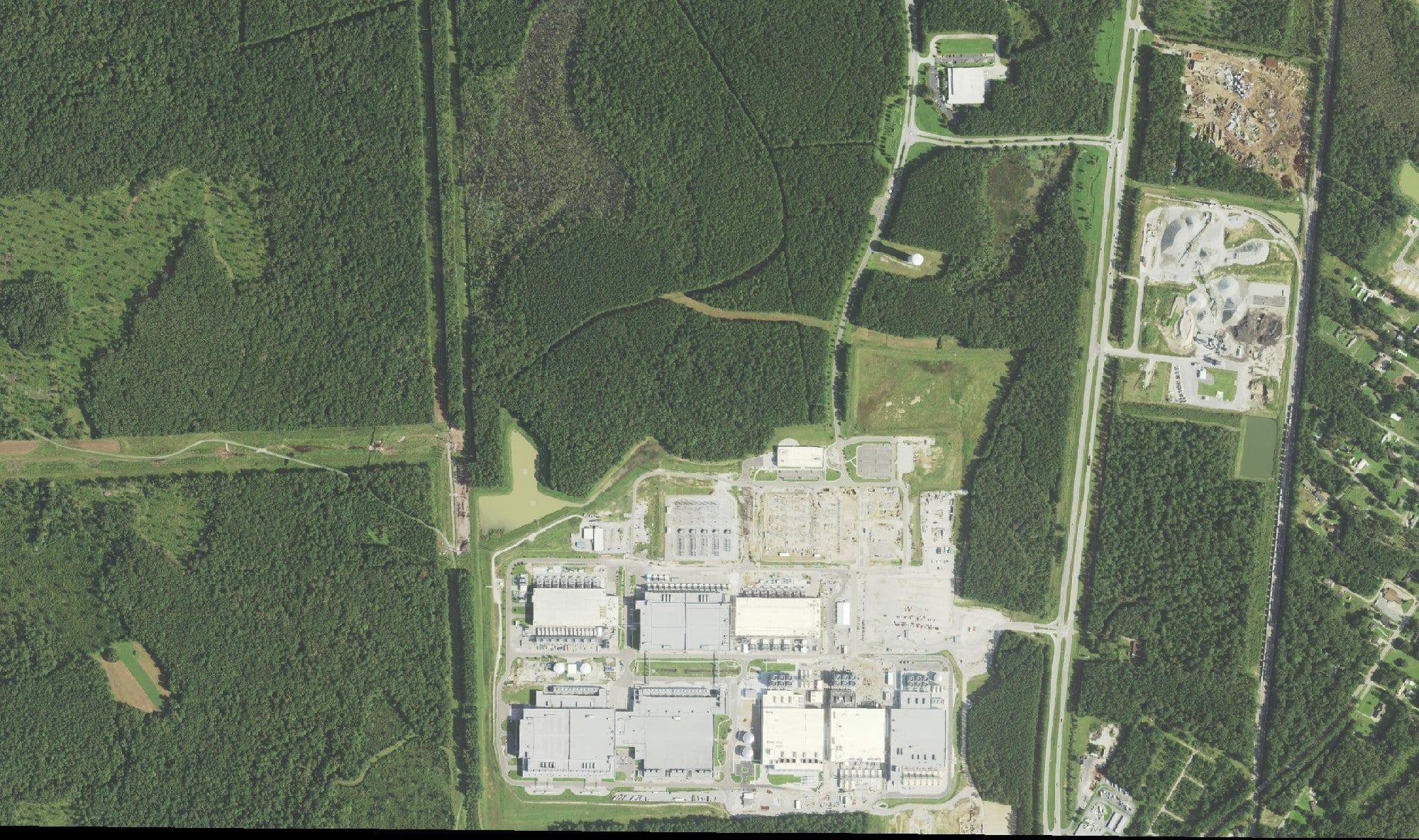
Google uses water to cool the servers at its data center in Mount Holly Commerce Park, between Goose Creek and Moncks Corner. It is spending $600 million to expand the campus, and the project will make the site one of the company’s five largest data centers, The Post and Courier reported in February.
The company buys surface water from Berkeley Water and Sanitation, The Post and Courier reported in August. After Google applied, that utility arranged a connection to a Charleston Water System pipe along U.S. Highway 52 that could supply 5 million gallons of treated surface water a day, according to the newspaper. A waterline that would supply that much surface water to Google is still under construction, The Post and Courier reported Thursday.
Google has said that surface water will remain its main source. “Groundwater is used to treat peak needs from time to time and for backup supply,” spokeswoman Charlotte Smith said in August, according to The Post and Courier. “Our data center must be planned to avert risk of unexpected supply disruptions.”
Google’s well began drawing water in 2018, according to the state Department of Health and Environmental Control, the newspaper reported.
How the fight unfolded
Google’s water use has drawn questions for years. An earlier request for more groundwater stalled under pressure from environmental groups and state regulators, and Google applied again in February, The Post and Courier reported.
DHEC staff issued a draft permit in August and approved it in October. The agency required Google to “make all efforts to reduce the regular demand on groundwater; reserve the groundwater for peak demand times or as a backup water supply; and, develop alternative water sources,” according to the newspaper.
“Permit conditions should be mandated, not encouraged,” Emily Cedzo of the Conservation League said in August, according to the newspaper.
A technical advisory committee of the Berkeley-Charleston-Dorchester Council of Governments voted nearly unanimously in late September to recommend that DHEC deny the permit, The Post and Courier reported. The Conservation League then asked the DHEC board to review it. Google spokesman Peter Schottenfels said the application complied with DHEC regulations and met the agency’s standards for granting permits, The Post and Courier reported this month.
Mount Pleasant Waterworks also objected. DHEC cut the utility’s own requested groundwater withdrawals while approving Google’s. Regulators based both decisions on access to surface water, The Post and Courier reported in August: they found the waterworks could buy what it needed from Charleston Water System, while Google’s application said its supplier could not provide more.
“We’re permitting based on the data available to us,” said Alex Butler, DHEC’s manager of water quantity permitting, according to the newspaper.
“Our customers ask me all the time, why would DHEC take groundwater away from the citizens of Mount Pleasant and give it to Google to cool computers. Unfortunately, I don’t have a good answer for that,” Waterworks General Manager Clay Duffie said in October, according to The Post and Courier.
Behind the dispute are falling groundwater levels. Residents and industries in South Carolina are drawing groundwater faster than it is replenished, and levels in many monitoring wells have never fully recovered from a drought about 20 years ago, according to state monitors, the newspaper reported.
Cantral said there will undoubtedly be new requests for groundwater in the future.
“We are committed to reforming our state’s weak policies to protect our groundwater from similar threats as our region grows,” she said.