Lester Simpson has worked in affordable housing development in Alexandria, Virginia, and Atlanta, according to SCBIZ.
Now he is director of development at an agency with plans to rebuild or renovate several of its public housing complexes on the Charleston peninsula.
Simpson became director of development at the Housing Authority of the City of Charleston in August, SCBIZ reported Oct. 7. The agency serves more than 15,000 residents in the region, according to the report.
He arrived alongside Debra Stephens, the authority’s new chief housing and real estate officer. Stephens previously held the same title at the Norfolk Redevelopment and Housing Authority in Virginia, SCBIZ reported.
“Both Ms. Stephens and Mr. Simpson bring an extraordinary depth of knowledge and expertise to our organization,” said Nathan Simms Jr., the Charleston authority’s president and CEO, according to SCBIZ. He said their leadership would put the agency “in a stronger position to advance redevelopment opportunities.”
Simms, who took over in May, previously ran the Norfolk authority, whose board voted to fire him in November 2025. The Charleston board said in May that it would have an outside firm review allegations about his work there, a review Simms said he welcomed, the Charleston City Paper reported. Simms has said the Norfolk board wanted to move in a different direction. ABC News 4 reported Aug. 31 that the review was still underway.
Simpson comes from the Alexandria Redevelopment and Housing Authority, where he was chief portfolio officer and led the agency’s development, acquisitions and asset management work, according to SCBIZ. SCBIZ said he led the authority’s $56.8 million purchase of The Alate, a 133-unit affordable senior housing community in Old Town Alexandria.
He also founded Audacity Development Group, a real estate development firm focused on mixed-use and affordable housing in Alexandria and Atlanta, SCBIZ reported.
He holds engineering degrees from North Carolina A&T and Michigan State University and an MBA from the University of Pennsylvania, and he is a Housing Accelerator Fellowship fellow, according to the report.
The work waiting for him in Charleston is large.
The housing authority’s website details three major redevelopment projects.
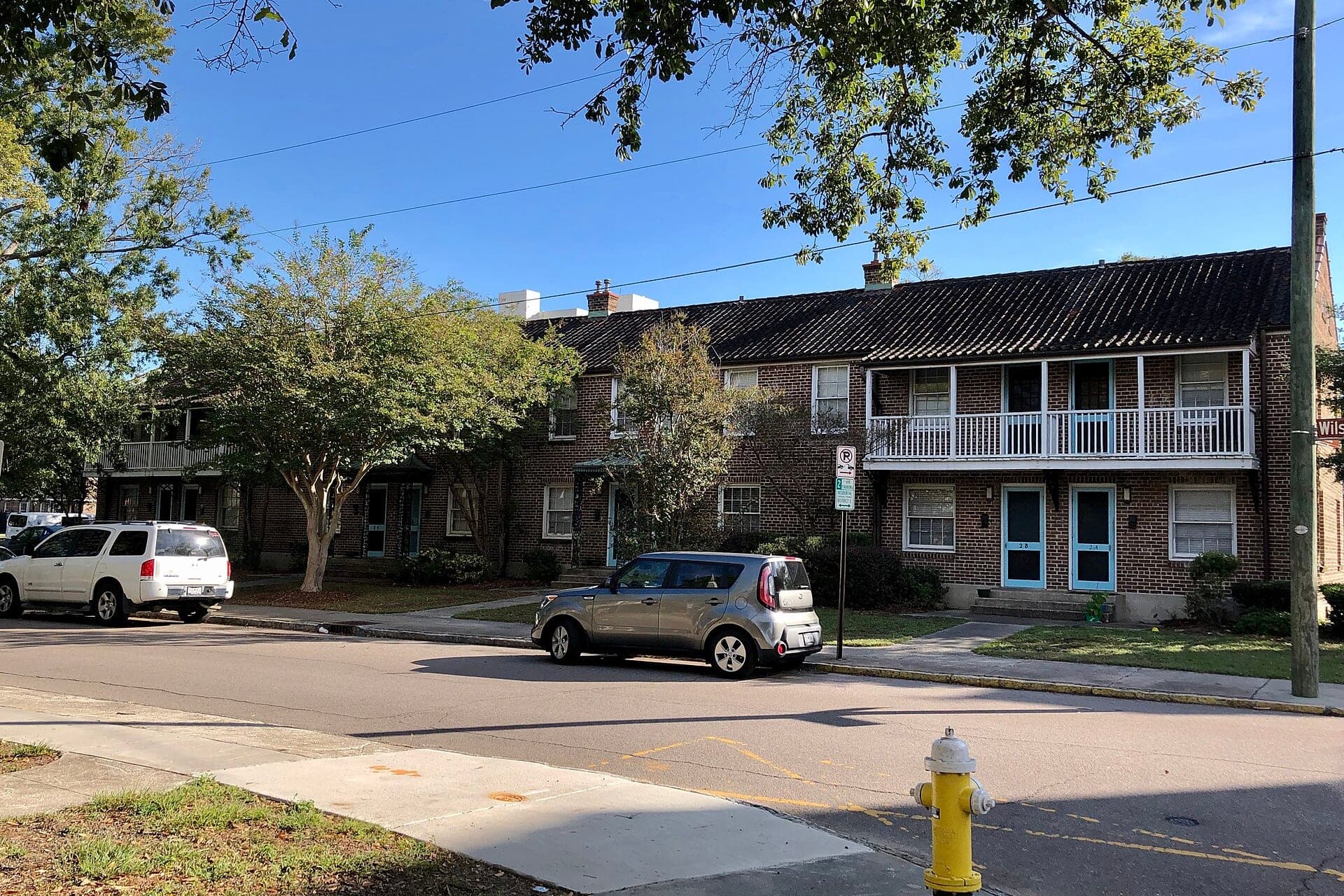
The biggest is Morrison Station, a plan to replace Cooper River Courts and Meeting Street Manor. The two complexes have 417 apartments today. The plan calls for 1,545. The authority puts the estimated total development cost at $600 million, to be financed by its development partner, The Integral Group, through private equity and debt. As of the authority’s latest update, negotiations with Integral were still focused on finalizing a right of first offer and language that would let business terms be reopened.
At Robert Mills Manor and the Robert Mills Manor Extension, the plan is to preserve and renovate rather than rebuild. The complexes would go from 221 apartments to 217. The authority plans to pay for the work with state and federal historic tax credits and a loan under the U.S. Department of Housing and Urban Development’s 221(d)(4) program, with Lument as lender, JPMorgan Chase as tax credit syndicator and Gibraltar Construction as general contractor.
That project took a step on Oct. 13, when an amended agreement naming its owner of record was fully signed and sent to HUD for review, the authority said. The authority said it cannot submit the project’s closing commitment under HUD’s Rental Assistance Demonstration program until HUD issues a firm commitment on the loan.
The third project would combine 275 Huger St. with the Colin McK. Grant Homes, growing the two sites from 30 apartments to 165. The authority plans to use low-income housing tax credits and historic tax credits and has not yet chosen a development partner. Its designers are working out how many homes the combined sites can hold, with design development drawings targeted for the end of December.
On its website, the authority describes its approach as building first: new homes go up in phases before older ones are redeveloped, so residents can move into new apartments as they open and stay in their community.
The agency laid out its plans to residents and the public at a Transformation Forum and posted video of the full presentation and of a community question-and-answer session on its website Oct. 9.
SCBIZ’s report did not include comments from Simpson. Simms framed the two hires as a way to keep up with demand, saying they position the authority to “meet the evolving housing needs of our community.”