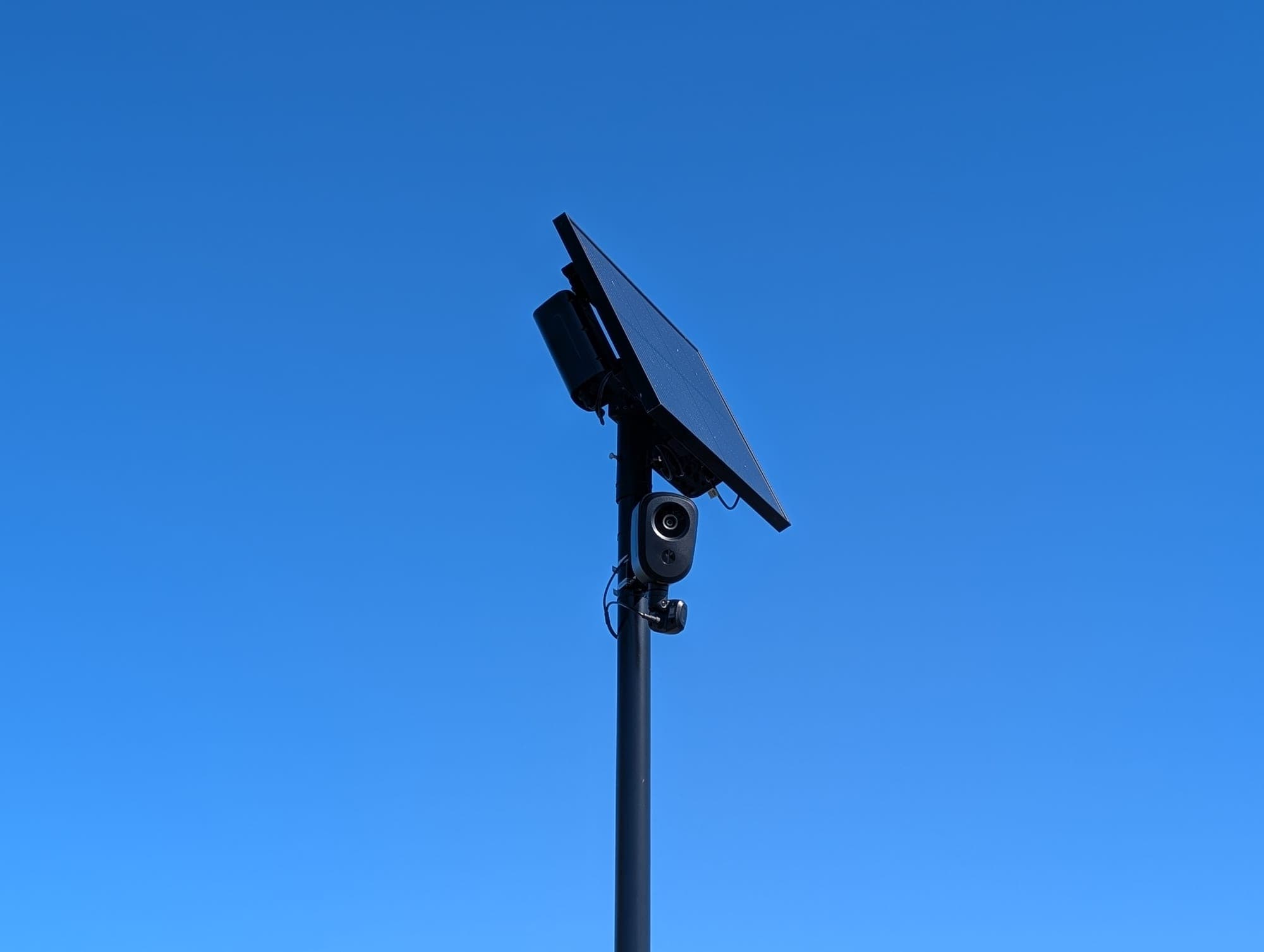
In a recent 30-day stretch, Mount Pleasant’s Flock Safety cameras captured more than 2.6 million images of passing vehicles. Police searched the system 219 times.
Police Chief Mark Arnold shared those numbers with a Town Council committee on Oct. 5, as council members weighed whether the town needs more safeguards, Live 5 News reported. He called the cameras “incredibly useful in the form of guardianship,” The Post and Courier reported, but he also acknowledged the constitutional questions they raise.
“If you put a camera on every single corner, nobody wants that,” Arnold said, according to Live 5. “It’s a police state. There is a balance to be had somewhere in there.”
A subscription, not a purchase
Mount Pleasant has used Flock since 2020, and its contract costs the town about $70,000 a year for access to the cameras and their data, The Post and Courier reported. The town had used cameras operated by the State Law Enforcement Division, an arrangement that required it to buy and maintain the hardware, police spokesman Brad Franko told the newspaper. Those older cameras were “nearing the end of their useful life” when the town switched.
The town has 20 permanent Flock cameras, mostly at entrances and exits to town, and two portable ones, Arnold said. Flock alerts have contributed to 40 cases that led to arrests this year, he said. The department has cut its data retention to seven days, requires supervisor approval for alerts and found no improper searches when it audited its use of the system, according to Live 5.
Flock, based in Atlanta, operates more than 120,000 license plate reader cameras nationwide, InvestigateTV reported.
Who uses what
The Dorchester County Sheriff’s Office has 31 Flock cameras. Every search requires a stated reason and a case number, searches are audited monthly and data is cleared after 30 days, the office told Live 5 in August.
“I trust the system and I trust the intent behind the system,” Sheriff Sam Richardson said.
North Charleston police use systems from other vendors. The department has Verkada cameras at 170 locations and Rekor cameras at 25, officers told Live 5 in August. Data is deleted after 90 days.
“After 90 days, they’re completely purged, so there’s no long-term historical record,” said Cpl. Jason Peiffer, a technology adviser for the department. North Charleston plans to open a real-time crime center by the end of the year and then limit system access to supervisors and above, he said.
Lawyer Gedney Howe IV is among the skeptics. “You cannot increase public safety by treating every citizen like a criminal,” he told Live 5.
Misuse and fallout
In Colleton County, the sheriff’s office fired a lieutenant on Aug. 20, saying he had made more than 2,700 unauthorized uses of its Flock system over about a year, including searches for himself, fellow deputies and friends, The Post and Courier reported. The sheriff had moved Flock auditing to the office’s professional responsibility unit on Aug. 11, a change that coincided with Flock’s release of AI tools for more thorough audits, the newspaper reported.
A second Colleton lieutenant was fired Aug. 31 after the office said he ran 62 unauthorized searches, including of vehicles registered to his spouse. The sheriff asked the State Law Enforcement Division to investigate, Live 5 reported.
Elsewhere in the state, Greer paused its Flock system for 90 days, The Post and Courier reported, and Oconee County Council banned Flock cameras countywide in September, according to FOX Carolina.
The company’s response
In August, Flock announced changes including mandatory multifactor authentication and an independent cybersecurity review, InvestigateTV reported.
“Tools this powerful must come with guardrails this strong,” CEO Garrett Langley said in a video about the changes.
The criticism has continued. A Georgia woman filed a federal class-action lawsuit against Flock on Aug. 25 alleging widespread misuse of its network, WIS reported. In September, the chief executives of Flock, Axon, Motorola Solutions and Verkada did not appear at a U.S. Senate Judiciary subcommittee hearing on license plate readers to which they had been invited, InvestigateTV reported. Flock told the subcommittee’s chairman in writing that it supports legislation setting the rules.
“Flock does not believe that Americans’ privacy should depend on one vendor’s good judgment, its current leadership, or its commercial incentives,” Dan Haley, the company’s chief legal officer, said, according to InvestigateTV.
Questions from Columbia
In an Oct. 2 letter to Langley, state Attorney General Alan Wilson asked how the company uses artificial intelligence and handles the data its cameras collect, giving it 30 days to respond, The Post and Courier reported. A Flock spokesperson told the newspaper the company looked forward to responding directly to his questions.
Gov. Henry McMaster has defended the technology. “We should not deprive law enforcement of tools that have the potential to prevent and solve crimes,” he told FOX Carolina in September. “If and when those tools are misused, those responsible must be held accountable.”
There are roughly 1,400 automated license plate reader cameras in South Carolina, according to a count by the group DeFlock cited by FOX Carolina. State lawmakers are expected to revisit the rules for them in January, the station reported.
Police cameras are not the only source of plate data. Towing and repossession companies have for more than a decade driven camera-equipped vehicles that feed Motorola Solutions’ Digital Recognition Network, which sells the data to hundreds of insurance companies and other buyers, The Post and Courier reported.
For now, Mount Pleasant’s Flock cameras remain in place, Live 5 reported.