Dr. Raymond Greenberg, president of the Medical University of South Carolina since 2000, announced Wednesday that he is leaving to become executive vice chancellor for health affairs at the University of Texas System.
Greenberg will leave MUSC at the end of August, according to the university’s announcement. In Texas, he will oversee six academic health science institutions, including four medical schools, The Associated Press reported. The Post and Courier reported that the group includes the MD Anderson Cancer Center in Houston and that the job will be based in Austin.
He will succeed Dr. Kenneth Shine, who held the post for a decade, MUSC said.
“It is not about the money,” Greenberg told The Post and Courier. “It is about the opportunity to be part of a growing and dynamic enterprise that has statewide impact.”
Pay and the interim plan
A University of Texas spokeswoman confirmed that Greenberg has been offered $700,000 a year, slightly less than he makes now, The Post and Courier reported. At MUSC, he earns more than $750,000 a year, including his state base pay of $250,629 and a privately funded compensation package, according to the newspaper. His MUSC contract was set to run until 2015.
The MUSC Board of Trustees met in a special executive session by conference call Wednesday afternoon and named Dr. Mark Sothmann, the university’s provost and vice president for academic affairs, as interim president, the newspaper reported.
Board Chairman Tom Stephenson told The Post and Courier the search for a permanent president will be national and could spill into 2014.
“It’s likely not to happen real quickly,” Stephenson said. “It might not happen this year.”
Internal candidates will be considered, Stephenson said, according to the newspaper. “We’d be stupid not to do a national search,” he said.
Thirteen years of building
Greenberg, 57, succeeded former Gov. Jim Edwards as MUSC’s president in 2000. Before that, he was the university’s vice president for academic affairs, and earlier he held administrative posts at Emory University, where he was founding dean of the Rollins School of Public Health, according to MUSC.
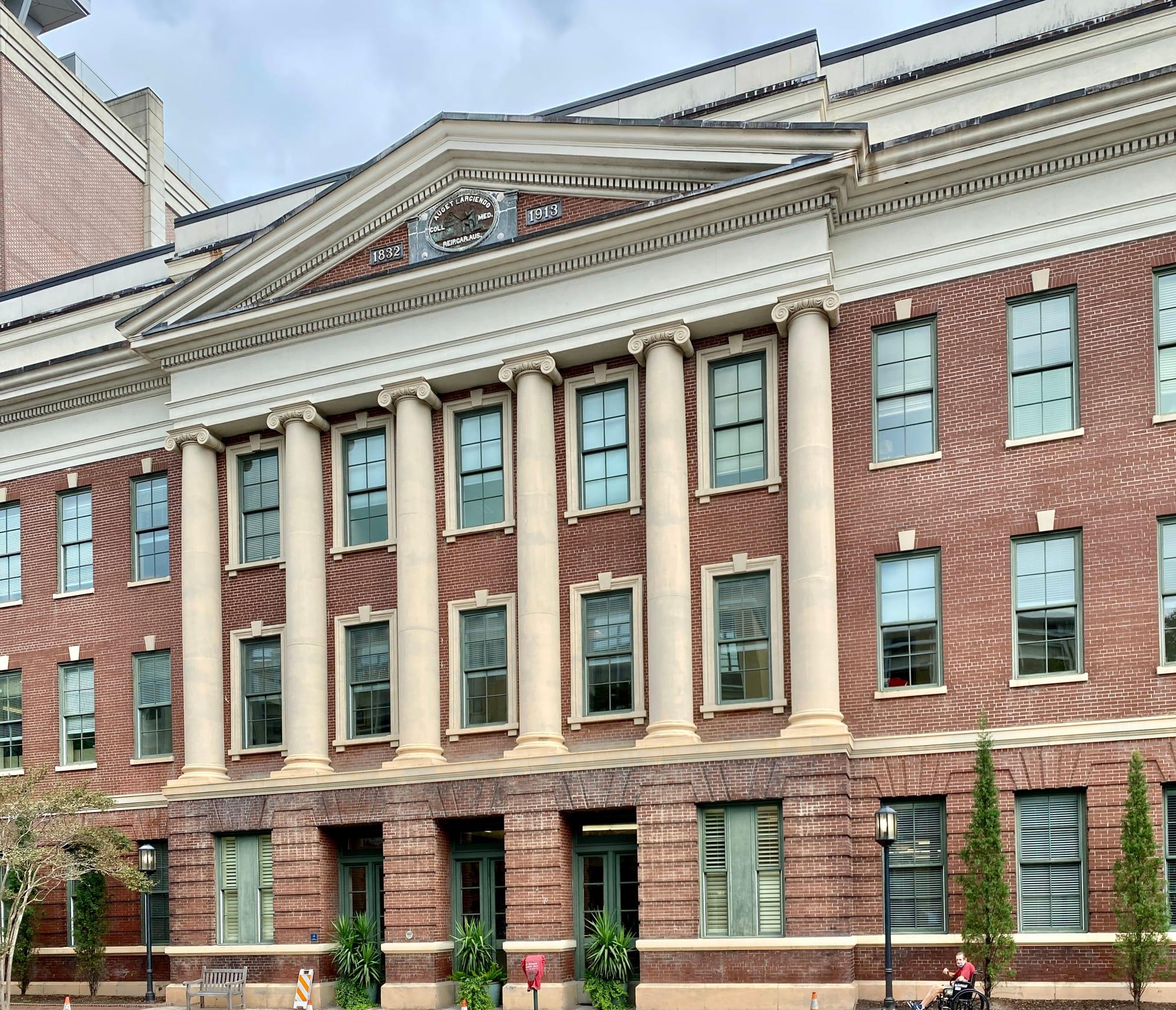
During his tenure, more than a million square feet of new space was built on the Charleston campus, MUSC said. The projects included a new hospital, new facilities for the Hollings Cancer Center, the College of Health Professions and the College of Dental Medicine, and research buildings for the Darby Children’s Research Institute, drug discovery and bioengineering.
Annual research funding more than doubled to a record $243 million during his presidency, and total operating budgets are approaching $2 billion a year, the university said. The National Cancer Institute designated the Hollings Cancer Center, and the National Institutes of Health gave MUSC a Clinical and Translational Science Award.
Greenberg also pushed for statewide partnerships, according to MUSC. Those include Health Sciences South Carolina, a partnership of the state’s research universities and teaching hospitals; the Carolina e-Health Alliance, in which Charleston hospitals share data between emergency departments; a bioengineering alliance with Clemson University; and a merger of MUSC’s pharmacy school with the University of South Carolina’s.
“Ray Greenberg has transformed the Medical University during his years in office,” Stephenson said in MUSC’s announcement. “He led us through challenging financial times, yet still was able to expand our contributions to the state.”
Money ahead
Greenberg told The Post and Courier that money will be MUSC’s biggest challenge going forward.
“There’s going to be less money from the clinical enterprise to help subsidize the teaching and research missions,” he said.
He blamed the federal sequester and declining state appropriations in part, the newspaper reported, and called the problem “the biggest challenge for academic health centers in general.”
Charleston Mayor Joe Riley praised Greenberg’s leadership. “He has a rare combination of extraordinary intellect, great wisdom and personal leadership,” Riley said, according to the newspaper.
Greenberg is the second president of a major South Carolina university to announce a departure this year, the AP reported. Clemson University President Jim Barker said in April that he would step down after 14 years.
“Leaving a place where you have been for nearly two decades is not an easy thing to do,” Greenberg told the AP.