Terri Warholak decided what kind of pharmacist she wanted to be during a summer in Arizona.
As a Purdue University pharmacy student, she worked with the Phoenix Area Indian Health Service, where pharmacists could see patients’ complete medical records and helped judge whether their medications were safe, according to the Medical University of South Carolina.
“There I learned what the possibilities were for pharmacy,” Warholak said in an MUSC profile.
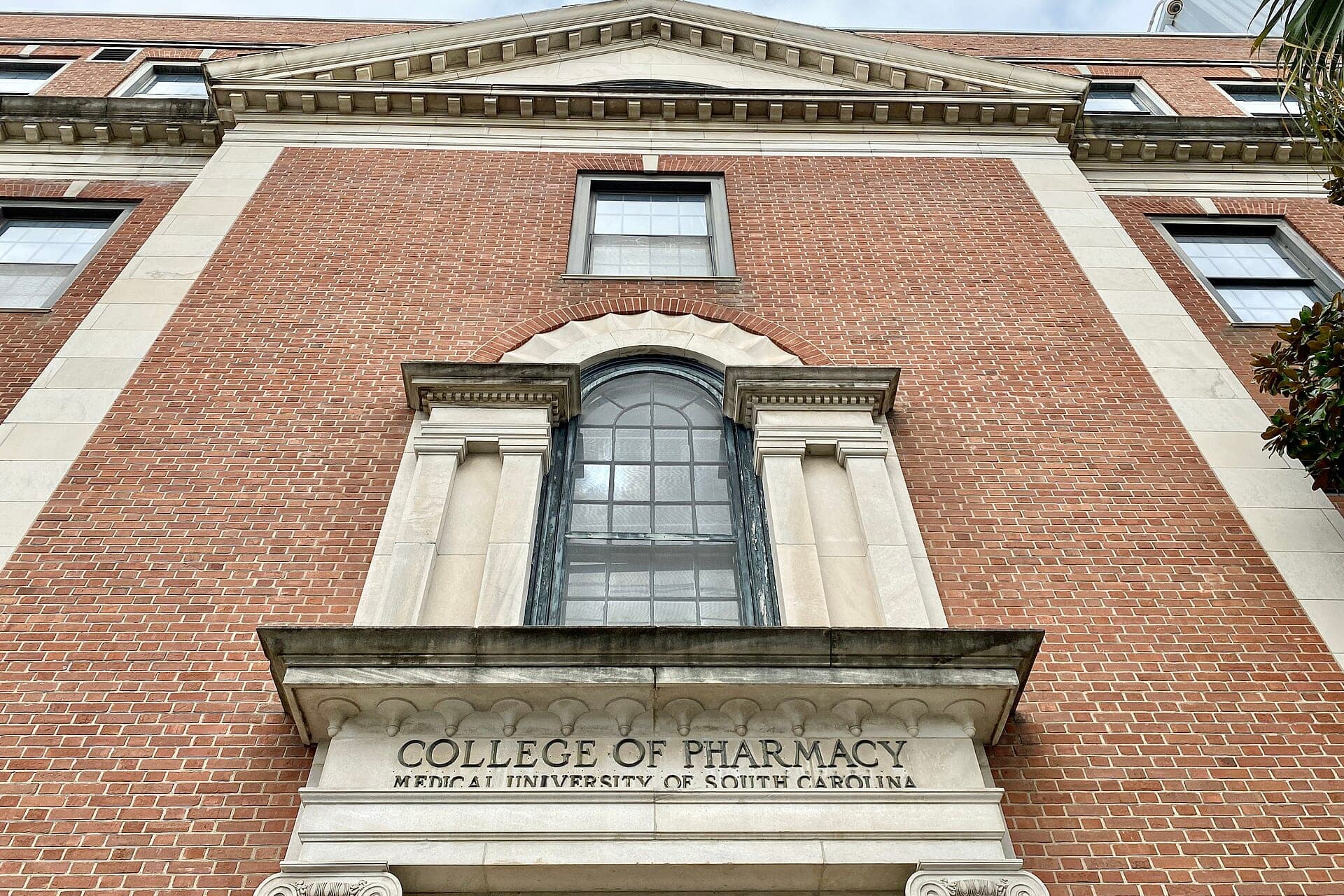
Now she leads MUSC’s College of Pharmacy. The university named Warholak dean of its College of Pharmacy in August, effective Oct. 1. She succeeds Philip D. Hall, who announced plans to step down after 15 years as dean.
Warholak, a registered pharmacist, comes from the University of Health Sciences and Pharmacy in St. Louis, where she had been dean of the St. Louis College of Pharmacy since 2022.
MUSC is pointing to her numbers there. Over three years, the share of graduating students who said they would choose the college again nearly doubled, according to MUSC. The university also credits her with tripling the college’s annual clinical service revenue, without saying over what period. Alumni giving more than doubled from 2024 to 2025, and alumni participation in giving more than tripled, MUSC said.
“Her record demonstrates that she knows how to turn ambitious ideas into measurable results while bringing people together around a shared purpose,” John V. Marymont, MUSC’s executive vice president for academic affairs and provost, said in the university’s announcement.
Her path to a dean’s office started in government work. After that Arizona summer, she spent the next one with the U.S. Food and Drug Administration. Once she had her pharmacy degree, she went back to Arizona as a commissioned officer in the U.S. Public Health Service and a staff pharmacist at Phoenix Indian Medical Center, MUSC said. She later returned to Purdue for a master’s degree and a doctorate in pharmacy administration.
At Midwestern University’s College of Pharmacy, she redesigned a quality and safety course around real problems identified by health professionals. She then spent 17 years at the University of Arizona College of Pharmacy, rising to professor and assistant dean for academic affairs and assessment, and helped develop Educating Pharmacists in Quality, a curriculum on improving the quality of care.
MUSC credits her with 180 peer-reviewed publications and work on projects representing more than $39 million in research funding, including about $4.7 million as principal investigator. She has served on the FDA’s Drug Safety and Risk Management Advisory Committee and with U.S. Pharmacopeia, according to the university.
She takes over a college that MUSC says accepted its first pharmacy student in 1882. U.S. News & World Report ranked it 31st of 141 pharmacy schools in 2025, the college says. Its graduates matched to residencies at a 92% rate in 2026, against 84% nationally. Its first-time pass rate on the national pharmacist licensing exam was 87% in 2025, even with the national rate, after falling to 67% in 2023, according to figures the college publishes.
One big job ahead is Helix+, the college’s redesigned Pharm.D. curriculum, set to launch in fall 2027. Warholak believes faculty should lead curriculum change, MUSC said.
She also sees openings in artificial intelligence, data science, pharmacogenomics and implementation science, and wants to grow research through recruitment, graduate and postdoctoral training and industry partnerships, according to the university.
“I’m really excited about the chance to build research and graduate programs,” she said. She called MUSC Health “a strong clinical partner.”
“MUSC has an extraordinary opportunity to connect pharmacy education and research with clinical practice in ways that improve care and expand what pharmacists can do for patients,” she said in the announcement.
Workforce is a theme. In Missouri, she helped create the Coalition to Move Pharmacy Forward, a statewide group of pharmacy schools, professional associations, regulators and employers focused on the pharmacist pipeline, MUSC said.
“It becomes a patient safety problem if we don’t have enough pharmacists,” Warholak said.
She describes the dean’s job as advocacy.
“A dean’s major role is to fight for the college, the faculty, the staff, the students and the alumni,” she said. “That’s what I’m there to do, lift them up and make sure that they are successful.”