One of the Charleston region’s biggest sources of high-tech jobs is getting a new name.
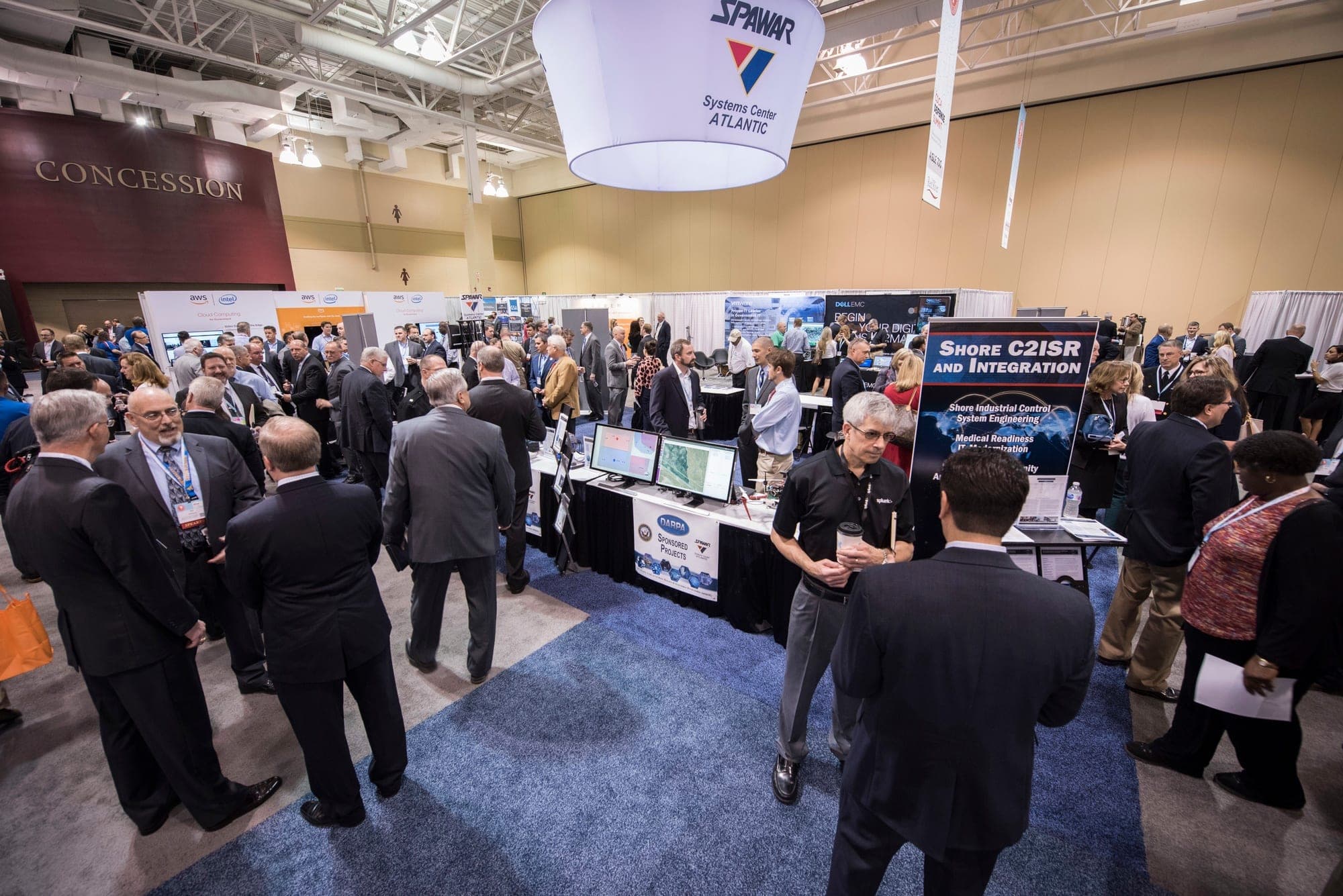
SPAWAR Systems Center Atlantic, the Navy engineering and acquisition command based at the Naval Weapons Station, will become Naval Information Warfare Center Atlantic on Monday, Feb. 18, the Navy said. It will go by the acronym NIWC Atlantic, which the Navy says is pronounced “Nī’ wick.”
Rear Adm. Christian Becker, commander of the San Diego-based Space and Naval Warfare Systems Command, announced the change Wednesday in a speech at the WEST 2019 conference at the San Diego Convention Center. The command’s West Coast center, SPAWAR Systems Center Pacific in San Diego, will become Naval Information Warfare Center Pacific.
“The advantage information warfare brings to the fight is at the core of our Navy’s ability to compete and win today and in the coming decades,” Becker said in a statement. “Recognizing our systems centers as Naval Information Warfare Centers reaffirms our commitment to accelerate the development and delivery of advanced warfighting capabilities to the fleet.”
The new name applies to every site that falls under the two centers worldwide, the Navy said. The parent command in San Diego will keep the Space and Naval Warfare Systems Command name.
Same work, new label
The Navy stressed that the change is about identity, not operations. The new name “does not signal a change in SPAWAR’s mission of identifying, developing, delivering and sustaining information warfighting capabilities,” the service said.
“The missions will stay the same but a name’s important because it tells us the focus that we need to have on information warfare,” Becker told the conference audience, C4ISRNET reported. “This is not changing the missions or functions and tasks of our centers, rather evolving to show and demonstrate that focus.”
He said the change aligns the centers with the Navy’s other warfare centers. “When we think about warfare centers in the Navy … we think of places like Naval Undersea Warfare Center, Naval Air Warfare Center, Naval Surface Warfare Center. We’re aligning and normalizing with that; Naval Information Warfare Center,” Becker said, according to C4ISRNET.
The Navy said the “warfare centers” label will make the centers’ mission clearer to the fleet and to industry. It said the change shows that information is a fundamental element of warfare, a concept the Navy calls essential to its Design for Maritime Superiority 2.0.
The Post and Courier reported that the rebranding is meant to make the organization’s purpose clearer as it tries to do more business with private tech firms and other branches of the military. No operational or mission changes are planned, the newspaper reported.
A big local employer
The East Coast center employs about 4,500 military and civilian workers in the Charleston area, The Post and Courier reported. It is based at the Naval Weapons Station off Remount Road in Hanahan.
Across all its sites, which include Hampton Roads, Va., New Orleans, Tampa, Fla., Washington, D.C., and overseas locations in Europe, the Middle East and Antarctica, the center has about 5,000 federal civil service employees and military personnel, the Navy said in October. SPAWAR as a whole has more than 10,000 active-duty military and civil service professionals.
The Charleston site was commissioned under the SPAWAR Systems Center Atlantic name in 2008, but its origins trace to the 1960s, when the Navy established an electronics command center in Charleston, according to The Post and Courier.
Capt. Wesley Sanders has led the center since October, when he succeeded Capt. Scott Heller as commanding officer. Christopher Miller is executive director.
Courting new companies
The rename comes as the center tries to work with companies it has not typically done business with, The Post and Courier reported.
Last June, SPAWAR picked Advanced Technology International of Summerville to manage the consortium for its Information Warfare Research Project, under a three-year, $100 million agreement. The project lets the Navy use an alternative to the traditional acquisition process to develop prototypes quickly.
The first prototype award under that agreement came Jan. 8: $1.3 million for a new Low Altitude Range Communication System for the Marine Corps, according to the Navy. The system is slated for installation at the Townsend Bombing Range, part of Marine Corps Air Station Beaufort.
“This first award is a significant milestone for the IWRP,” Pete Reddy, the center’s deputy executive director, said in January. From concept to award, the effort took 119 days, the Navy said, and consortium membership had grown to 219.